Platelet Rich Plasma (PRP) therapy is a popular treatment that promotes healing and regeneration, commonly used for hair restoration, joint healing, and skin rejuvenation. However, many individuals wonder if PRP contains growth hormones. While PRP does not directly contain growth hormones, it does include platelet-derived growth factors (PDGFs) that can stimulate healing and tissue regeneration. These growth factors share some similarities with growth hormones, but they work in different ways. This blog explores the components of PRP, the role of growth factors, and the relationship between growth hormones and PRP.
Introduction
Platelet Rich Plasma (PRP) therapy has gained significant attention for its ability to promote healing and regeneration in various medical fields. One common question is: Does platelet rich plasma contain growth hormone? While PRP is known for its powerful healing properties, it does not contain growth hormones in the traditional sense. Instead, platelet rich plasma contains growth factors, which include platelet-derived growth factors (PDGFs) that play a critical role in tissue repair and regeneration. Understanding the difference between growth hormones and these growth factors in PRP can help clarify how this treatment works and its potential benefits.
In this article, we will dive into the science behind PRP, explore the key components of PRP, and clarify the role of growth hormones and growth factors in the healing process.
1. What is PRP Therapy?
Platelet Rich Plasma (PRP) therapy involves extracting a small sample of a patient’s blood, processing it to concentrate the platelets, and then reintroducing the PRP back into the body. The platelets contain numerous growth factors and proteins that are vital for healing and tissue regeneration. This makes PRP a valuable tool in various treatments, including hair restoration, joint healing, and skin rejuvenation.
The Role of Platelets in Healing
Platelets are the first responders to injury and play a crucial role in blood clotting. However, their role extends beyond clotting: platelets also release growth factors that stimulate the healing of tissues. These platelet-derived growth factors (PDGFs) help in tissue regeneration, collagen production, and the promotion of cell growth and repair.
Related; How many PRP treatments are needed for hair?
2. Does Platelet Rich Plasma Contain Growth Hormones?
While PRP contains growth factors that stimulate tissue regeneration, it does not contain growth hormones as commonly understood. Growth hormones, such as Human Growth Hormone (HGH), are peptides that directly affect growth and metabolism throughout the body.
Understanding the Components of PRP
PRP consists primarily of concentrated platelets, white blood cells, and plasma. The growth factors in PRP, such as PDGF, TGF-β (Transforming Growth Factor Beta), and VEGF (Vascular Endothelial Growth Factor), play a significant role in promoting healing, tissue regeneration, and hair growth.
Key Growth Factors in PRP
These growth factors act in various ways to accelerate healing. For instance, PDGF helps with tissue repair, VEGF promotes blood vessel formation, and TGF-β aids in collagen formation. These factors work synergistically to speed up the healing process in areas where PRP is injected, such as in hair follicles or injured joints.
3. Growth Hormones vs. Growth Factors: What’s the Difference?
| Aspect | Growth Hormones (GH) | Growth Factors in PRP |
| Definition | Peptides secreted by the pituitary gland that promote growth, metabolism, and cell regeneration. | Naturally occurring proteins in the blood that stimulate healing and tissue regeneration at the injury site |
| Source | Secreted by the pituitary gland. | Found in blood platelets, especially in Platelet-Rich Plasma (PRP). |
| Primary Function | Stimulate growth, metabolism, and overall body regeneration. | Promote local tissue regeneration and healing at the site of injury. |
| Examples | Human Growth Hormone (HGH). | Platelet-derived growth factors (PDGF), Transforming Growth Factor-beta (TGF-β). |
| Therapeutic Use | Used in hormone replacement therapy | Used in PRP therapy, mainly for tissue healing and regeneration |
| Broad Metabolic Effects | Yes, growth hormones have broad effects on metabolism and growth. | No, they have localized effects related to healing and tissue repair |
| Application | Systemic effects on the body. | Primarily focused on localized healing and regeneration. |
4. The Role of Growth Hormones in Healing and Regeneration
Growth hormones have a critical role in tissue repair, but PRP relies on a different mechanism.
How Growth Hormones Stimulate Cell Growth and Repair
Growth hormones increase cell division, enhance protein synthesis, and support tissue growth, making them essential for overall development and recovery. In the context of healing, growth hormones can aid in the regeneration of damaged tissue, but this process is different from the localized healing triggered by the growth factors in PRP.
The Impact of Growth Hormones in Medical Treatments
In contrast, PRP therapy works by introducing a concentrated form of the body’s own healing factors to the site of injury. These platelet-derived growth factors stimulate local tissue regeneration, but without the widespread systemic effects of growth hormones.
5. PRP and Its Healing Properties
PRP’s effectiveness lies in its ability to stimulate healing by concentrating the body’s natural growth factors. The platelet-derived growth factors in PRP have been shown to accelerate tissue regeneration, promote collagen synthesis, and enhance cell growth in the treated area.
How PRP Promotes Tissue Regeneration
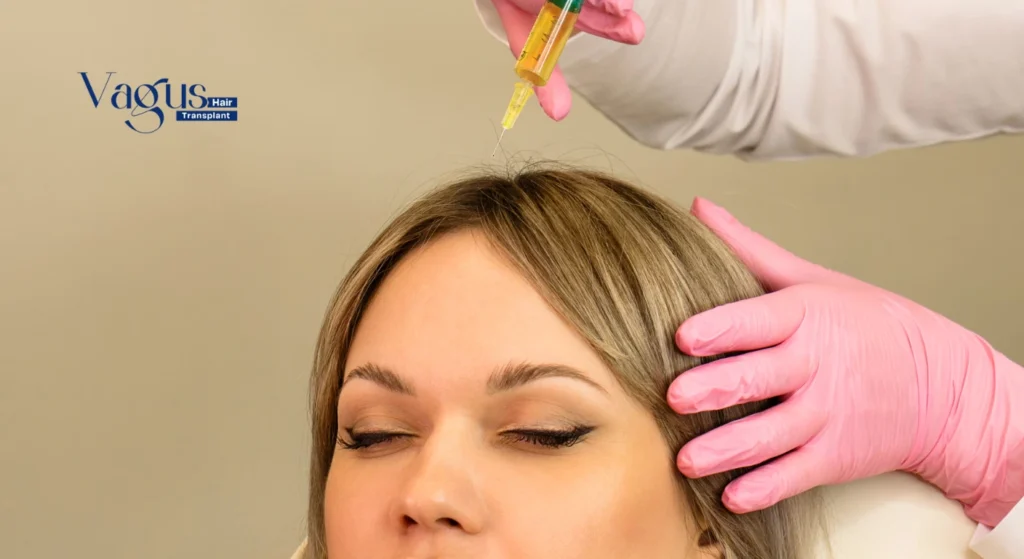
When PRP is injected into an area of injury, it can promote tissue healing by releasing growth factors that stimulate the repair of damaged cells. For example, in hair restoration, PRP can reactivate dormant hair follicles and stimulate new growth, resulting in thicker and healthier hair.
PRP for Hair Restoration and Joint Healing
PRP therapy has become a go-to treatment for hair loss and joint injuries, where it accelerates recovery and promotes healing. While growth hormones are not directly involved, platelet-rich plasma provides the necessary growth factors that can improve the healing process.
6. Benefits of Growth Factors in PRP for Different Treatments
PRP’s benefits extend across various treatments, including hair restoration and orthopedic treatments, due to its ability to deliver concentrated growth factors directly to the problem area.
Hair Loss Treatment with PRP: Does It Include Growth Hormones?
PRP therapy for hair loss relies on the platelet-derived growth factors present in the plasma to stimulate hair follicles. Although PRP does not contain growth hormones, the growth factors present can mimic some of the effects that growth hormones would have on the scalp, promoting hair regrowth.
PRP in Orthopedic Treatments: A Natural Healing Process
PRP therapy is widely used in orthopedic treatments to accelerate the healing of injuries like torn ligaments or joint degeneration. The concentrated growth factors promote cell repair and regeneration, speeding up recovery times.
7. PRP vs. Growth Hormone Therapy: Key Differences
While both PRP therapy and growth hormone therapy are used to promote healing and regeneration, there are significant differences in how they work.
How PRP Differs from Growth Hormone Injections
PRP therapy uses growth factors derived from a patient’s own blood, whereas growth hormone injections provide synthetic growth hormone to stimulate widespread growth and tissue repair. PRP is more targeted and localized, while growth hormone affects the body systemically.
Are Growth Hormones Necessary for PRP Therapy?
Growth hormones are not necessary for the effectiveness of PRP therapy. The growth factors in PRP are sufficient to promote healing and tissue regeneration at the site of injury or hair loss.
Scientific Evidence on Growth Hormones and PRP Effectiveness
There has been significant research into the effectiveness of both PRP therapy and growth hormone therapy. Studies show that PRP’s growth factors are highly effective in promoting localized healing and regeneration, particularly for hair restoration and joint injuries.
Studies on PRP’s Growth Factors and Their Impact
Numerous studies support the efficacy of platelet-derived growth factors in promoting tissue regeneration. While growth hormones have their own role in broader growth and metabolism, PRP therapy offers a more targeted approach.
What Research Says About Growth Hormones in PRP Therapy
Research suggests that PRP therapy can be just as effective without the inclusion of growth hormones, thanks to the presence of platelet-derived growth factors that trigger healing at the cellular level.
Final Thoughts
In conclusion, while platelet rich plasma does not contain growth hormones, it is highly effective in promoting healing and tissue regeneration due to the growth factors it contains. Whether for hair restoration, joint healing, or other treatments, PRP therapy leverages the body’s natural regenerative capabilities to support recovery and rejuvenation.
Growth factors play a crucial role in stimulating the healing process, but growth hormones are not required for the success of PRP therapy. With its ability to concentrate these healing factors, PRP remains an effective treatment for a variety of conditions.
Ready to experience the benefits of PRP therapy? Learn more about how PRP can help accelerate your healing and rejuvenation process.
Frequently Asked Question
1.Does PRP contain growth hormone?
No, PRP therapy does not contain growth hormone, but it contains platelet-derived growth factors that stimulate tissue repair and regeneration.
2.Can PRP help with hair loss?
Yes, PRP therapy can help promote hair growth by stimulating hair follicles with the growth factors present in the plasma.
3.What’s the difference between PRP and growth hormone therapy?
PRP therapy uses platelet-derived growth factors to promote healing at the site of injury, whereas growth hormone therapy provides synthetic hormones to stimulate growth and tissue regeneration throughout the body.