Hair Restoration for Medical Hair Loss: Proven Treatments for Better Results
Comprehensive medical guide to hair transplant procedures, innovative treatments, and restoration solutions for medical conditions causing hair loss. Evidence-based Treatments from Vagus Hair Transplant specialists in Islamabad, covering alopecia areata, post-surgical hair loss, burn restoration, and more.
Hair restoration for medical hair loss is a cutting-edge treatment designed to help individuals suffering from hair thinning or baldness due to medical conditions. This procedure utilises advanced techniques such as follicular unit extraction (FUE) or hair transplant surgery to restore natural hair growth. It offers a permanent solution for patients experiencing hair loss due to factors like alopecia, hormonal imbalances, or medical treatments. Regain confidence and restore a fuller, healthier head of hair with effective hair restoration options.
Hair Restoration for Medical Hair Loss
What is Medical Hair Loss?
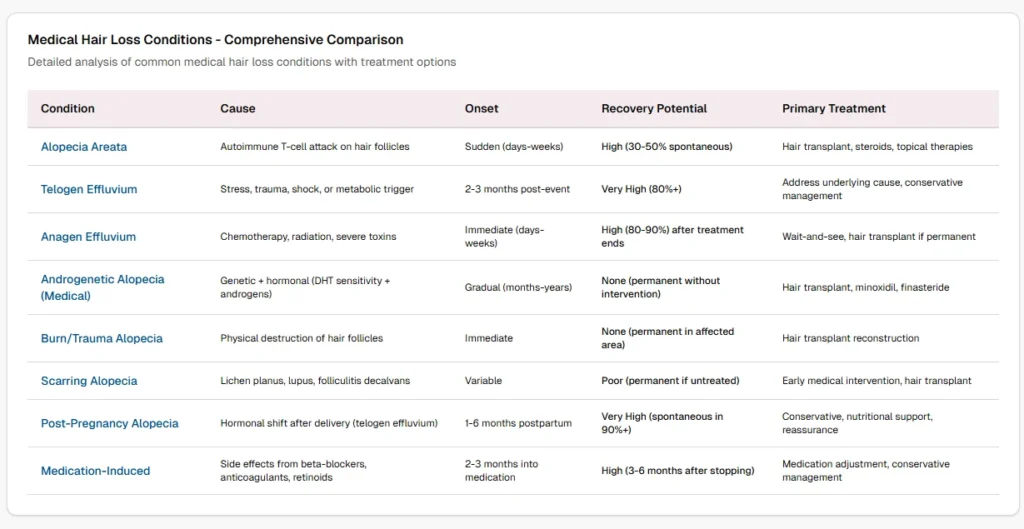
Medical hair loss refers to hair loss caused by underlying medical conditions, treatments, systemic factors, or traumatic injuries, distinct from primary cosmetic baldness. While androgenetic alopecia (pattern baldness) may involve genetic predisposition, true medical hair loss typically stems from autoimmune disorders like alopecia areata, medical treatments such as chemotherapy, hormonal imbalances, metabolic disorders, or physical trauma.
The distinction is crucial because medical hair loss often qualifies for insurance coverage, may be reversible with proper intervention, and requires specialised diagnostic and treatment approaches.

Why Medical Hair Loss Matters
- Psychological Impact: Significant effects on self-esteem, social confidence, and mental health. Studies show 40% of patients experience depression or anxiety related to hair loss.
- Potential Reversibility: Many medical hair loss conditions are reversible or responsive to early intervention, unlike permanent cosmetic baldness.
- Underlying Health Indicator: May signal undiagnosed medical conditions requiring treatment (thyroid disorders, autoimmune diseases, hormonal imbalances).
- Insurance Coverage Potential: Medical hair loss from approved conditions often qualifies for partial or full insurance reimbursement, unlike cosmetic procedures.
- Treatment Effectiveness: Early diagnosis and intervention can significantly prevent permanent follicle damage and improve long-term outcomes.
Key Fact:
According to dermatological research, approximately 80 million people in North America experience some form of hair loss, with medical conditions accounting for 15-25% of cases. Early professional evaluation is essential for proper diagnosis and optimal treatment outcomes.
Common Medical Hair Loss Conditions
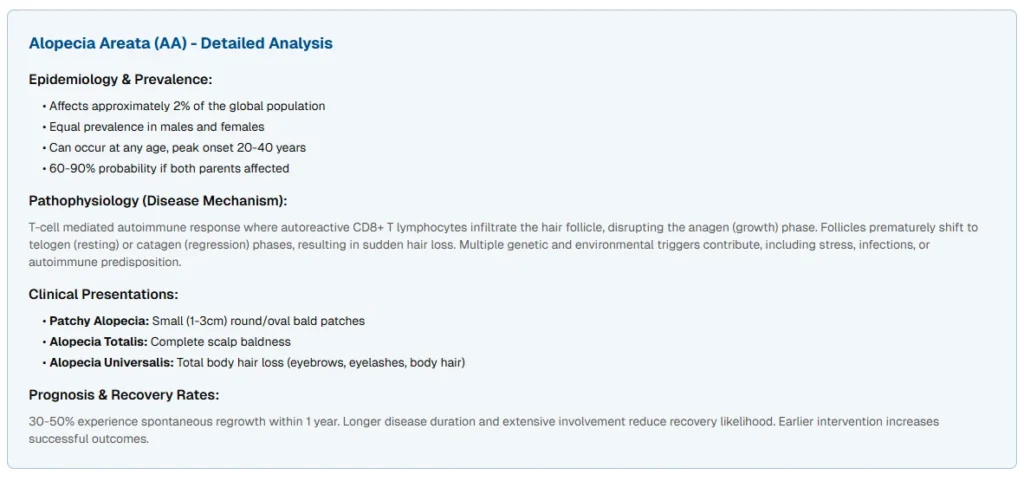
Alopecia Areata
Affects 2% of the population
An autoimmune condition causing patchy or complete hair loss. T-cells attack hair follicles.
Onset:
Sudden (days-weeks)
Recovery:
High (30-50% spontaneous recovery)
Post-Surgical Hair Loss
40% of transplant patients
Hair loss following major surgery, anaesthesia, or physical trauma from the procedure.
Onset:
Immediate to 3 months
Recovery:
High (6-12 months typically)
Telogen Effluvium
40-50% of postpartum women
Temporary hair shedding following stress, surgery, or medications. Diffuse pattern.
Onset:
2-3 months after trigger
Recovery:
Very High (80%+)
Chemotherapy Alopecia
80-90% of chemo patients
Cytotoxic drugs damage rapidly dividing cells in the hair follicles.
Onset:
2-4 weeks during treatment
Recovery:
High (3-6 months post-treatment)
Root Causes and Medical Factors
Autoimmune Disorders Causing Hair Loss
When the immune system mistakenly attacks hair follicles
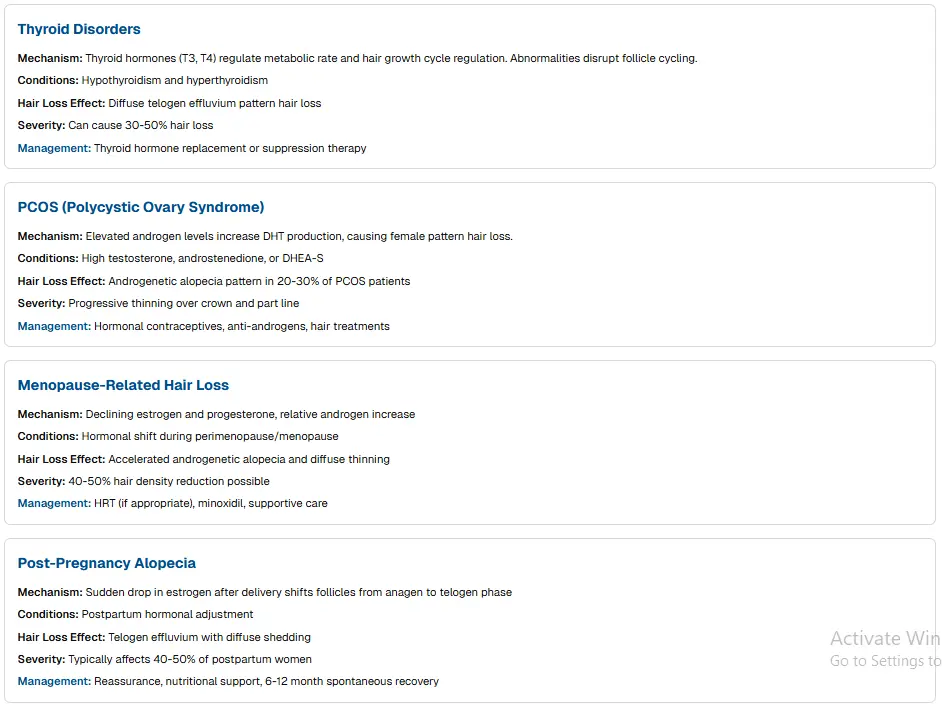
Hormonal Imbalances Affecting Hair
How hormonal dysfunction triggers hair loss
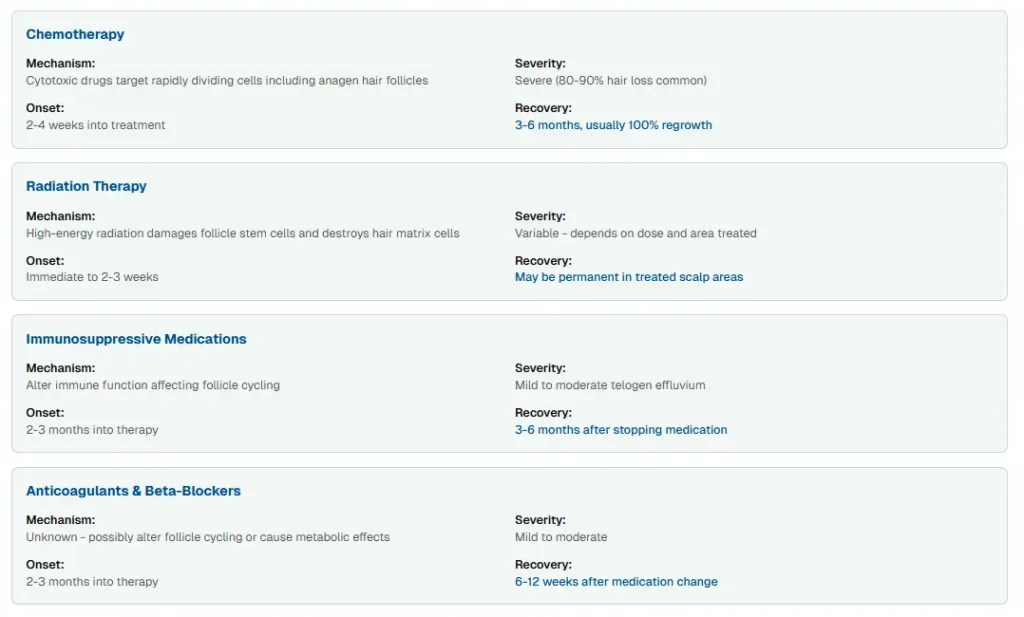
Hair Loss from Medical Treatments
Side effects of medical procedures and medications
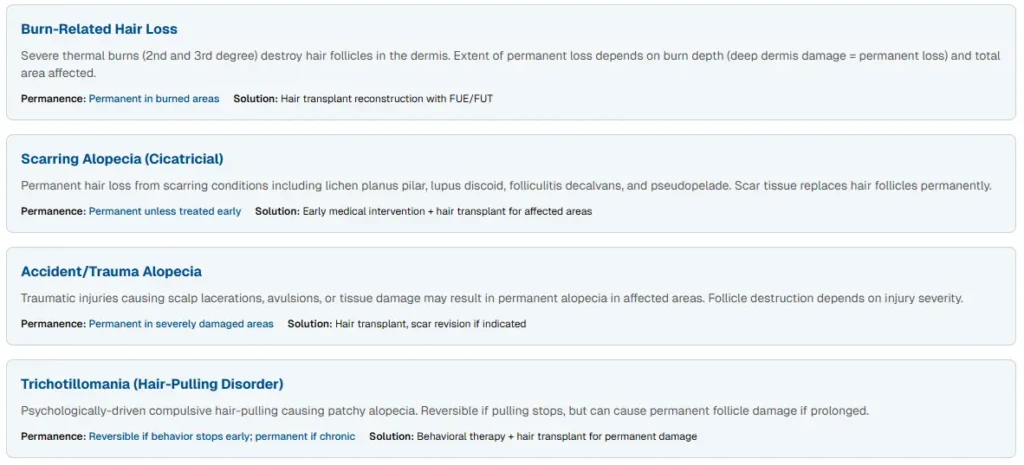
Trauma & Injury-Related Hair Loss
Permanent hair loss from physical damage
Metabolic & Nutritional Causes
Nutritional deficiencies and metabolic disorders

Hair Transplant Procedures for Medical Hair Loss
Advanced surgical techniques offering permanent restoration with success rates exceeding 95%. Ideal for medical hair loss conditions where hair follicles are permanently destroyed.
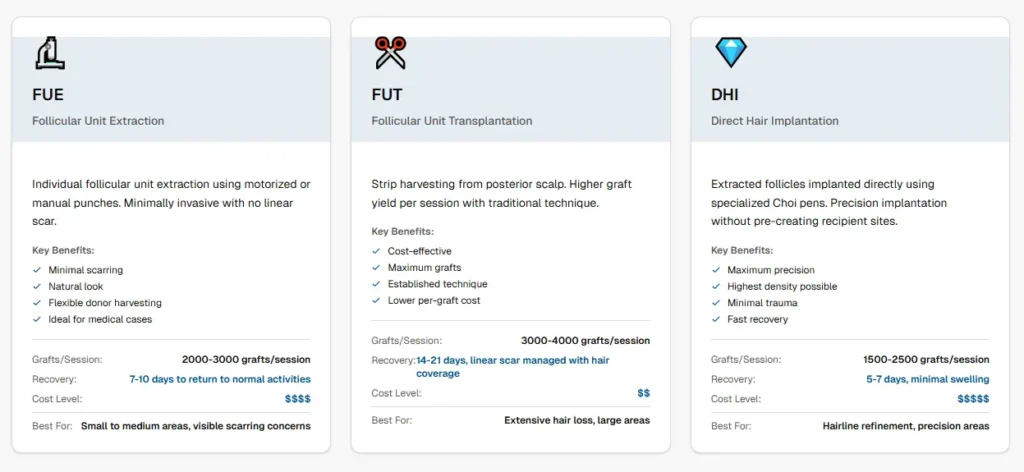
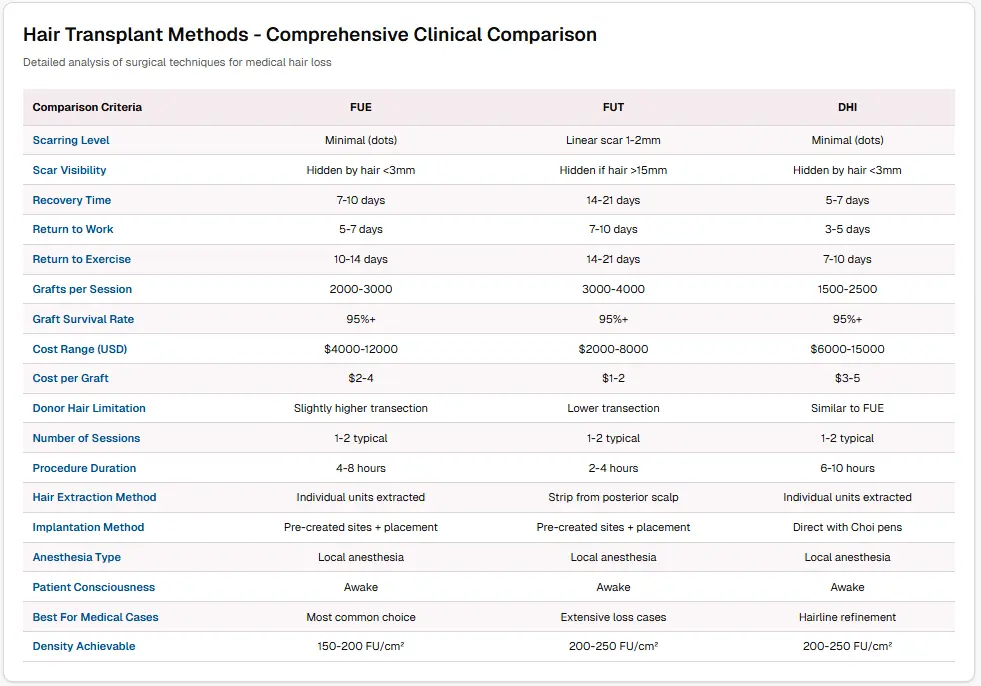
Hair Transplant Procedure - Detailed Step-by-Step Process
Complete walkthrough of what to expect during medical hair restoration surgery
Pre-Operative Consultation & Design
2-3 hours before surgery
Comprehensive hairline design using artistic principles and individual facial features. Hair density assessment, donor area evaluation, and expected graft count calculation. Before photographs were documented. Realistic expectations set. Medical history reviewed for safety. Medications adjusted if necessary.
Anesthesia Administration
10-15 minutes
Local anaesthesia is injected into the donor area and the recipient area. Typically, 500-1000 mL of 1% lidocaine with epinephrine is used. Patient remains awake but experiences no pain, only pressure sensations. Numbing takes effect within 5-10 minutes. Patient monitoring begins.
Donor Area Preparation
5-10 minutes
Posterior scalp hair trimmed to 1-2mm (for FUE) or surgical site marked (for FUT). Donor area cleaned and prepped with surgical solution. Microscopic examination of hair characteristics was performed. Follicle grouping assessed (single, double, triple, quad hairs). Photography documenting the donor area was taken.
Follicular Unit Extraction
60-180 minutes depending on technique
FUE: Motorised or manual punches (0.6-0.9mm) used to extract individual follicular units under stereomicroscopy. 2000-3000 individual units extracted. FUT: Scalpel strip (8-12mm wide) harvested from a safe donor zone. Donor area sutured (trichophytic closure preserves hairline). Extracted units were kept in a chilled 4°C solution for preservation.
Graft Preparation & Sorting
30-60 minutes (simultaneous with extraction)
Extracted tissue was examined under 10-40x magnification. Individual follicular units are carefully dissected into grafts (1, 2, 3, or 4-hair grafts). Transition rate minimised (<5%). Grafts categorised by hair count. Stored in sterile solution with oxygen-enriching agents. Graft viability was maintained throughout preparation.
Recipient Site Design & Creation
60-120 minutes
Hairline design finalised with patient input. Angle, direction, and density were determined for natural appearance. Tiny incisions (0.7-0.9mm) were created in a predetermined pattern. Incision angle mimics natural hair direction (typically 40-45° angle). Special care is taken in the frontal area for hairline aesthetics. Approximately 2000-4000 recipient sites created, depending on the procedure.
Graft Implantation
60-120 minutes
Prepared grafts were carefully placed into the recipient sites. FUE/FUT: Grafts placed into pre-created incisions using forceps. DHI: Grafts implanted directly using Choi pens without pre-created sites. Proper depth and angle are critical for survival and aesthetics. Density typically 150-250 follicular units/cm². All grafts are placed within 12-15 hours of extraction for optimal survival.
Post-Operative Dressing & Instructions
15-20 minutes
Recipient area cleaned gently. Surgical bandage/gauze applied loosely. Protective ointment applied. Post-operative care instructions provided verbally and in writing: wound care protocol, medication compliance (antibiotics, pain relievers), activity restrictions, hair washing guidelines, and follow-up appointment schedule. Patient given emergency contact information.
Recovery Timeline and Results
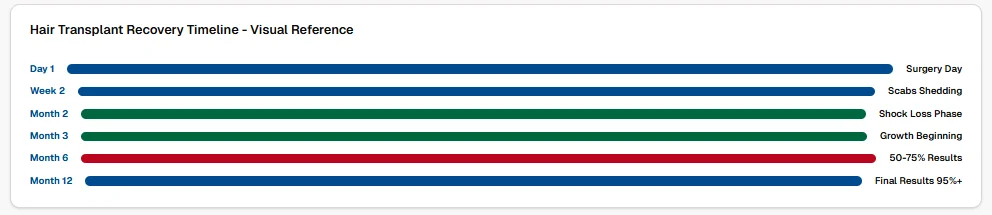
Hair Transplant Recovery - Complete Timeline
What to expect from days 1 through the final results at 12 months
Days 1-7: Immediate Post-Operative
Immediate post-operative period. The bandage remains in place for 24-48 hours. Mild swelling and redness are normal. Pain is minimal, manageable with prescribed medications. Bleeding may occur – use a clean cloth for gentle pressure. Sleep on your back or elevated to minimise swelling. Avoid touching the transplanted area.
Activities OK:
- Rest required
- Bandage care
- No strenuous activity
- Minimal workouts
Restrictions:
No exercise, swimming, hot showers, direct sun
Healing:
Initial wound stabilisation
Weeks 2-4: Early Healing
Scabs begin shedding – this is NORMAL and indicates healthy healing. Avoid scratching or picking at scabs. Hair washing begins gently (day 5 onward). Swelling decreases significantly. Most patients return to work during this phase. Itching may occur – resist scratching as it can damage grafts.
Activities OK:
- Light desk work OK
- Gentle hair wash possible
- Light walking
- Return to a normal diet
Restrictions:
No heavy lifting, strenuous exercise, contact sports, or harsh hair handling
Healing:
Scab shedding 80-90% complete, wound closure advancing
Months 1-3: Intermediate Healing
Hair shedding phase – SHOCK LOSS occurs. This is temporary and normal. Most transplanted hairs enter the telogen (resting) phase and fall out within 2-3 weeks post-transplant. This appears alarming, but is part of the normal cycle and does not indicate failure. Up to 80% of transplanted hairs may shed initially. Hairline can look sparse during this phase. New hair growth begins around month 3.
Activities OK:
- Normal work activities
- Light exercise beginning
- Gentle sports OK
- Normal hair care
Restrictions:
Avoid heavy contact sports, chlorine exposure, and excessive heat styling
Healing:
Shock loss phase, new hair follicle cycling beginning
Months 3-6: Growth Phase Begins
New hair begins visible growth from transplanted follicles. Hair growth rate is approximately 0.5-1 cm per month. By month 6, approximately 10-20% of the final density is visible. Hair texture and colour are developing. Continued growth of new hairs. Patient satisfaction typically begins improving as new hair becomes visible.
Activities OK:
- All normal exercise
- Sports resumable
- All normal activities
- Regular hair care
Restrictions:
None – normal activities permitted
Healing:
Active hair growth from transplanted follicles
Months 6-9: Significant Growth
Significant visible hair growth. By months 6-9, approximately 50-75% of final hair density is achieved. Hair length and thickness are increasing noticeably. Patient confidence is improving substantially. Most of the transplanted hair is now in anagen (growth) phase. Continued density improvement.
Activities OK:
- All activities unrestricted
- Normal styling possible
- All hair products OK
- Normal exercise
Restrictions:
None
Healing:
75%+ of final density achieved
Months 9-12: Final Results
Full final results achieved by 12 months post-transplant. 95%+ of transplanted grafts have taken and are growing normally. Hair density, thickness, and growth pattern stabilised. Hairline appears completely natural. Most patients report high satisfaction. Final before/after photos documented for comparison.
Activities OK:
- All normal activities
- Complete styling freedom
- Final assessment period
- Follow-up documentation
Restrictions:
None
Healing:
100% final results – permanent hairs established
Costs and Financial Considerations
Understanding Hair Transplant Pricing
Hair transplant costs vary significantly based on procedure type, number of grafts, surgeon experience, clinic location, and facility quality. Understanding pricing structure helps patients make informed decisions and plan financially.
Number of Grafts Needed
Most significant cost factor – typical range 1500-4000 grafts
Technique Used (FUE vs FUT vs DHI)
FUE: $$$$ | FUT: $$ | DHI: $$$$$
Clinic Location & Reputation
Urban centres are typically more expensive; Islamabad offers excellent value
Surgeon Expertise & Experience
More experienced surgeons command higher fees, often justified by better results
Anesthesia and Facility Costs
Varies by procedure duration and anesthesia type used
Post-Operative Care & Follow-ups
Some clinics include multiple follow-ups; others charge separately
Results and Success Metrics
95%+
Graft Survival Rate
Grafts that successfully grow
94-98%
Patient Satisfaction
Recommend to others
90%+
Density Achievement
Of the target density reached
98%+
Natural Appearance
Appear natural, undetectable
Patient Case Studies - Medical Hair Loss Restoration Success
Real examples of successful medical hair loss treatment outcomes
Case Study 1: Alopecia Areata - Extensive Patchy Loss
Patient: Female, 28 years old
Condition: Alopecia areata with multiple large patches (2-5cm diameter) across the scalp for 18 months
Treatment: FUE hair transplant – 2200 grafts harvested from permanent donor zone
Outcome: Full coverage of all bald patches achieved by month 12. Natural hairline restored. Patient confidence significantly improved. No recurrence of alopecia areata in transplanted areas.
Patient Satisfaction: 98%
Case Study 2: Burn-Related Scarring Hair Loss
Patient: Male, 34 years old
Condition: 2nd-3rd degree burn to the frontal and parietal scalp from an industrial accident. Permanent hair loss in 60% of the scalp.
Treatment: FUE + DHI combination – 3500 grafts in two sessions, 6 months apart
Outcome: Significant density restoration. Scarred areas covered. Natural hairline and crown density restored. Appearance dramatically improved. Psychological recovery is significant.
Patient Satisfaction: 96%
Case Study 3: Post-Chemotherapy Hair Loss Recovery
Patient: Female, 45 years old
Condition: Complete scalp baldness following aggressive chemotherapy for breast cancer. 18 months post-chemo, no hair regrowth.
Treatment: FUE hair transplant – 1800 grafts to create a natural hairline and restore crown density
Outcome: Complete hair restoration achieved. Full density by 12 months. Patient transitioned from wig-dependent to natural hair. Cancer-free status and normal hair growth are psychological milestones.
Patient Satisfaction: 99%
Case Study 4: Extensive Post-Surgical Hair Loss
Patient: Male, 52 years old
Condition: Extensive hair loss over the grafted coronary artery bypass surgery scar and surrounding scalp. 3000 sq cm affected area.
Treatment: FUT with strategic hairline design – 3800 grafts in a single session
Outcome:Surgical scar and surrounding baldness covered effectively. Natural hair growth direction achieved. Scar is entirely hidden. Patient is very satisfied with the results.
Patient Satisfaction: 95%
Vagus Hair Transplant - Medical Hair Loss Solutions in Islamabad
Why Choose Vagus Hair Transplant Islamabad?
Leading provider of medical hair restoration in Pakistan
Clinical Excellence
- American Board of Hair Restoration Surgery-certified hair transplant surgeons
- 25+ years combined surgical experience
- Specialised expertise in medical hair loss conditions
- Advanced diagnostic capabilities
Technology & Facilities
- State-of-the-art surgical equipment (Neograft, Artas robots available)
- Advanced microscopy for graft dissection (40x magnification)
- Joint Commission-accredited surgical facility
- Highest sterility and safety standards
Comprehensive Patient Care
- Detailed pre-operative consultation and assessment
- Customised treatment plans for individual needs
- Insurance coordination and pre-authorisation assistance
- Comprehensive post-operative care and support
- International patient services and travel arrangements
Specialized Services
- Medical hair loss condition expertise (alopecia areata, post-surgical)
- Burn and trauma scalp reconstruction
- Scarring alopecia treatment and prevention
- Advanced diagnostic testing and assessment
- Multi-modal treatment approach (surgical + medical)
Islamabad Location Benefits
Why Medical Hair Loss Patients Choose Islamabad:
✓ Cost-Effective: 50-70% less than developed countries for the same quality
✓ Experienced Surgeons: Training from leading international programs
✓ Comprehensive Care: Pre- and post-operative support included
✓ World-Class Standards: Joint Commission accreditation and international protocols
✓ Modern Facilities: Advanced equipment and technology
✓ International Patients: Visa assistance and travel arrangements
Restoring Confidence Through Medical Hair Restoration
If you’re experiencing medical hair loss, don’t delay. Early intervention often prevents permanent follicle damage and improves results. Schedule a consultation with Vagus Hair Transplant to explore your personalised restoration options and take the first step toward regaining your confidence and natural appearance.