Oral minoxidil vs oral finasteride for hair loss is a common comparison among patients concerned about hair thinning and hair shaft thickness. Oral minoxidil is generally more effective in increasing hair shaft thickness because it enlarges hair fibre diameter and actively stimulates hair growth. Oral finasteride works differently; it helps prevent further thinning by blocking DHT and protecting hair follicles from miniaturisation. In simple terms, oral minoxidil improves hair thickness and texture, while oral finasteride focuses on maintaining existing hair. For many patients, a combination of both treatments provides the most reliable and long-term results.
Introduction
Hair thinning is often the earliest and most noticeable sign of hair loss, even before visible bald areas develop. This is why understanding the difference between oral minoxidil vs oral finasteride for hair loss has become increasingly important for patients concerned about hair shaft thickness.
So, how does oral minoxidil compare with oral finasteride in improving hair shaft thickness? In simple terms, oral minoxidil directly increases hair shaft thickness by stimulating hair follicle activity, while oral finasteride primarily slows further thinning by blocking DHT and protecting follicles from miniaturisation. Recognising this distinction helps patients make informed decisions when treating androgenetic alopecia and diffuse hair thinning.
Scientific Evidence: What Studies Say About Hair Shaft Thickness
Clinical studies and trichoscopic evaluations show a clear difference in how oral minoxidil and oral finasteride affect hair shaft thickness. Research on oral minoxidil hair shaft diameter demonstrates a measurable increase in hair fibre thickness due to enhanced follicular activity and prolonged anagen phase. These changes result in noticeable improvements in hair calibre, particularly in patients with diffuse thinning.
In contrast, studies evaluating finasteride hair thickening indicate that its primary benefit lies in reducing hair follicle miniaturisation by lowering DHT levels. While finasteride helps preserve hair density and prevents further thinning, it shows a limited direct impact on increasing hair shaft diameter. This scientific distinction explains why oral minoxidil is more effective for improving hair thickness, whereas finasteride serves as a long-term stabilising treatment.
Understanding Hair Shaft Thickness and Its Importance in Hair Loss Treatment
Hair shaft thickness refers to the diameter of each individual hair strand, and it plays a major role in how full and healthy the hair appears. Thicker hair shafts reflect more light, provide better scalp coverage, and create the appearance of higher hair density. They are also structurally stronger, making them less prone to breakage and damage during daily styling or grooming.
In conditions like androgenetic alopecia, hair follicles gradually shrink over time due to hormonal influence. This process, known as hair follicle miniaturisation, leads to progressively thinner and weaker hair strands. As the hair shaft diameter decreases, hair loses volume and strength, even before visible hair loss becomes apparent. This is why improving or preserving hair shaft thickness is a key goal in effective hair loss treatment.
Why Oral Minoxidil Makes Hair Thicker
Oral minoxidil improves hair thickness by acting directly on the hair follicles. It increases blood flow to the scalp, ensuring better delivery of oxygen and nutrients to the follicles, and stimulates the anagen (growth) phase of the hair cycle. In addition, oral minoxidil causes follicular hypertrophy, meaning the hair follicles increase in size, which allows them to produce thicker and stronger hair strands. As a result, there is a noticeable increase in hair shaft diameter, making oral minoxidil one of the most effective treatments for improving hair thickness.
In contrast, oral finasteride does not directly thicken hair shafts. Instead, it supports hair thickness indirectly by blocking DHT, the hormone responsible for hair follicle miniaturisation. By protecting follicles from further shrinkage, finasteride helps preserve existing hair and supports the long-term effectiveness of treatments like oral minoxidil.
Oral Minoxidil Results for Hair Thickness
Clinical observations and patient outcomes show that oral minoxidil can lead to visible hair thickening within 3 to 6 months of consistent use. Many patients notice that their hair becomes stronger, darker, and healthier in texture. The results are especially noticeable in individuals with diffuse hair thinning, where overall hair density and volume improve rather than just isolated areas.
These improvements explain why many patients report clear and measurable oral minoxidil results before and after treatment, particularly in terms of hair shaft thickness and overall hair quality.
Related, How to Get a Thicker Hairline?
How Oral Finasteride Affects Hair Thickness
Oral finasteride affects hair thickness by addressing the hormonal cause of hair loss rather than directly stimulating hair growth. It works as a DHT blocker, reducing levels of dihydrotestosterone (DHT), the hormone responsible for hair follicle miniaturisation in androgenetic alopecia. By lowering DHT levels, finasteride slows the shrinking of hair follicles, reduces excessive hair fall, and helps preserve existing hair density.
However, it is important to understand that finasteride does not directly increase hair shaft thickness. Any perceived improvement in hair thickness usually occurs indirectly, as hair strands are protected from becoming thinner over time rather than being actively thickened.
Long-Term Finasteride Hair Thickness data
Long-term clinical studies show that oral finasteride is highly effective in maintaining hair density over extended periods and significantly slowing the progression of androgenetic alopecia. Its greatest benefit lies in stabilisation and maintenance, making it an essential long-term treatment for protecting existing hair. While it is not a primary thickening agent, finasteride plays a crucial supportive role when used alone or in combination with treatments like oral minoxidil.
Additionally, The Complete Clinical Guide to Hair Transplant for Alopecia Areata
Oral Minoxidil vs Oral Finasteride: Direct Comparison for Hair Shaft Thickness
| Feature | Oral Minoxidil | Oral Finasteride |
| Increases hair shaft diameter | Yes | No (indirect only) |
| Stimulates new growth | Yes | Limited |
| Prevents further thinning | Partial | Strong |
| Best for diffuse thinning | Excellent | Moderate |
Conclusion: Oral minoxidil is better for improving hair thickness, while finasteride is essential for stopping hair loss progression.
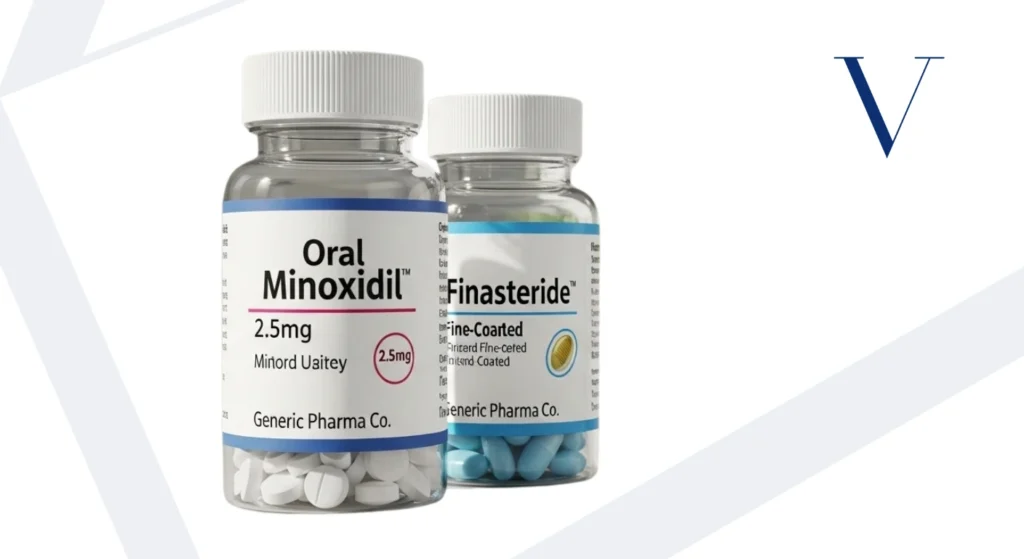
Which Is Better for Thinning Hair: Minoxidil or Finasteride?
When patients ask which is better for thinning hair, oral minoxidil or oral finasteride, the answer depends largely on the specific treatment goal. If the primary concern is improving hair thickness, strength, and overall volume, oral minoxidil is usually the preferred option. It works by stimulating hair follicles, extending the growth phase, and increasing hair shaft diameter, which leads to visibly thicker and healthier hair strands.
On the other hand, if the main goal is to stop hair loss progression and protect existing hair, oral finasteride plays a crucial role. By blocking DHT, finasteride helps prevent further follicle miniaturisation and reduces ongoing hair thinning, making it an essential long-term maintenance treatment.
For this reason, many doctors recommend combination therapy, where oral minoxidil is used to actively improve hair thickness and regrowth, while oral finasteride is used to preserve these results over time. This combined approach often provides the most balanced and effective solution for patients with thinning hair and androgenetic alopecia.
Vagus Hair Transplant: Combining Advanced Hair Restoration with Medical Therapy
In cases of advanced hair loss, medical therapy alone may not be sufficient to restore adequate hair density. This is where Vagus Hair Transplant plays a critical role. Hair transplantation effectively restores hair in areas where follicles have become inactive or permanently miniaturised, while medical treatments such as oral minoxidil and oral finasteride help strengthen existing hair and support the long-term survival of transplanted follicles.
Safety: Oral Minoxidil vs Finasteride
When used under proper medical guidance, both oral minoxidil and oral finasteride are considered safe and effective for treating hair loss. However, each medication has a different safety profile that patients should understand before starting treatment.
Oral minoxidil, when prescribed in low doses, is generally well tolerated. Some patients may experience mild side effects such as fluid retention or increased body hair growth, which are usually dose-dependent and manageable with medical supervision.
Oral finasteride is also well tolerated by most patients. In a small percentage of individuals, hormonal side effects may occur, but these are considered rare and often reversible after discontinuation.
Because both medications affect the body differently, they should always be taken under the supervision of a qualified medical professional to ensure safety, proper dosing, and long-term effectiveness.
Final Conclusion
When comparing oral minoxidil vs oral finasteride for hair loss, oral minoxidil is superior for hair shaft thickness improvement, while finasteride plays a crucial role in long-term hair preservation. For best results, especially in patients considering Vagus Hair Transplant, a combined medical and surgical approach offers the most effective and natural-looking outcome.
At Vagus Hair Transplant, advanced transplant techniques are combined with personalised medical therapy to optimise overall results. This integrated approach helps improve hair shaft thickness in non-transplanted areas, enhances the growth and quality of transplanted hair, and maintains long-term hair density with natural-looking outcomes. By addressing both hair restoration and hair preservation, Vagus Hair Transplant delivers more predictable, stable, and lasting results for patients with androgenetic alopecia.
Frequently Asked Questions
Does oral minoxidil increase hair shaft thickness?
Yes, oral minoxidil directly increases hair shaft diameter by stimulating follicle growth.
Does finasteride thicken hair?
Finasteride mainly prevents hair thinning; it does not directly thicken hair shafts.
Is oral minoxidil better than finasteride?
For hair thickness, yes. For stopping hair loss, finasteride is essential.
Can oral minoxidil reverse hair thinning?
It can partially reverse early thinning, especially when combined with finasteride.