The Complete Guide to Hair Transplants for Grey Hair Recipients: Everything You Need to Know
process, timeline & Expert Tips
Hair Transplants for Grey Hair is highly effective, with modern procedures yielding excellent results. Grey hair follicles are not weaker or less viable than pigmented hair, so they can be successfully transplanted using techniques like FUE, FUT, or DHI. The transplanted hair will age in line with the natural greying process of the donor area, ensuring a seamless blend.
Despite common myths, grey hair transplants provide natural, permanent results, and any concerns about accelerated greying or unnatural appearance are unfounded. With careful surgeon selection and realistic expectations, grey hair recipients can enjoy enhanced volume and confidence.
This comprehensive guide covers the science behind greying, why grey hair can be successfully transplanted, expert procedures available in Islamabad, cost considerations, and proven strategies to maintain your restored hair. By the end, you’ll have the confidence to make an informed decision about your hair restoration journey.
UNDERSTANDING HAIR COLOUR AND GREYING
How Hair Gets Its Color: The Science of Melanin
What Is Melanin and How Does It Work?
Melanin is manufactured by specialised cells called melanocytes, located at the base of each hair follicle. These cells produce two main types of melanin:
– Eumelanin: Responsible for brown and black tones
– Pheomelanin: Creates red and blonde hues
The combination and concentration of these melanins determine your unique hair colour. As new hair grows, melanin is deposited into the hair shaft, giving it pigmentation. This process occurs continuously throughout your life until the onset of greying begins.
When Does Hair Naturally Turn Grey?
Hair greying is largely determined by genetics and ethnicity. According to dermatological research, the average timeline varies:
– Caucasians: 50% grey by mid-30s
– Asians: 50% grey by late-30s
– African populations: 50% grey by mid-40s

However, individual variation is significant. Some people start greying in their 20s, while others remain pigmented well into their 60s. Your family history is the strongest predictor of when you’ll start greying.
Why Hair Turns Grey: The Complete Science
Grey hair isn’t simply white hair; it’s actually a mix of pigmented and unpigmented hairs. Understanding the mechanisms behind greying helps explain why grey hair transplants work just as well as pigmented transplants
Genetic Predisposition (Primary Factor)
Genetics account for 60-80% of greying variation. Specific genes control how efficiently your melanocytes produce pigment and how long they survive.
If your parents greyed early, there’s a strong likelihood you will too.
The process is largely predetermined by your DNA. No amount of stress management or nutritional optimisation can override genetic programming, though these factors can accelerate greying in predisposed individuals.
The Hydrogen Peroxide & Catalase Connection
Greying hair is linked to the accumulation of hydrogen peroxide (H₂O₂) in hair follicles. As we age, catalase production decreases, leading to H₂O₂ buildup.
This oxidative stress damages melanocytes and bleaches the hair shaft.
While research suggests boosting catalase levels may reverse greying, it’s currently irreversible once melanocytes are damaged, explaining why grey hair is permanent in most cases.
Melanocyte Stem Cell Depletion
Your body holds melanocyte stem cells that replenish pigment-producing cells. With age, these stem cells deplete or malfunction, preventing the follicle from producing pigmented hair.
This depletion is progressive and permanent with current medical technology.
However, the follicles remain healthy; only their ability to produce pigment changes, explaining why hair loss and greying are separate processes.
Beyond Genetics: Environmental & Lifestyle Factors Contributing to Greying
Nutritional Deficiencies
Key nutrients for melanin production include Vitamin B12, Iron, Copper, and Zinc.
B12 is crucial for melanocyte function, with deficiency linked to premature greying. Iron and Copper support melanin synthesis, while Zinc maintains melanocyte health.
Studies show vegetarians and vegans are more prone to premature greying due to lower B12. Supplementing these nutrients before a hair transplant may enhance graft health.
Chronic Stress & Cortisol
Chronic stress increases cortisol, which can damage melanocytes, trigger inflammation in hair follicles, and impair immune function, leading to hair shedding.
This stress-greying connection is real.
Managing stress through meditation, exercise, and adequate sleep helps improve overall hair health, potentially slowing greying and reducing hair loss by supporting both melanocyte function and follicle health.
Smoking & Air Pollution
Smoking accelerates premature greying by generating free radicals that damage melanocytes and reduce blood flow to follicles.
Former smokers often see improved hair health after quitting. Medical conditions linked to early greying include Vitiligo, thyroid disorders, pernicious anaemia, and alopecia areata.
If you have any of these, discuss them during your hair transplant consultation, as they may affect pre-operative planning, but don’t disqualify you.
Hair Transplants for Grey Hair
This is the most important question for grey-haired candidates: Will my grey hair transplant work?The answer is unequivocally yes. Grey hair transplants have the same success rates as pigmented hair transplants, according to guidelines from the International Society of Hair Restoration Surgery (ISHRS).
Debunking the Myth: Grey Hair Isn’t Healthy Enough. Many patients assume grey hair is inherently weaker or less viable than pigmented hair. This is false.
Grey hair follicles have identical structure and biology to pigmented follicles. The only difference is pigmentation—not health, strength, or viability. Research consistently shows:
– Graft survival rates: 85-95% for both grey and pigmented hair
– Growth initiation: No difference in timeline
– Long-term durability: Grey transplanted hair performs identically
The reason? Grey hair is still hair. It has the same protein structure, growth cycle, and biological mechanisms. It simply lacks melanin pigment.
The Principle of Donor Dominance
Here’s the key principle that makes grey hair transplants successful: donor dominance.
Hair follicles maintain their genetic characteristics regardless of where they’re transplanted. When hair from your scalp’s back and sides (donor area) is transplanted to thinning areas, it retains all the properties of the donor region including:
– Resistance to hair loss
– Pigmentation patterns
– Growth cycle timing
– Diameter and texture
This is true regardless of whether the hair is grey or pigmented.
If your donor hair is grey, the transplanted hair will follow the same greying pattern as your donor area would have. You won’t develop new grey hair after transplantation only the natural progression that would have occurred anyway.
Grey Hair Transplant Success Rates & Clinical Evidence
Grey hair transplantation shows excellent outcomes, with a graft integration rate of over 90% within 3-4 months and lifelong permanent hair retention (if donor area genetics apply).
Patient satisfaction is often higher than with pigmented hair transplants due to the aesthetic advantage of natural blending.
Grey hair follicles are not weaker or more prone to complications than pigmented ones. Age-related factors, such as scalp health, circulation, nutrition, and medical conditions, matter more.
Graft survival rates for both FUE and FUT methods are 95%, with implantation success at 85-90%.
Hair growth typically begins 3-4 months after the procedure, regardless of hair pigmentation.
Natural Blending Advantages of Grey Hair
Grey hair transplants offer distinct aesthetic advantages:
Seamless blending: Grey naturally integrates with existing mixed-pigment hair
No visible demarcation: Unlike dark hair on a light scalp, grey hair blends smoothly
Dimensional appearance: The mix of grey and pigmented hair creates a fuller look
Age-appropriate results: Grey restoration looks naturally mature, avoiding the “pluggy” appearance
Surgeons often prefer working with grey hair recipients due to the superior aesthetic outcomes. The natural blending and mature appearance tend to result in more satisfying results compared to younger patients with dense black hair.
HAIR TRANSPLANT PROCEDURES FOR GREY HAIR

Follicular Unit Extraction (FUE) for Grey Hair
FUE involves individually extracting follicular units using a specialised micromotor punch tool.
How it works:
1. Local anaesthesia applied to the donor area (back/sides of scalp)
2. Individual follicular units extracted one by one
3. Grafts dissected and inspected for quality
4. Recipient sites created in thinning areas
5. Grafts implanted with precise directional control
Advantages:
– Minimal scarring (imperceptible with short hair)
– Precise graft selection (surgeon can choose grey/pigmented mix)
– Natural-looking results with artistic control
– Faster healing than FUT
Timeline
– Procedure: 4-8 hours, depending on graft count
– Visible healing: 7-10 days
– Full recovery: 2-3 months
Why FUE is popular for grey hair
With FUE, your surgeon can selectively harvest grafts to achieve optimal colour balance in the recipient area. This level of control is ideal for creating natural-looking results with mixed pigmentation.
Follicular Unit Transplantation (FUT)
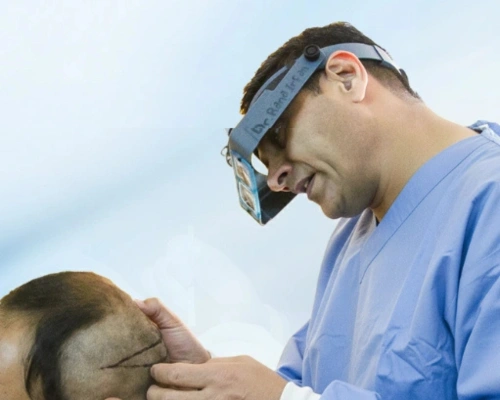
FUT uses a strip-harvesting technique where a thin strip of scalp is removed from the donor area.
Process:
1. Local anaesthesia applied
2. Thin strip (typically 1-1.5cm wide) harvested from the donor area
3. Scalp wound closed with sutures
4. Strip dissected into individual grafts
5. Recipient sites created and grafts implanted
Advantages:
– Higher graft yield (more grafts per session)
– Cost-effective
– Excellent for extensive hair loss
– Equally effective with grey hair
Timeline
– Procedure: 4-8 hours
– Visible healing: 2-3 weeks
– Suture removal: 10-14 days
– Full recovery: 3-4 weeks
Disadvantage
FUT leaves a linear scar in the donor area. This is only visible if you wear hair very short. Many patients are comfortable with this trade-off for the higher graft count.
Direct Hair Implantation (DHI)
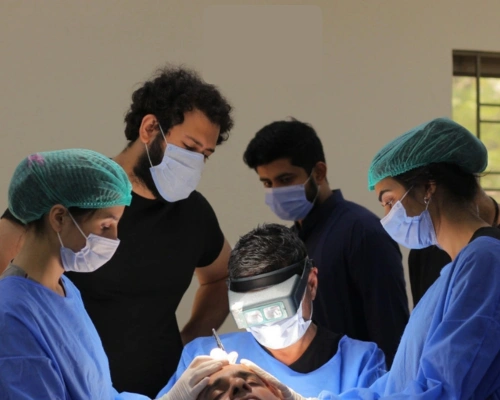
DHI is an advanced technique combining extraction and implantation without separate recipient site creation.
Process:
1. Follicles extracted individually (like FUE)
2. Implanted directly into recipient areas using a specialised DHI pen
3. No pre-made recipient incisions
4. Precise angle and direction control for each graft
Advantages:
– Most artistic control over graft placement
– Ideal for mixed grey/pigmented hair scenarios
– Minimally invasive
– Excellent for sensitive scalps
Cost
DHI (Direct Hair Implantation) usually costs 20-30% more than FUE (Follicular Unit Extraction) because it requires greater precision and longer operative time for a more meticulous hair transplantation process.
Grey hair consideration
DHI is highly effective for grey hair patients, as it allows the surgeon to position each graft with precision, ensuring a seamless blend with the existing hair for a natural, aesthetic result.
Pre-Transplant Assessment for Grey Hair Recipients
Donor Area Analysis & Colour Mapping
Your surgeon performs a detailed evaluation before recommending a specific approach.
What’s assessed:
– Percentage of grey hair in donor region (back and sides)
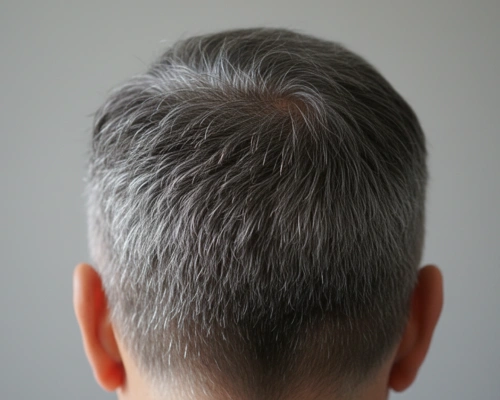
– Distribution pattern (uniform grey vs. salt-and-pepper)
– Hair density and calibre
– Overall donor area supply
Colour mapping process:
Your surgeon creates a “hair map” showing:
– Grey hair density zones
– Pigmented hair zones
– Optimal graft selection areas
– Realistic coverage achievable
Example: If your donor area is 60% grey and 40% pigmented, your surgeon will discuss this ratio and how it affects your transplant results.
Recipient Area Preparation
Careful design planning ensures natural-looking results.
Design considerations:
– Hairline shape that complements your face and age
– Density that matches your scalp’s existing hair
– Directional flow that looks natural
– Integration point between transplanted and existing hair
Medical History & Suitability
Your surgeon assesses:
– Overall health and surgical candidacy
– Medications affecting healing or graft success
– Nutritional status (B12, iron, minerals)
– Medical conditions affecting hair health
– Age (no upper limit; suitability individual)
GREY HAIR TRANSPLANTS IN ISLAMABAD

Why Islamabad Is a Leading Hair Transplant Hub
Islamabad has emerged as a world-class destination for hair restoration procedures, particularly for grey hair transplantation.
Reasons Islamabad excels:
– ISHRS-certified surgeons with 15-20+ years of experience
– State-of-the-art facilities with advanced technology
– Competitive pricing (50-70% less than Western clinics)
– Comprehensive post-operative care programs
– High success rates with international patient testimonials

Choosing a Qualified Surgeon for Grey Hair Transplants
When evaluating a surgeon for grey hair transplants, check their ISHRS membership, board certification.
Minimum 10+ years hair transplant experience
Ask about their grey hair-specific cases, graft survival rate, revision rate, and colour matching techniques.
Avoid surgeons with unclear pricing or those who guarantee results.
What to Expect During Your Islamabad Consultation
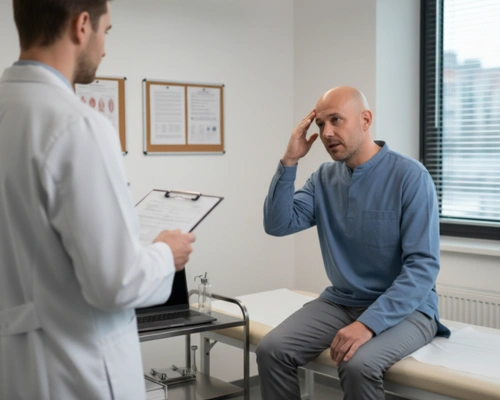
Consultation formats: virtual, in-person, or a combination. Typical timeline: 45-90 minutes.
Components include medical history review, hair/scalp examination, design discussion, procedural explanation, cost breakdown, and post-operative care plan.
Topics covered: medications, hairline design, graft count, pricing, recovery timeline, and follow-up schedule.
COST & FINANCIAL CONSIDERATIONS
Cost Factors Details
Graft Count Needed 1,500 – 5,000 grafts (average)
Cost per Graft $1 – $3 in Islamabad (vs. $4 – $8 in Western clinics)
Surgical Technique FUE ($3,000 – $8,000) vs. FUT ($2,000 – $5,000)
Surgeon Experience Senior surgeons cost more than junior surgeons
Facility Quality Premium clinics charge 10-15% more
Example cost scenarios
-Hairline/temple restoration (1,500 grafts, FUE): $3,500-5,000
– Moderate hair loss (2,500-3,000 grafts, FUE): $5,000-8,000
– Extensive restoration (4,000-5,000 grafts, FUT): $4,000-7,000
All-Inclusive Packages
-Most reputable clinics in Islamabad offer packages including:
– Consultation and design
– Anesthesia
– Surgical fees
– Grafts
– Post-operative medications (minoxidil, antibiotics, pain relief)
– Follow-up appointments (6 months)
What's typically NOT included
– Travel and accommodation
– International airfare
– Additional medications beyond 6 months
– Cosmetic procedures (eyebrow transplants, etc.)
PROCEDURE & RECOVERY TIMELINE
Pre-Operative Preparation (1-2 Weeks Before)
Hair and Scalp Care
– Hair length: Trim hair to ¼ inch (6mm) in donor and recipient areas
– Hair washing: Use gentle shampoo 2 days before surgery
– Scalp health: Treat any dandruff or conditions with medicated shampoo
– Moisturization: Keep scalp naturally hydrated (avoid excess oils)
Medications to Modify or Stop
Stop 1-2 weeks before:
– Aspirin and blood thinners (warfarin, apixaban)
– NSAIDs (ibuprofen, naproxen)
– Vitamin E supplements (high doses)
– Herbs: St. John’s Wort, ginkgo, garlic, ginger supplements
Lifestyle Modifications
-Smoking: Quit at least 2 weeks before (worsens healing)
– Alcohol: Avoid 5-7 days before (increases bleeding)
– Caffeine: Limit intake (increases heart rate)
– Exercise: No strenuous activity 1 week before
– Sleep: Get 8+ hours nightly (supports healing)
– Nutrition: Eat protein-rich foods (supports graft health)
– Hydration: Drink 2-3 litres of water daily
Day-of Preparation
– Clothing: Wear loose, comfortable clothes (button-up recommended)
– Transportation: Arrange for someone to drive you (anaesthesia effects)
– Items to bring: ID, insurance card, emergency contact information
– Arrive early: Plan for 15-30 minutes check-in
The Transplant Day Procedure (4-8 Hours)
Phase 1: Anesthesia Application (15-20 min)
– Local anaesthesia are injected into the donor area
– Local anaesthetsia are injected into the recipient area
– Small test area numbered to confirm effectiveness
– Mild sedation may be offered for anxiety
– Pain level: Slight pressure and minimal discomfort; no pain
Phase 2: Donor Area Extraction (2-4 hours)
For FUE technique:
1. Surgeon uses a precision motorised punch tool
2. Extracts individual follicular units
3. Grafts placed in a sterile solution immediately
4. Donor area carefully cleaned as extraction progresses
5. Minimal bleeding; kept under control with gentle pressure
For FUT technique:
1. Surgeon removes a thin strip from the donor area
2. Area immediately sutured (typically 1-3 stitches)
3. Minimal discomfort with local anaesthesia
4. Strip transported to the dissection area
Phase 3: Graft Dissection and Recipient Site Creation
Surgeon creates tiny incisions in the recipient area:
– Precise angle matching natural hair growth
– Optimal depth for graft placement
– Spacing ensures density looks natural
– Blade depth: 1-2mm
Surgeon creates tiny incisions in recipient area:
– Precise angle matching natural hair growth
– Optimal depth for graft placement
– Spacing ensures density looks natural
– Blade depth: 1-2mm
Phase 4: Graft Implantation (1-2 hours)
– Grafts inserted into recipient sites one-by-one
– Natural directional flow maintained
– Symmetry checked throughout
– Final count documented
– Each graft positioned for optimal growth and appearance
Recovery Timeline: Weeks 1-12
Week 1: Initial Healing & Bandage Removal
- In the first 3 days, keep bandages in place, elevate your head while resting, and manage minimal pain with medication.
- Days 4-7 include bandage removal, gentle shampooing at the clinic, and scab formation.
- Mild itching and tenderness are normal.
- Avoid exercise, heavy lifting, swimming, saunas, and direct water pressure for the first week. No high heat on your scalp.


Week 2-3: Scab Formation & Flaking
- In weeks 2-3, scabs form and naturally fall off, and mild swelling and itching may occur.
- Some graft shedding is normal.
- Avoid picking scabs to prevent graft disruption and infection.
- Follow proper scab care: gentle washing, soft-bristled brush, and moisturising.
- Light walking and desk work are allowed, but avoid heavy exercise and contact sports.
Month 2: Shock Loss Period (Weeks 4-8)
- Shock loss is normal during months 2-3, with 50-80% of transplanted hair shedding as follicles enter dormancy.
- This isn’t permanent, as hair will regrow in 2-4 weeks. Psychological management involves patience and tracking progress with baseline photos.
- Light exercise and normal hair washing are allowed, but avoid strenuous activities, contact sports, and swimming.
- Shock loss typically resolves by months 3-4.

Month 4-6: Hair Growth Begins & Density Increases
- Between months 4-6, new hair begins growing and existing hair regrows, with density increasing over time.
- Initially, hair is fine and grows at a rate of 1/2 inch per month, becoming thicker later.
- By month 6, there’s about 1 inch of new hair.
- Normal activities, including exercise, contact sports, and swimming, can resume.
Continue gentle hair care, conditioning, and consider using minoxidil to support growth.
Month 9-12: Full Results Emerging
- By months 9-12, 60% of final density is achieved, with hair becoming thicker and growing at ½ inch per month.
- Hair behaves like natural hair, and full styling is possible.
- By month 12, 90%+ of transplanted hairs are growing, with results appearing completely natural.
- Full density is typically achieved by month 12-18. Patients report significant transformation and improvement.
Post-Operative Care: Critical Steps for Grey Hair Success
In the first week after hair transplant surgery, it’s crucial to follow strict care guidelines. Bandages must stay dry and be changed as needed, while pain management includes acetaminophen and ice packs. Sleeping with the head elevated helps reduce swelling. Scalp hygiene should be maintained without washing for the first 7 days, and activity should be limited to light walking. Weeks 2-4 involve gentle hair washing with prescribed cleansers and moisturizing. Exercise gradually resumes, with full activities allowed after month 3. Avoid strenuous activities, excessive sweating, and harsh environmental exposure during the healing process. Sun exposure should be limited, and water exposure should be avoided for the first 2 weeks.
Nutritional Support for Hair Growth
Post-hair transplant, focus on a protein-rich diet (1.5-2g per kg) with sources like chicken, fish, and legumes to support hair growth. Include key nutrients like Vitamin B12, iron, zinc, copper, and selenium to enhance graft integration and follicle health. A balanced sample day could include Greek yogurt, grilled chicken, and baked salmon. Consider supplements like Vitamin B12, biotin, and omega-3 for additional support. Always consult your clinic for specific supplementation needs.
Hair Care Products for Transplanted Grey Hair
In the first three months post-transplant, use gentle, sulfate-free shampoos and hydrating conditioners to maintain scalp health. Growth-supporting serums like biotin or minoxidil can be added after month 2. Lightweight oils and scalp treatments promote healing, while harsh products like alcohol-based items, hair dye, and hot tools should be avoided. For grey hair care post-month 3, use purple-toning shampoos, moisturizing masks, and anti-frizz products, along with UV protection to prevent yellowing.
MANAGING GREY HAIR POST-TRANSPLANT
Colour Matching Strategies for Grey Hair Transplants
One of the advantages of grey hair transplants is the opportunity for strategic colour blending.
Understanding Your Donor Hair Colour Profile: Your surgeon evaluates your donor area during consultation
– Salt-and-pepper pattern: Mix of grey and pigmented hair (ideal for blending)
– Fully grey donor: All grey hair (creates uniform grey appearance)
– Pigmented donor: Mostly dark hair (allows selective harvesting of grey grafts)
Pre-transplant hair examination:
Your surgeon takes detailed photos of:
– Donor area colour distribution
– Exact percentage of grey
– Pigmented areas location
– Overall colour pattern
This becomes the blueprint for graft selection and placement.

Achieving Natural Blending Results
Strategic graft placement involves tailoring the hairline, mid-scalp, and crown with a mix of pigmented and grey grafts for a natural look. The hairline typically features pigmented grafts, while grey grafts are used in the crown to blend with existing hair.
The angle, direction, and density of the grafts mimic natural hair growth patterns. A mix of single-hair, pigmented, and grey grafts creates dimensional fullness. Results are age-appropriate, with gradual colour transitions for a natural appearance.
Hair Dyeing and Colouring After Transplant
You can dye transplanted grey hair, but timing is crucial. Avoid dyeing during the first 3 months as grafts are still integrating and the scalp is sensitive.
Between months 4-6, consult with your surgeon and use gentle, ammonia-free dyes.
After 6 months, it’s safe to dye the hair with any dye type, following normal protocols. For optimal safety, wait until month 6 before dyeing.
Debunking Myths, Addressing Concerns: Your Truth Behind the Gray Hair Transplant
Myth 1: Transplanted Grey Hair Will Turn Greyer Faster
Reality: Greying rate follows donor area genetics, not transplant status. Your transplanted hair will age exactly as your donor hair would have. If your donor area greyed slowly (staying 20% grey at age 60), transplanted hair will follow the same timeline. The transplant procedure itself doesn’t accelerate greying.
Myth 2:Grey Hair Won’t Grow Back Pigmented
Reality: Hair follicles maintain their genetic “memory.”
Once a follicle is genetically programmed to produce grey hair, no procedure reverses that. However, this is a feature, not a bug, because your transplanted hair will retain the healthy genetics of your donor area.
Myth 3:I Should Remove Grey Hair From the Donor Area First
Reality: Removing healthy grey grafts wastes your precious donor supply.
You have approximately 6,000-8,000 harvestable follicles. Removing any is wasteful. Grey hair grafts:
– Perform identically to pigmented grafts
– Help create natural, dimensional results