Topical finasteride for hair loss is an effective solution for those struggling with male and female pattern baldness. By applying finasteride directly to the scalp, it targets hair loss more locally, reducing the risk of systemic side effects associated with oral finasteride. In this comprehensive guide, we’ll explore how topical finasteride works, its benefits, side effects, and how it compares to oral finasteride. We’ll also cover practical advice on how to use it effectively, who should consider it, and answer some frequently asked questions to help you make an informed decision.
Introduction to Topical Finasteride
What is Topical Finasteride?
Topical finasteride is a medication used to treat hair loss, particularly male and female pattern baldness. Unlike the oral form of finasteride, which works by inhibiting the enzyme 5-alpha reductase throughout the body, topical finasteride is applied directly to the scalp. This localized treatment helps to block the production of dihydrotestosterone (DHT) in the scalp, a hormone responsible for hair thinning and follicle miniaturization. Topical finasteride for hair loss provides a direct, targeted approach to restore hair growth, while minimizing the risk of side effects typically seen with oral finasteride.
How Does Topical Finasteride Differ from Oral Finasteride?
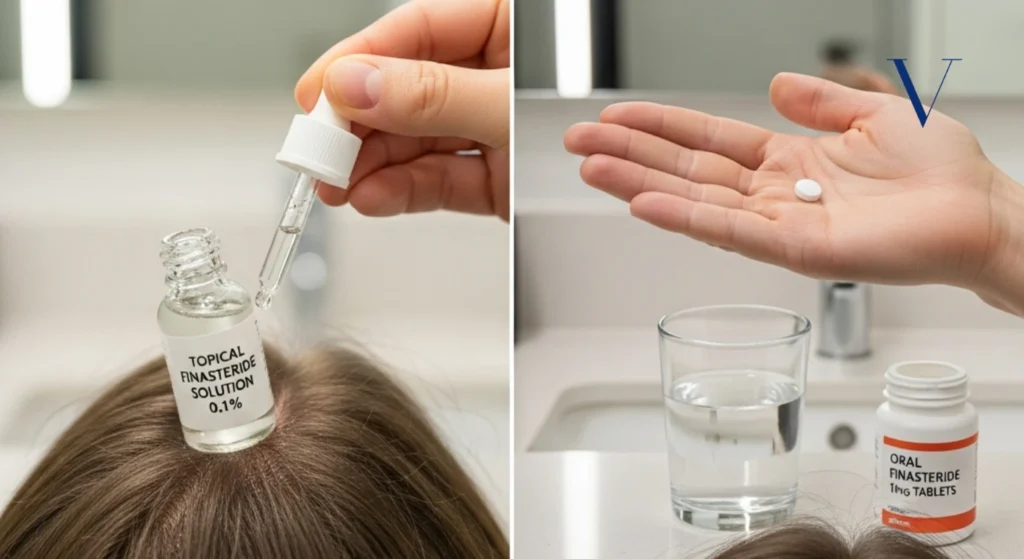
The main difference between topical finasteride and oral finasteride is the way they are administered and absorbed by the body. Oral finasteride is taken in pill form and works systemically, affecting the entire body, including sexual function and other potential side effects like mood swings. On the other hand, topical finasteride is applied directly to the scalp, allowing for a more localized treatment. This reduces the risk of systemic side effects, making it an appealing option for those who want the benefits of finasteride without experiencing the common adverse effects.
How Topical Finasteride Works for Hair Loss
Mechanism of Action: Blocking DHT to Promote Hair Growth
The primary mechanism behind finasteride’s effectiveness in treating hair loss is its ability to block DHT, a derivative of testosterone that causes hair follicles to shrink. DHT binds to receptors in the scalp, leading to the miniaturization of hair follicles and eventually hair loss. By inhibiting the enzyme 5-alpha reductase, which is responsible for converting testosterone into DHT, finasteride helps to prevent hair follicle shrinkage and promotes healthy hair growth. Topical finasteride works by directly applying the medication to the affected areas, concentrating its effects where it’s needed most.
The Science Behind Topical vs. Oral Finasteride
While both oral and topical finasteride work by inhibiting DHT, the key difference lies in their absorption and systemic effects. Oral finasteride is absorbed into the bloodstream and affects the entire body, including areas that might not be affected by hair loss. This can result in unwanted side effects such as sexual dysfunction, reduced libido, and mood changes. Topical finasteride, however, targets the scalp directly, ensuring that DHT inhibition occurs precisely where hair loss is happening. This localized application results in fewer systemic side effects, making it a safer alternative for many individuals.
Benefits of Topical Finasteride for Hair Loss
Localized Treatment with Fewer Side Effects
One of the most significant benefits of using topical finasteride is its ability to target the specific area of hair loss. By applying the medication directly to the scalp, it delivers a concentrated dose of finasteride to the hair follicles, maximizing its effectiveness. This localized treatment also reduces the risk of systemic side effects, such as sexual dysfunction and hormonal imbalances, which are associated with oral finasteride.
Effectiveness at Various Stages of Hair Loss
Topical finasteride is effective at various stages of hair loss. Whether you’re just starting to notice thinning hair or dealing with more advanced baldness, topical finasteride can help restore hair growth. It is particularly effective in the early to middle stages of hair loss, when hair follicles are still active but have begun to shrink due to DHT. In cases of more severe hair loss, topical finasteride may help slow further hair thinning and promote regrowth in some individuals.
Related: Is Oral Medication Effective for Hair Loss Treatment?
Is Topical Finasteride Effective for Hair Loss?
Clinical Evidence Supporting Topical Finasteride
Numerous clinical studies have shown that topical finasteride can be an effective treatment for hair loss. Research has demonstrated that applying finasteride directly to the scalp results in significant improvements in hair density, regrowth, and thickness, with fewer side effects compared to oral finasteride. A study published in the Journal of Dermatology found that topical finasteride was just as effective as oral finasteride in treating male pattern baldness, but with a lower incidence of sexual side effects.
User Testimonials and Case Studies
Many users have reported positive results after using topical finasteride. Testimonials and case studies show that consistent use of topical finasteride can lead to noticeable improvements in hair density and growth. For example, Dr. Rana Irfan, a renowned dermatologist and hair restoration expert, has seen successful outcomes with topical finasteride in his practice, particularly for patients who experience side effects from oral treatments.
Safety and Side Effects of Topical Finasteride
Common Side Effects and How to Manage Them
While topical finasteride has fewer side effects than its oral counterpart, some users may still experience mild scalp irritation, redness, or itching. These side effects are typically temporary and subside as the scalp adjusts to the medication. In rare cases, users may experience dizziness or headaches. If side effects persist or worsen, it is essential to consult a healthcare provider for advice.
Comparing Side Effects: Topical vs. Oral Finasteride
Oral finasteride is associated with more significant systemic side effects, including sexual dysfunction, reduced libido, and mood changes. These side effects are much less common with topical finasteride, as it is applied directly to the scalp and is not absorbed into the bloodstream in significant amounts. For individuals concerned about the side effects of oral finasteride, topical finasteride offers a safer alternative.
How to Use Topical Finasteride for Hair Loss
Step-by-Step Guide for Application
- Cleanse the Scalp: Begin by washing your hair and scalp with a gentle shampoo to remove dirt and oils.
- Apply the Finasteride Solution: Use the dropper to apply the topical finasteride directly to the affected areas of your scalp.
- Massage Gently: Massage the solution into your scalp for a few minutes to ensure it is evenly distributed.
- Let It Dry: Allow the solution to dry before styling your hair or applying other products.
Recommended Dosage and Frequency of Use
The standard dosage for topical finasteride is typically 1 mL applied to the affected areas once daily. It’s important to adhere to your healthcare provider’s guidance on dosage and frequency. Most users will see noticeable results within 3 to 6 months of consistent use.
Topical Finasteride vs Oral Finasteride
Pros and Cons of Topical Finasteride
Pros:
- Fewer side effects, especially sexual dysfunction
- Direct application to the scalp for targeted results
- Easier to use for individuals who are sensitive to oral medications
Cons:
- Requires daily application
- May be less effective in advanced stages of hair loss compared to oral finasteride
Who Should Consider Topical Finasteride Over Oral Finasteride?
Topical finasteride is ideal for individuals who are concerned about the side effects of oral finasteride, particularly those who experience sexual dysfunction or other systemic side effects. It’s also a good choice for those with mild to moderate hair loss who want a more targeted treatment option.
Where to Buy Topical Finasteride
Trusted Sources for Purchasing Topical Finasteride
Topical finasteride is available through licensed pharmacies and online retailers. It is essential to purchase it from a trusted source, such as a pharmacy recommended by your healthcare provider or a reputable online platform. Be cautious of purchasing from unverified sources to avoid counterfeit products.
Comparing Costs: Topical Finasteride vs. Other Hair Loss Treatments
Topical finasteride is generally more affordable than oral finasteride, but the cost may vary depending on the brand and the quantity purchased. It is essential to compare the price of topical finasteride with other hair loss treatments like minoxidil to ensure it fits within your budget.
Conclusion: Should You Try Topical Finasteride for Hair Loss?
Final Thoughts on Using Topical Finasteride
Topical finasteride for hair loss is an effective treatment option for those looking to restore hair growth while minimizing side effects. It’s an excellent alternative for individuals who experience adverse side effects from oral finasteride or want a more targeted solution. With regular use and proper guidance from a healthcare provider, topical finasteride can help achieve noticeable results.
Consulting a Healthcare Provider Before Starting Treatment
Before starting any hair loss treatment, including topical finasteride, it is essential to consult with a healthcare provider to determine if it’s the right option for you. A professional can guide you on the proper dosage, frequency of use, and help you manage any potential side effects.
Frequently Asked Questions
Can I Use Topical Finasteride with Other Treatments?
Yes, topical finasteride can be used in combination with other hair loss treatments, such as minoxidil. However, it’s essential to consult a healthcare provider before combining treatments to ensure safety and efficacy.
How Long Does It Take to See Results from Topical Finasteride?
Most users begin to see visible results within 3 to 6 months of consistent use. However, individual results may vary, and some users may take longer to notice significant improvements.