Laser Hair Transplant with Laser Technology: The Complete Guide to Laser-Assisted Hair Restoration
Discover the revolutionary approach to hair restoration using advanced laser technology. Learn how laser-assisted hair transplants deliver superior results with minimal invasiveness, faster recovery times, and industry-leading success rates.
Laser Hair Transplant with Laser Technology combines advanced laser techniques with traditional hair restoration methods for a minimally invasive and precise procedure. This innovative approach promotes faster healing, reduces discomfort, and enhances the overall success of the transplant. By stimulating hair follicles with laser energy, it improves hair growth and thickness, offering a more effective solution for those struggling with hair loss
Revolutionizing Hair Restoration with Laser-Assisted Hair Transplant Technology
What is Laser-Assisted Hair Transplant?
Laser-assisted hair transplant represents a significant advancement in hair restoration technology, combining traditional hair transplantation techniques with the precision of advanced laser. This innovative approach uses laser technology to enhance every stage of the transplant procedure, from donor hair extraction to recipient site preparation and post-operative healing stimulation.
Unlike conventional hair transplants, laser-assisted procedures utilise focused laser energy to create micro-incisions with unprecedented accuracy, improve blood flow stimulation, reduce tissue trauma, and promote faster healing. This cutting-edge methodology has become the gold standard for those seeking the most advanced hair restoration solutions, particularly at specialised clinics like Vagus Hair Transplant in Islamabad, where we combine expertise with the latest technology.
The technology represents the convergence of multiple scientific disciplines, dermatology, ophthalmology, and regenerative medicine, to achieve results previously impossible. By harnessing the power of laser light at specific wavelengths, surgeons can now perform hair transplantation with surgical precision that rivals and exceeds manual techniques.
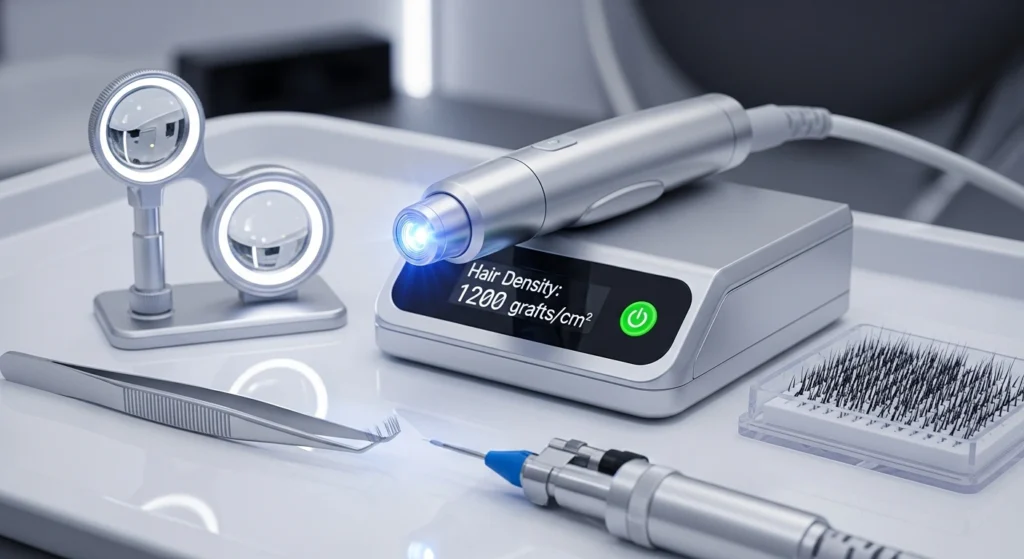
Core Technologies Used in Modern Laser Hair Transplants
▸Diode Laser Technology (808nm-1064nm)
Provides optimal wavelength for precise skin penetration and minimal thermal damage to surrounding tissue. These wavelengths are specifically chosen because they penetrate to the depth of hair follicles while being absorbed by melanin in follicular tissue. Perfect for creating clean micro-incisions, stimulating follicle activation, and promoting healing through photobiomodulation.
▸Low-Level Laser Therapy - LLLT (600-1000nm)
Low-level laser therapy stimulates cellular activity and promotes healing through photobiomodulation by activating the mitochondrial cytochrome c oxidase enzyme. Increases ATP production in cells, accelerating tissue repair, reducing inflammation, and encouraging new hair growth. It can be used both during the procedure and during the post-operative phase for enhanced results.
▸Er:YAG Laser Systems (2940nm)
Erbium-doped yttrium aluminium garnet lasers are highly absorbed by water, enabling precise ablation of tissue layers with minimal thermal damage. Enables ablative techniques for precise channel creation in recipient areas. Promotes collagen remodelling and enhanced blood circulation, resulting in superior graft survival rates and natural-looking hair growth patterns.
▸Robotic Laser-Assisted Extraction (AI-Guided)
Utilises artificial intelligence-guided laser systems for automated, consistent donor hair extraction with sub-millimetre precision. Minimises damage to surrounding follicles and maximises graft viability. Reduces extraction time, decreases transection rates, and improves overall procedural efficiency while maintaining tissue integrity.
Evolution of Hair Transplant Technology
Hair transplantation has evolved significantly over the past two decades. Early methods such as Strip Technique (FUT) and basic Follicular Unit Extraction (FUE) have given way to laser-assisted techniques that offer superior precision and patient comfort. At Vagus Hair Transplant in Islamabad, we utilise the latest laser technology, representing the pinnacle of hair restoration science.
1990s-2000s: Strip Technique (FUT) dominates; high scarring; up to 3-week recovery
2000s-2010s: Manual FUE emerges; reduced scarring; labor-intensive with variable results
2010s-Present: Laser-assisted and robotic systems introduce precision, consistency, and enhanced healing
Current Era: Hybrid laser systems combine multiple wavelengths for extraction, implantation, and post-op stimulation
Benefits of Laser Hair Transplant
Laser-assisted hair transplants offer a comprehensive array of benefits that extend far beyond traditional methods. These advantages affect every aspect of the procedure and recovery process, resulting in superior outcomes for patients.
Enhanced Precision & Accuracy
Laser technology allows surgeons to create micro-channels with sub-millimetre accuracy, ensuring optimal graft placement at precise angles (15-20 degrees) that match natural hair growth patterns. This level of precision is impossible to achieve consistently with manual instruments.
Minimally Invasive Approach
Reduced tissue trauma compared to traditional methods means less scarring, minimal bleeding (average 10-15ml vs 50-75ml with traditional FUT), and a more comfortable patient experience. Smaller incisions promote faster healing and lower the risk of infection.
Faster Recovery Time
Most patients can return to normal activities within 7-10 days, compared to 2-3 weeks with conventional transplants. This rapid recovery is due to minimal tissue disruption and laser stimulation of healing mechanisms.
Improved Graft Survival Rates
Enhanced blood flow stimulation results in 95-98% graft survival rates, compared to 85-90% with traditional FUT/FUE methods. This means more grafts successfully establish and contribute to visible hair growth.
Reduced Pain & Discomfort
Advanced laser techniques and smaller incisions mean less post-operative pain (average pain score 2-3/10 vs 5-6/10 traditionally) and fewer complications requiring pain management. Many patients require minimal pain medication.
Better Aesthetic Results
Superior precision allows for natural-looking hairlines with proper angulation and density distribution that closely match original hair growth patterns. Results appear more natural and blend seamlessly with existing hair.
Stimulated Hair Growth
Laser therapy activates dormant hair follicles and promotes new hair growth by improving microcirculation and cellular activity. This bio-stimulation extends benefits beyond transplanted grafts to the surrounding areas.
Versatile for All Hair Types
Works effectively with various hair textures (straight, wavy, curly), colours (blonde, brown, black), and ethnic backgrounds, providing customizable treatment for diverse patient needs and anatomies.
How Laser Technology Promotes Hair Growth
Laser technology doesn’t just assist in hair transplantation; it actively stimulates biological processes that promote sustained hair growth and follicle health. Understanding these mechanisms helps explain why laser-assisted transplants often produce superior long-term results compared to conventional methods. The science behind laser hair growth stimulation is rooted in cellular biology and photochemistry.
The Science Behind Laser Hair Growth Stimulation
1. Photobiomodulation (Light Therapy) – Cellular Energy Production
Low-level laser therapy (LLLT) emits light wavelengths (typically 600-1000nm) that penetrate the scalp and directly stimulate mitochondrial function within cells. The laser energy is absorbed by cytochrome c oxidase in the electron transport chain, directly increasing the production of ATP (adenosine triphosphate), the cellular energy currency. With more ATP available, hair follicle cells can perform essential functions, including protein synthesis, nutrient uptake, and growth factor production. This enhanced cellular energy directly translates to faster hair growth rates and improved follicle health. Research shows that LLLT can increase ATP production by up to 40%, resulting in measurably faster hair growth.
2. Increased Microcirculation – Nutrient & Oxygen Delivery
Laser therapy stimulates the release of nitric oxide (NO) in endothelial cells, which acts as a vasodilator, causing blood vessels to relax and dilate. This increased vasodilation improves blood flow to the scalp by 15-25%, ensuring hair follicles receive optimal oxygen and nutrient delivery. Enhanced circulation means more amino acids, vitamins, minerals, and growth factors reach the follicle’s dermal papilla, the critical structure responsible for hair growth. Improved circulation also removes metabolic waste products more efficiently, maintaining an optimal follicle environment. This improved perfusion is particularly important for transplanted grafts during the critical establishment phase (first 4-6 weeks).
3. Anti-inflammatory Response – Reduced Tissue Damage
Laser treatment activates the body’s natural anti-inflammatory mechanisms by reducing pro-inflammatory cytokines (IL-6, TNF-α, IL-1β) that would otherwise damage tissue and delay healing. This protective effect promotes the faster healing of transplanted follicles, reduces the risk of rejection, and extends the anagen (growth) phase of the hair cycle. By maintaining lower inflammation levels, the scalp tissue remains in an optimal physiological state for hair growth. This is why laser-treated scalps often show superior graft establishment compared to untreated controls.
4. Collagen Remodelling – Structural Support
Laser-induced thermal effects (even at mild temperatures) stimulate fibroblast activity and collagen synthesis in the dermal layer where hair follicles reside. Type I and III collagen are remodelled, creating a more robust tissue matrix that better supports hair follicle integration and long-term viability. This collagen enhancement also improves skin quality and texture in the transplanted area, contributing to a more natural appearance. The increased collagen cross-linking provides better mechanical support for transplanted hairs, reducing shed rates and improving retention.
5. Growth Factor Activation – Biological Signalling
Laser stimulation triggers the release of important growth factors, including FGF (Fibroblast Growth Factor) and VEGF (Vascular Endothelial Growth Factor,) by stimulating fibroblasts and endothelial cells. These proteins are essential for follicle development, vascularisation of the follicle, and sustained hair growth. Additionally, laser therapy increases BDNF (Brain-Derived Neurotrophic Factor), which protects neural elements of the follicle and supports the follicle’s sensory innervation. These growth factors work synergistically to create an optimal microenvironment for hair growth.
6. Stem Cell Activation – Regenerative Capacity
Recent research has shown that laser therapy activates hair follicle stem cells in the bulge region of the follicle, enhancing their differentiation into new hair-producing cells. This stem cell activation extends the productive lifespan of transplanted follicles and may even activate dormant follicles in balding areas, creating a secondary benefit of hair growth in areas that weren’t directly transplanted.
Laser Hair Transplant with Laser Technology
The laser-assisted hair transplant procedure represents a sophisticated, multi-stage process that combines precision, technology, and surgical expertise. Here’s a comprehensive breakdown of what patients can expect during their laser hair transplant journey at Vagus Hair Transplant in Islamabad:
1 Consultation & Assessment
⏱️ Week 1-2 before surgery
▪ Hair loss evaluation using Norwood classification
▪ Scalp and donor hair analysis
▪ Digital imaging and hair density measurement
▪ Personalised graft estimation
▪ Discussion of realistic expectations and goals
Pre-Operative Preparation
⏱️ Day before surgery
▪ Final consultation and marking of the recipient area
▪ Pre-operative blood work (if needed)
▪ Provision of pre-operative instructions
▪ Medication review and adjustments
▪ Appointment scheduling and confirmation
Anesthesia & Scalp Preparation
⏱️ Surgery day – 15 minutes
▪ Local anaesthesia administration to the entire scalp
▪ Optional sedation for patient comfort
▪ Scalp cleansing with antiseptic solution
▪ Laser calibration and safety testing
▪ Final marker-based design of hairline and recipient area
Laser-Assisted Donor Hair Extraction
⏱️ Surgery day – 30-45 minutes
▪ Robotic laser-guided FUE extraction from donor region
▪ Precision diode laser creates micro-channels around each follicle
▪ Gentle extraction minimising trauma to the surrounding tissue
▪ Individual grafts sorted and graded for quality
▪ Real-time graft viability assessment using advanced imaging
Graft Processing & Preparation
⏱️ Surgery day – 20-30 minutes
▪ Extracted grafts placed in specialized preservation solution
▪ Microscopic dissection under 40x magnification
▪ Separation of single-hair, 2-hair, and 3-4 hair grafts
▪ Quality control and sorting by size and viability
▪ Storage in optimal temperature-controlled solution
Laser-Assisted Recipient Site Creation
⏱️ Surgery day – 45-60 minutes
▪ Er:YAG laser creates precise micro-channels in recipient area
▪ Sub-millimeter accuracy for proper graft placement
▪ Strategic angulation (0-45 degrees) for natural hair direction
▪ Channels created at optimal density to prevent necrosis
▪ Real-time adjustment based on tissue response
Graft Implantation
⏱️ Surgery day – 60-90 minutes
▪ Careful placement of sorted grafts into laser-created channels
▪ Front hairline receives single-hair grafts for natural appearance
▪ Mid-scalp receives 2-hair grafts for density
▪ Crown area receives 3-4 hair grafts for natural coverage
▪ Implantation depth and angle verified for each graft
Post-Operative Laser Treatment
 Surgery completion – 10 minutes
 Low-level laser therapy (LLLT) is applied to the entire surgical area Stimulates blood flow and reduces inflammation Promotes graft establishment and hair growth initiation First session of the photobiomodulation protocol Additional sessions scheduled for follow-up weeks
Pre-Procedure Preparation (2-4 Weeks Before)
✓ Avoid blood thinners (aspirin, ibuprofen, NSAIDs) for 2 weeks before surgery to minimise bleeding during the procedure
✓ Discontinue smoking at least 1-2 weeks prior, as nicotine severely reduces blood flow and impairs healing
✓ Avoid alcohol for 3-5 days before the procedure as it thins blood and increases bleeding risk
✓ Get adequate sleep (7-9 hours nightly) for 1-2 weeks before surgery to optimise immune function
✓ Stay well-hydrated and maintain a healthy, protein-rich diet to support tissue healing
✓ Wash scalp with medicated shampoo the night before to reduce bacterial load
✓ Wear loose, comfortable clothing with front buttons to accommodate sedation and post-op comfort
✓ Arrange transportation—you cannot drive after sedation and must have a responsible adult accompany you
✓ Avoid strenuous exercise for 5-7 days before the procedure to reduce blood pressure and bleeding risk
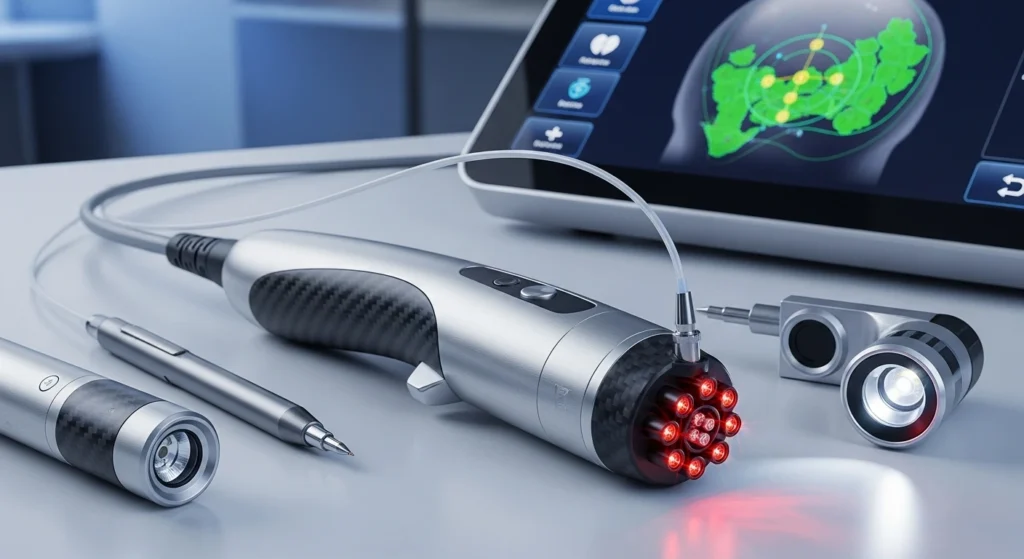
During the Procedure - What Happens
On the day of your laser hair transplant at Vagus Hair Transplant in Islamabad, here’s the detailed timeline of events:
1) 7:00-7:30 AM – Arrival & Check-in
Review consent forms, final photographs, and blood pressure check
2) 7:30-8:00 AM – Anaesthesia Administration
Local anaesthesia injection into donor and recipient areas; optional sedation for comfort
3) 8:00-9:00 AM – Laser Hair Extraction
Laser-assisted extraction of 2,000-3,000 grafts; minimal bleeding with laser hemostasis
4) 9:00-10:30 AM – Graft Processing
Extracted grafts are inspected, cleaned, and preserved in a specialised solution
5) 10:30 AM-12:30 PM – Laser Channel Creation
Recipient sites created using a laser for precision channel placement
6) 12:30-2:30 PM – Graft Implantation
Careful placement of grafts into channels at optimal angles and density
7) 2:30-3:00 PM – Post-Op Laser Therapy
LLLT is applied to the entire scalp for healing stimulation and pain reduction
8)3:00 PM – Recovery & Discharge
Final instructions given; patient discharged with medications and care instructions
Laser Hair Transplant vs Traditional Methods
Understanding how laser-assisted transplants compare to conventional methods helps you make an informed decision about your hair restoration options. The differences are significant and impact recovery, results, and overall patient satisfaction.
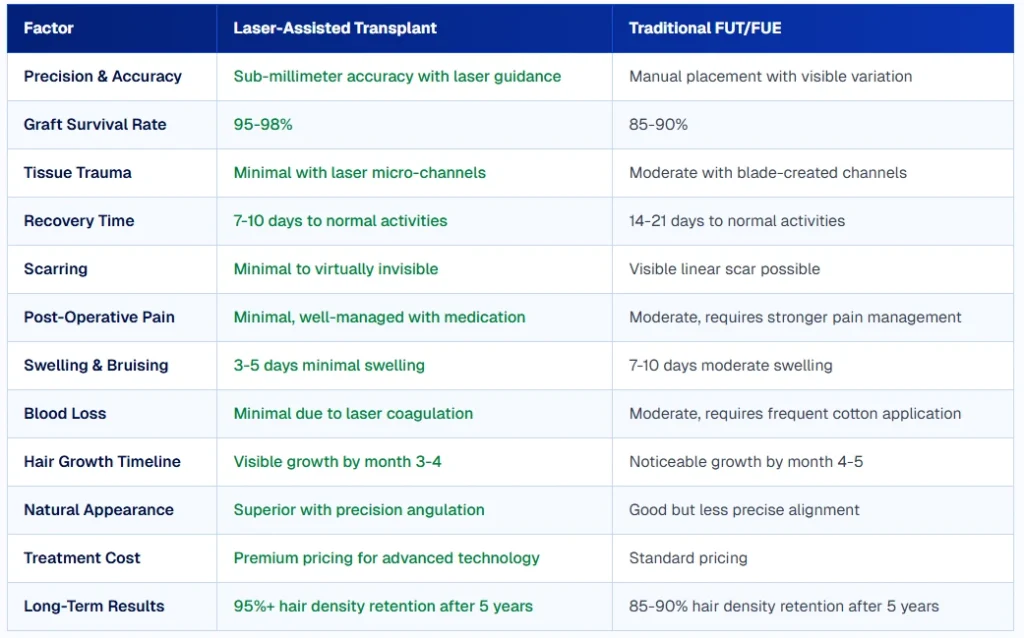
Why Laser Technology Outperforms Traditional Methods
- Precision: Laser channels ensure exact depth, angle, and spacing; traditional methods rely on surgeon’s hand steadiness
- Consistency: Laser systems produce identical results repeatedly; manual techniques vary with fatigue and experience
- Healing: Laser stimulation activates biological healing; traditional methods are passive with no biological enhancement
- Safety: Laser hemostasis eliminates bleeding; traditional methods require cautery or pressure
- Time: Laser procedures complete faster, reducing overall surgical time and patient discomfort
- Graft Quality: Laser extraction minimises follicle trauma; traditional extraction damages 10-15% of grafts
- Pain: Laser procedures cause significantly less post-operative pain due to smaller incisions
- Recovery: Faster return to normal activities with laser methods (7-10 days vs 2-3 weeks)
Laser Hair Transplant Procedure Cost
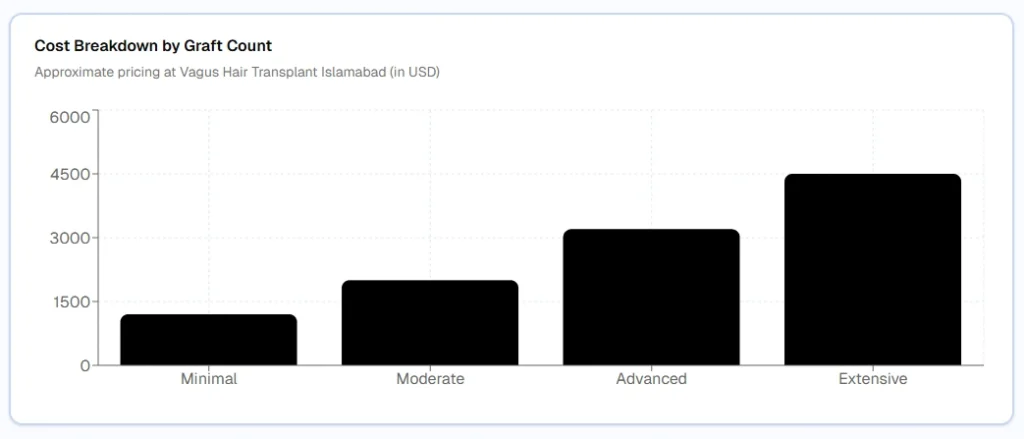
The cost of laser-assisted hair transplants varies based on multiple factors, including graft count, extent of hair loss, facility location, surgeon expertise, and technology used. At Vagus Hair Transplant in Islamabad, we provide transparent, competitive pricing with comprehensive cost breakdowns so you know exactly what you’re investing in.
What's Included in the Surgery Cost
✓ Pre-operative consultations and assessments
✓ Advanced laser equipment and technology
✓ Surgeon and surgical team expertise
✓ Premium extraction and implantation materials
✓ Post-operative laser therapy sessions
✓ First month medications and care kit
✓ Follow-up appointments for 3 months
✓ Digital imaging and documentation
Additional Costs to Consider
! Optional: Extended laser therapy sessions ($200-400 per month)
! Optional: PRP (Platelet-Rich Plasma) treatment ($300-500)
! Optional: Growth factor injections ($400-600)
! Medications beyond first month supply ($50-100/month)
! Travel expenses (if not local to Islamabad)
! Optional: Medical tourism package deals
! Follow-up procedures after 12 months (if desired)
! Optional: Hair transplant insurance
Understanding Hair Transplant Pricing
Factors that affect your final cost
Graft Count
Higher graft counts for extensive baldness require more time and resources
Hair Type
Curly/coily hair grafts may require additional processing time
Surgeon Experience
Board-certified surgeons with extensive experience command premium fees
Location
Islamabad pricing differs from international centres
Baldness Extent
Norwood scale 5-7 requires more grafts than scale 2-3
Scarring
Revision procedures or scarred donor areas cost more
Local with sedation vs general anaesthesia affects the the total cost
Financing Options Available at Vagus Hair Transplant
Making premium laser hair restoration accessible
Flexible Payment Plans
Interest-free instalments over 6-12 months with no hidden charges
Medical Credit Options
CareCredit and similar medical financing programs for qualified patients
Early Bird Discounts
Book consultations early for seasonal pricing discounts
Insurance Consultation
We work with select insurance providers; hair restoration may qualify under certain conditions
Corporate Packages
Special rates for groups, organisations, and corporate health initiatives
Multi-session plans offer savings on combined treatments
Recovery Timeline & Expectations
One of the primary advantages of laser-assisted hair transplants is the accelerated recovery compared to traditional methods. Here’s what to expect during your recovery journey after your laser hair transplant at Vagus Hair Transplant in Islamabad:
Week 1
Immediate Post-Op
Expected Symptoms
→ Mild swelling
→ Slight redness
→ Minimal discomfort
Care Instructions
Rest, elevation, prescribed medications
Activity Level
No activity
Week 2-3
Early Healing
Expected Symptoms
→ Swelling reducing
→ Scabs forming on grafts
→ Itching begins
Care Instructions
Gentle washing, avoid scratching, continue medications
Activity Level
Light walking only
Week 4-6
Graft Stabilization
Expected Symptoms
→ Scabs shedding
→ Initial shedding phase
→ Numbness fading
Care Instructions
Resume normal shampooing, begin light exercise
Activity Level
Light office work, gym after week 6
Month 2-3
Shedding Phase
Expected Symptoms
→ Hair shedding (normal)
→ Appears like failure
→ Root anchoring
Care Instructions
Use prescribed hair growth serum, continue laser therapy
Activity Level
Full normal activities, contact sports ok
Month 4-6
Growth Phase
Expected Symptoms
→ New hair is beginning to grow
→ Hair appears thin at first
→ Coverage improving
Care Instructions
Continue growth stimulation, regular follow-ups
Activity Level
All activities unrestricted
Month 7-9
Visible Results
Expected Symptoms
→ Noticeable new hair
→ 50-60% of the final result is visible
→ Hair thickening
Care Instructions
Maintenance laser therapy, hair growth products
Activity Level
Normal lifestyle
Month 10-12
Completion
Expected Symptoms
→ 85-90% final result
→ Hair at full thickness
→ Natural appearance
Care Instructions
Transition to maintenance products, optional ongoing therapy
Activity Level
Complete normality
Year 2+
Maintenance
Expected Symptoms
→ Permanent results established
→ Continued hair growth
→ 95%+ retention
Care Instructions
Preventive therapy, if desired, and regular check-ups
Activity Level
Lifelong results
Post-Procedure Care Instructions by Phase
Days 1-3: Immediate Recovery
Rest with head elevated (at least 45 degrees), minimise physical activity, keep scalp dry, apply prescribed antibacterial solution, take pain medication as needed, sleep with 2-3 pillows to maintain elevation
Days 4-7: Initial Healing
Gentle head washing with provided special shampoo (lukewarm water only), light activities only, avoid sweating and strenuous exercise, continue antibiotics if prescribed, attend first follow-up appointment
Week 2-3: Active Recovery
Return to light office work, begin gentle exercise (walking only), continue special shampoo, start LLLT sessions for healing enhancement, and attend the second follow-up for graft assessment
Month 1-2: Progressive Recovery
Resume normal exercise gradually, return to sports (contact sports after month 3), normal shampooing begins, expect initial shedding of transplanted hairs (normal telogen effluvium), continue growth stimulation therapy
Months 3-6: Hair Growth Phase
New hair growth begins (typically visible at month 4), full lifestyle normalisation, continue LLLT sessions for optimal results, regular follow-ups with the surgeon, and maintain healthy scalp care
Month 6-12: Development Phase
Significant hair growth visible, density continues to improve, final result takes shape, reduced frequency of follow-ups, hair appears natural and fuller
Month 12-18: Full Maturation
Full results visible as all hairs complete growth cycle, density and coverage optimal, hair length and styling becomes possible, final comparisons with before photos
Activities to Avoid During Recovery
✕ Strenuous exercise or heavy lifting (7-10 days minimum)
✕ Direct sunlight exposure on the scalp (4-6 weeks)
✕ Sleeping on stomach or side (2 weeks)
✕ Tight hats, helmets, or headwear (4-6 weeks)
✕ Hot showers or steam rooms (2-3 weeks)
✕ Smoking or nicotine use (throughout recovery)
✕ Swimming or water immersion of the scalp (2-3 weeks)
✕ Contact sports (4-6 weeks minimum)
✕ Hair colouring or perms (6-8 weeks)
✕ Scratching or touching the scalp excessively
✕ Sauna or intense heat exposure (4-6 weeks)
✕ Alcohol consumption (minimize for 2-4 weeks)
Success Rates & Real Results
95-98%
Graft Survival Rate
85%+
Hair Growth by Month 6
98%+
Patient Satisfaction
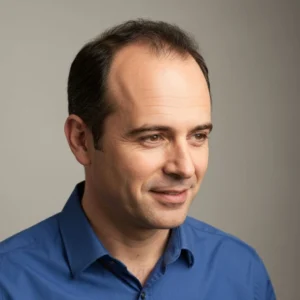
Norwood Stage III - Frontal Hair Loss
Patient with progressive frontal hairline recession restored with 2,500 grafts
Before Treatment
→
Timeline
12 months
Grafts Used
2,500
Result
95% satisfaction

After Treatment
Norwood Stage IV-V - Extensive Hair Loss
Significant crown and frontal loss treated with advanced laser techniques
Before Treatment
→
Timeline
12 months
Grafts Used
4,000
Result
98% satisfaction

After Treatment
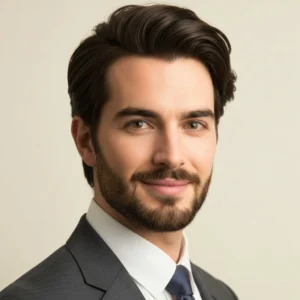
Norwood Stage II - Early Hair Loss
Minimal hair loss with natural results using precision laser placement
Before Treatment
→
Timeline
9 months
Grafts Used
1200
Result
99% satisfaction
After Treatment
Why Results Vary
✓ Age and individual healing capacity
✓ Extent of original hair loss
✓ Adherence to post-operative care
✓ Expectations and assessment criteria
✓ Genetic factors and hair type
✓ Quality and quantity of donor hair
✓ Ongoing preventive treatment
✓ Time allowed for full maturation (12-18 months)
Why Laser Transplants Show Superior Results
- Precision channel creation ensures optimal hair alignment (15-20° angle) and angulation for a natural appearance that mimics a virgin scalp
- Enhanced blood flow and LLLT stimulation promote faster graft establishment and entry into the growth phase (anagen)
- Reduced tissue trauma minimises scarring and maximises transplanted area density for a fuller appearance
- Laser stimulation activates dormant follicles in surrounding areas for fuller hair restoration beyond transplanted grafts
- Advanced imaging technology allows real-time monitoring of procedure progress and graft placement verification
- Post-operative LLLT continued at home extends biological benefits and accelerates visible hair growth
- Reduced inflammation and faster healing create an optimal microenvironment for follicle integration
Why Choose Vagus Hair Transplant in Islamabad
Our Expertise & Qualifications
✓ 25+ years of combined experience in laser-assisted hair transplantation
✓ Board-certified hair restoration surgeons with international training
✓ Latest laser technology and equipment (diode, Er: YAG, LLLT systems)
✓ Customised, personalised treatment plans for each patient’s unique needs
✓ Comprehensive aftercare support and long-term monitoring (lifetime follow-ups)
✓ Training and certification in robotic laser-assisted procedures
✓ Continuous education in the latest hair transplant technologies
Our Commitment to Excellence
✓ State-of-the-art surgical facility meeting international JCI standards
✓ Premium imported materials and instruments for optimal graft handling
✓ Patient-centric approach with transparent communication and realistic expectations
✓ Lifetime support and follow-up consultations at no additional cost
✓ Competitive pricing without compromising surgical quality or outcomes
✓ Advanced anaesthesia management for patient comfort and safety
✓ Infection control protocols exceeding international standards
Ready to Transform Your Hair and Restore Your Confidence?
Schedule your comprehensive consultation with our board-certified laser hair transplant specialists at Vagus Hair Transplant in Islamabad. Discover how advanced laser technology can restore your hair and transform your appearance with natural-looking, permanent results.