Hair turns grey primarily because the body gradually reduces the production of melanin, the pigment responsible for giving hair its natural colour. This process occurs within hair follicles, where pigment-producing cells, known as melanocytes, gradually become less active over time. Ageing is the most common reason behind this change, but premature grey hair can also be influenced by genetics, chronic stress, vitamin deficiencies, smoking, and certain medical conditions. In most cases, grey hair is permanent; however, if early greying is linked to nutritional or health-related factors, timely intervention may help slow progression or, in rare cases, partially restore pigmentation.
Introduction
Noticing your first grey strand can raise an important question: why does hair turn grey? For many people, it feels like a visible sign of ageing, while others experience grey hair much earlier and wonder if it signals an underlying issue. Scientifically, hair turns grey when melanin production declines within the hair follicles, but the reasons behind this decline are more complex than ageing alone.
Factors such as genetics, oxidative stress, lifestyle habits, and nutritional health all play a role in determining when and how quickly greying occurs. Many people ask why hair turns grey at a young age, what causes premature greying, and whether grey hair can be reversed. Understanding the biological processes and contributing factors not only clears common misconceptions but also helps make informed decisions about prevention and treatment.
The Science Behind Grey Hair (Melanin and Hair Follicles)
To understand why hair turns grey, it is important to examine how hair gets its colour. Each strand of hair grows from a follicle located in the scalp. Inside these follicles are specialised cells called melanocytes. These cells produce melanin, the pigment that determines whether your hair is black, brown, blonde, or red.
There are two primary types of melanin involved in hair colour. Eumelanin gives darker shades like black and brown, while pheomelanin contributes to lighter tones such as red and yellow. As we age, melanocytes gradually lose their ability to produce sufficient melanin. When pigment production decreases, hair appears grey. When it stops completely, hair turns white.
Related: How Hair Gets Its Color: The Science of Melanin
Why Does Hair Turn Grey Instead of Falling Out?
Hair growth and pigment production are controlled by separate biological processes. Even when melanocytes stop producing melanin, the hair follicle may continue generating new strands. This is why hair can turn grey rather than fall out. The structure remains intact, but the colour fades due to reduced pigment.
At What Age Does Hair Turn Grey?
There is no fixed age at which hair turns grey, as it varies from person to person. For many individuals, the first grey hairs appear in the late 30s or early 40s. However, grey hair in your 30s is considered completely normal.
In some cases, people experience grey hair in their 20s or even earlier. When teenagers get grey hair, it is usually linked to genetics or underlying health factors. Ethnicity also plays a role, as different populations may experience greying at slightly different average ages. Ultimately, genetics is the strongest factor in determining when your hair will start to lose its pigment.
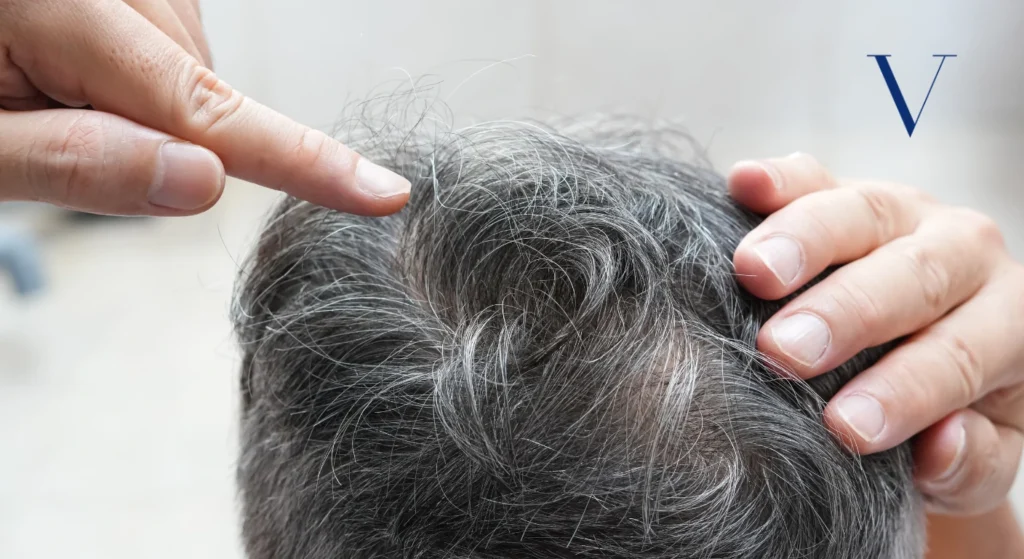
What Causes Premature Grey Hair?
Premature grey hair refers to greying that occurs earlier than the expected age range. The most common reason behind early greying is genetics. If your parents experienced early greying, there is a strong chance you may notice it earlier as well.
Oxidative stress is another important factor. Over time, free radicals accumulate in the body and damage melanocytes. This damage reduces melanin production and accelerates the appearance of grey hair. Smoking has also been associated with premature grey hair because it increases oxidative stress levels.
Medical conditions such as thyroid disorders and autoimmune diseases may disrupt normal pigment production. In addition, nutritional deficiencies, especially of Vitamin B12, iron, and Vitamin D, can contribute to premature grey hair. Identifying and correcting these deficiencies may slow down the process in some cases.
Why Does Hair Turn Grey at a Young Age?
When people ask why hair turns grey early, the answer often lies in hereditary factors. Genetics strongly influence how long melanocytes remain active. If there is a family history of grey hair in the 20s or early 30s, it is likely to follow a similar pattern.
Lifestyle factors may also contribute. Chronic stress, poor dietary habits, smoking, and environmental pollutants can increase oxidative damage in the body. Although genetics remains the primary cause, these external factors may accelerate the onset of premature grey hair.
Does Stress or Vitamin Deficiency Cause Grey Hair?
Can Stress Really Cause Grey Hair?
Scientific research suggests that chronic stress can affect pigment-producing stem cells in hair follicles. High stress levels increase oxidative damage, which may reduce melanin production. While stress alone may not directly cause grey hair, it can accelerate greying in individuals who are already genetically predisposed.
Vitamin Deficiency and Grey Hair
Nutritional health plays an important role in maintaining hair pigmentation. Deficiencies in Vitamin B12, biotin, iron, and copper have been linked to premature grey hair. In certain cases, restoring proper nutrient levels may improve hair health and slow further greying. However, age-related grey hair is usually not reversible through supplements alone.
Why Does Hair Turn Grey Suddenly?
Sudden greying can feel alarming, but it often has an explanation. Sometimes, rapid hair shedding causes darker hairs to shed first, making grey hairs more noticeable. Acute stress or autoimmune conditions may also trigger abrupt changes in hair pigmentation.
True overnight greying is extremely rare. In most cases, the sudden visibility of existing grey strands creates the impression of rapid change.
Why Does Hair Turn White?
Grey hair contains reduced melanin, while white hair contains no pigment at all. As the melanocytes completely stop functioning, new hair strands grow without any colour. This transition is a natural part of ageing and reflects the gradual decline of pigment-producing cells.
Is Gray Hair Permanent?
In most situations, grey hair is permanent. Once melanocytes stop producing melanin due to ageing, the change cannot typically be reversed. However, if premature grey hair is caused by temporary factors such as vitamin deficiencies or thyroid imbalance, early treatment may help slow progression.
Can Grey Hair Be Reversed?
One of the most frequently asked questions is: Can grey hair turn black again? The answer depends on the underlying cause. Age-related grey hair is generally permanent because melanocyte stem cells decline naturally over time.
If grey hair results from stress or nutritional deficiency, there may be limited potential for improvement once the root cause is addressed. However, there is currently no medically proven treatment that guarantees the complete reversal of grey hair.
How to Prevent Early Greying
Although natural ageing cannot be stopped, certain habits may help delay premature grey hair. Maintaining a balanced diet rich in essential vitamins and antioxidants supports overall hair health. Managing stress through exercise, meditation, and proper sleep can also reduce oxidative damage.
Avoiding smoking is particularly important, as it has been directly associated with early greying. Regular medical checkups can help detect and treat underlying conditions that may contribute to pigment loss.
Treatment for Premature Grey Hair
Medical treatment focuses on identifying the underlying cause. If thyroid disorders, anaemia, or vitamin deficiencies are present, proper medical intervention may help stabilise the condition. Dermatologists may recommend nutritional supplementation or lifestyle adjustments to slow further greying.
Cosmetic solutions such as hair colouring remain the most effective option for those who wish to restore their natural appearance.
Natural Remedies for Grey Hair
Many people look for natural remedies for grey hair or ways to prevent it. Traditional remedies such as amla, curry leaves, coconut oil massage, and black sesame seeds are commonly used to support scalp health. While scientific evidence is limited, these remedies may improve overall hair quality and nourishment.
It is important to understand that natural remedies may help maintain hair health, but are unlikely to reverse age-related grey hair completely.
Does Plucking Grey Hair Increase More Grey Hair?
Plucking grey hair does not cause more grey hairs to grow. Each follicle produces one strand of hair, and removing it does not affect neighbouring follicles. However, repeated plucking may damage the follicle and potentially reduce future hair growth in that area.
Final Thoughts
If you have been wondering why hair turns grey, the answer lies in the gradual decline of melanin production within hair follicles. Ageing remains the primary cause, but genetics, stress, and health conditions can influence the timing. While grey hair is usually permanent, understanding the underlying causes allows you to take preventive steps and maintain overall hair health with confidence.
Expert Guidance & Hair Health Support – Vagus Hair Transplant
When experiencing concerns such as grey hair, premature greying, or overall hair thinning, consulting qualified professionals is an important step. Vagus Hair Transplant provides comprehensive consultations and advanced hair restoration solutions designed according to each individual’s scalp condition and hair health. It is important to understand that hair transplant procedures do not reverse grey hair, as greying occurs due to reduced melanin production rather than hair loss. However, a professional evaluation can help identify whether early greying is associated with nutritional deficiencies, hormonal imbalances, stress, or other manageable medical factors.
At Vagus Hair Transplant, the approach goes beyond simply restoring hair density in areas affected by thinning or baldness. The clinic emphasises long-term scalp health through medically approved treatments, personalised care plans, and evidence-based techniques. With accurate diagnosis and customised treatment strategies, patients receive comprehensive support that addresses both hair loss concerns and overall hair quality in a safe and professional environment.
Frequently Asked Questions
Why does hair turn grey at a young age?
Early greying is usually genetic, though stress, nutritional deficiencies, and medical conditions can contribute.
What causes premature grey hair?
Genetics, oxidative stress, smoking, thyroid disorders, and vitamin deficiencies are common causes.
Can stress really cause grey hair?
Chronic stress may accelerate greying by damaging pigment-producing cells.
Is grey hair reversible?
In most cases of age-related hair greying, the greying is permanent. Deficiency-related cases may show limited improvement.
At what age does hair turn grey?
Most people begin noticing grey hair in their late 30s or early 40s, but it varies widely.