Beard Hair Transplant in Islamabad – Complete Guide to Procedure, Cost, Results & Recovery
Discover how modern beard transplant surgery can transform your facial appearance with permanent, natural-looking results. Learn about procedures, costs, and what to expect from leading clinics in Islamabad.
A beard hair transplant has emerged as one of the most effective and medically advanced solutions to address these concerns. This procedure involves transferring healthy hair follicles, typically from the scalp, to the beard area to create natural, long-lasting growth. Unlike temporary treatments, a transplant offers a permanent outcome, allowing individuals to grow, trim, and style their beard just like natural facial hair.
Why Beard Transplant Matters
A full, nicely kept beard is often seen as a sign of being strong, confident, and mature. For many men, having facial hair is a big part of how they look, and it can affect how they feel about themselves and how others see them. But not all men are able to grow a thick, even beard naturally. Things like family history, hormone levels, or old injuries can cause problems like not having enough hair in some areas, having a thin beard, or not growing any beard at all.
These issues can do more than just affect how someone looks.
Seeing an uneven or sparse beard every day can lower self-esteem and make a person unhappy with their appearance. To fix this, many people try beard oils, serums, and other treatments. Even though these products are common, they often don’t work well or consistently. This can lead to frustration, especially when people spend time and money without seeing the results they hope for.
Beard transplant surgery is now a trusted and advanced way to solve these problems for good.
This procedure is not too invasive and involves taking healthy hair follicles from the scalp and carefully placing them into the beard area. Since the hair comes from the person’s own body, the results look natural and grow just like regular beard hair. This means it can be trimmed, styled, and kept clean like any other facial hair.
What is Beard Transplant? Understanding the Science
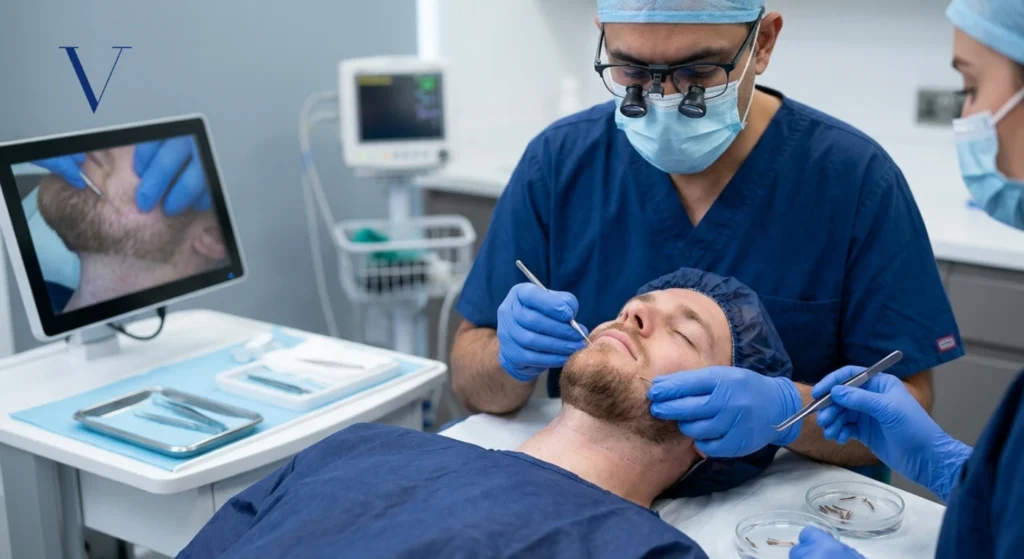
A beard transplant is a type of surgery that helps grow or improve facial hair by moving hair follicles from one part of the body to another. This method works because hair follicles keep their original genetic traits no matter where they are placed.
For the result to look real, the surgeon needs to understand facial shape, how hair grows, and how dense it should be. Experts in Islamabad have lots of experience making beards that look entirely natural. Once the transplant is done and healed, the hair grows at a normal rate, about half an inch each month and can be cut and styled just like normal beard hair.
In this procedure, hair is taken from a donor area, usually the back or sides of the head, where there is a lot of dense hair that doesn’t thin easily.
These hair follicles are then placed into the facial areas like the cheeks, chin, or neck. The surgeon carefully places them to look like natural beard growth.
One major benefit of a beard transplant is that it’s a permanent solution.
Unlike medicines like minoxidil that need to be used forever, transplanted hair grows for good. After the procedure and healing, you have a lasting beard that only needs regular care like any other facial hair.
Who is a Good Candidate for Beard Transplant?
Not everyone is a suitable candidate for beard transplant surgery. However, the vast majority of men seeking facial hair restoration can qualify. Here are the key criteria for being a good candidate:
Patchy Beard Growth
If you struggle with uneven, patchy beard growth where some areas grow thicker than others a beard transplant can fill in those gaps and create a uniform appearance.
Minimal or No Beard Growth
Some men have minimal facial hair growth due to genetics or hormonal factors. Beard transplant provides a permanent solution for growing a full beard from scratch.
Scar Coverage
Facial scars from injury, accident, or previous surgery can be camouflaged effectively with transplanted beard hair that covers the affected area.
Sufficient Donor Hair
You must have adequate hair density on your scalp (donor area) to harvest healthy grafts. During consultation, your surgeon will assess this.
Realistic Expectations
Good candidates understand what beard transplant can and cannot do. You should have realistic expectations about results and recovery time.
Good Overall Health
While beard transplant is minimally invasive, you should be in generally good health without serious medical conditions that might impair healing.
The best way to determine if you’re a good candidate is to schedule a free consultation with a qualified surgeon in Islamabad. They’ll assess your hair, skin, facial structure, and goals to provide personalized recommendations.
Types of Beard Transplant: FUE vs DHI
There are several techniques available for beard transplant surgery. The most popular methods used in Islamabad are FUE (Follicular Unit Extraction) and DHI (Direct Hair Implantation). Here’s a comparison:
FUE (Follicular Unit Extraction)
FUE (Follicular Unit Extraction) is the most extensively used fashion for beard transplant in Islamabad. Individual hair follicles are uprooted from the patron area using a technical micro-punch tool( 0.8- 1.2 mm periphery), also implanted into the beard area.
• minimum scarring — only bitsy, slightly visible blotches remain
• No direct scars on the reverse of the head
• Recovery time 5- 7 days before continuing normal conditioning
• Slightly longer procedure( 8- 10 hours)
• Advanced cost compared to other styles
• Excellent for short hairstyles
• Graft survival rate 90- 95
Cost PKR 200,000- 600,000( depending on graft count)
DHI (Direct Hair Implantation)
DHI (Direct Hair Implantation) is an advanced technique that combines extraction and implantation in a single step using specially designed implanter pens. Grafts are placed directly into pre-determined sites with exceptional precision.
• Highest precision and graft placement accuracy
• Minimal trauma to tissue—rapid healing
• Recovery time: 3-5 days to return to normal
• Almost invisible scarring
• Requires specialised equipment and training
• Higher cost (premium pricing)
• Best results for natural appearance
• Graft survival rate: 95%+
Cost: PKR 300,000-800,000+ (depending on graft count)
The choice between FUE and DHI depends on your budget, desired recovery time, and aesthetic goals. During your consultation in Islamabad, your surgeon will recommend the best option for your specific situation.
A Stronger Beard. A Stronger You.
Schedule your comprehensive consultation with our board-certified beard hair transplant specialists at Vagus Hair Transplant in Islamabad. Discover how advanced technology can restore your hair and transform your appearance with natural-looking, permanent results.
Beard Transplant Procedure : Step-by-Step Process
Understanding what happens during your beard transplant surgery can help you feel more confident about the procedure. Here’s what the typical journey looks like:
Step 1: Initial Consultation
Your surgeon examines your hair density, evaluates facial structure, discusses your beard goals, and reviews medical history. You’ll see before/after photos of previous patients and discuss realistic expectations. This consultation is typically free and helps you decide if proceeding is right for you.
Step 2: Pre-Surgery Preparation
About one week before surgery, you’ll receive detailed instructions. These include avoiding blood thinners, alcohol, and smoking. Blood tests may be required for safety clearance. Your surgeon will provide specific guidelines about hair length in donor and recipient areas.
Step 3: Surgery Day – Anaesthesia
You’ll arrive early for final markings and photos. Local anaesthesia is administered to both donor and recipient areas. You remain awake but comfortable throughout the procedure—a topical numbing cream combined with local injections ensures you feel no pain, only mild pressure.
Step 4: Graft Extraction
Using your chosen technique (FUE or DHI), the surgeon carefully extracts individual hair follicles from the donor area. For a full beard, typically 800-2500 grafts are harvested depending on desired density. This phase takes 2-3 hours and requires precision and patience.
Step 5: Recipient Site Design
The surgeon marks the beard area with careful attention to natural growth direction, density patterns, and facial symmetry. This is critical for achieving a natural appearance. Small incisions are created to match hair angle and depth. The pattern respects your facial structure and aesthetic goals.
Step 6: Graft Implantation
Extracted grafts are carefully implanted into the recipient sites. This requires meticulous placement at the correct angle and depth. For DHI, specialised implant pens do this in one step. For FUE, sites are created first, then grafts are placed. This phase is the most time-intensive and demands surgical skill.
Step 7: Bandaging and Post-Op Care
After implantation, the area is cleaned and bandaged. You’ll receive detailed post-operative instructions covering wound care, medications, activity restrictions, and what to expect during healing. You’ll typically go home the same day (a beard transplant is usually performed as an outpatient procedure).
Beard Transplant Cost in Islamabad: Pricing Guide
Cost Per Graft and Total Price Range
FUE: PKR 200-400 per graft | Total: PKR 160,000-1,000,000+
DHI: PKR 300-500 per graft | Total: PKR 240,000-1,250,000+
Most men require 800-2000 grafts for a full, natural-looking beard.
Cost is often the first question men ask about a beard transplant. Understanding pricing helps you make an informed decision. In Islamabad, beard transplant costs vary based on several factors.
Factors Affecting Cost
1. Number of Grafts Required
This is the primary cost driver. Light enhancement needs 500-1000 grafts. Moderate beard needs 1000-1500. Full dense beard needs 1500-2500+.
2. Procedure Technique
FUE costs less than DHI due to equipment and expertise required. DHI is premium pricing for superior precision.
3. Surgeon Experience
Highly experienced surgeons with excellent track records may charge more. This often translates to better results.
4. Clinic Facilities
State-of-the-art clinics with advanced technology and international accreditation typically charge premium rates.
5. Aftercare and Follow-up
Comprehensive aftercare packages, medications, and follow-up visits may be included or charged separately.
Important Note About Cost :
While cost matters, choosing based solely on the cheapest option can lead to poor results. A more experienced surgeon at a reputable clinic will likely provide better outcomes, making the investment worthwhile. We recommend getting consultations from 2-3 clinics to compare prices and expertise.
Vagus Hair Transplant: Enhancing Healing and Natural Beard Growth
Vagus hair transplant is an emerging concept in modern hair restoration that focuses on enhancing natural healing and improving graft survival through advanced techniques and supportive therapies. It is not a separate transplant method like FUE or DHI, but rather an approach that may involve optimizing nerve response, blood circulation, and tissue recovery to support better hair growth after the procedure. The idea is to create a more favorable environment for transplanted follicles so they heal faster and grow more effectively. While still evolving, this concept reflects the shift towards more refined, science-backed solutions aimed at delivering stronger, healthier, and more natural-looking beard transplant results.
A well-shaped beard is more than just facial hair. It adds structure to the face, improves overall appearance, and boosts confidence. But not everyone can grow a full, even beard naturally. Patchy growth, thin coverage, or genetic limitations are common issues many men face. This is where modern beard transplant procedures offer a reliable solution.
At Vagus Hair Transplant, beard restoration is designed to create a natural-looking beard that matches your facial structure and hair characteristics. The focus is not just on adding hair, but on building a balanced and realistic beard line that suits your face.
Latest Trends in Beard Transplant 2026
In 2026, a beard transplant is no longer just a basic procedure. It has become a more advanced and personalized treatment where the main focus is on achieving natural-looking results. Techniques like FUE, DHI, and Sapphire FUE are now commonly used because they cause minimal scarring, allow faster healing, and provide better overall outcomes. Instead of placing hair randomly, doctors carefully implant each follicle according to the natural direction and density of beard hair so the final result looks completely real.
Along with this, supportive treatments like PRP (Platelet-Rich Plasma) and newer regenerative options are also being used to improve healing and enhance hair growth. Because of these improvements, beard transplant results today are much more reliable, with higher success rates than before. In simple terms, patients can now expect a fuller, natural-looking beard that blends perfectly and lasts long-term.
Beard Transplant Results & Growth Timeline
One of the most frequently asked questions is: “When will I see results?” Understanding the timeline helps you have realistic expectations about the healing and growth process.
Months 1-2: Initial Healing
The transplanted area is healing. Scabs form and shed naturally. The hair that was transplanted falls out (this is normal—the follicle remains and will regrow). This shedding phase can be emotionally challenging but is completely expected.
Months 3-4: Growth Begins
New hair begins to sprout from transplanted follicles. Growth is still subtle—you might see fine, thin hairs just 1-2mm in length. Some people notice growth as early as 8 weeks; others take 12 weeks.
Months 5-6: Noticeable Improvement
Hair is growing more noticeably. The transplanted area starts showing visible thickness and coverage. Your beard is becoming recognizable, though not yet at full density. Many people can start styling their new beard at this stage.
Months 7-9: Substantial Growth
Significant beard growth and density improvement is visible. The beard looks progressively fuller and more natural. By this point, most people are quite pleased with their results and need regular trimming.
Months 10-12: Full Results
By month 12, you’ve achieved 90-95% of your final results. The beard reaches full density and thickness. Hair texture has matured, and color may have stabilized. This is when you can judge the true success of your procedure.
Beyond 12 Months: Continued Improvement
Hair continues to mature and thicken. Some patients report ongoing improvement even 18-24 months post-procedure. By this point, your new beard is permanent and indistinguishable from naturally grown facial hair.
Success Metrics
Graft Survival Rate: 90-95%
Patient Satisfaction Rate: 98%+
Natural Appearance Achievement: 99%
Permanence: 100% (results last lifetime)
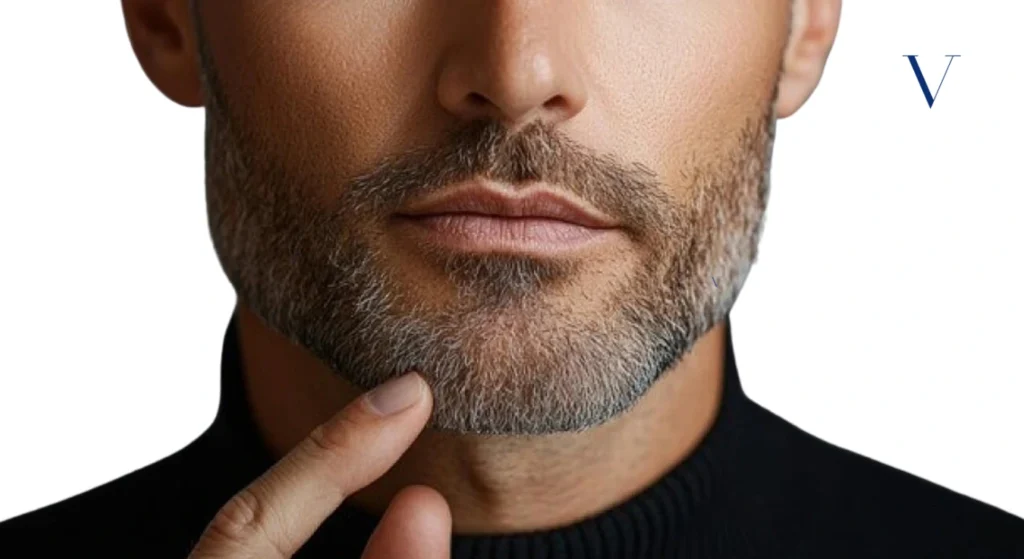
Transform Your Look with a Fuller, Natural Beard
Schedule your comprehensive consultation with our board-certified beard hair transplant specialists at Vagus Hair Transplant in Islamabad. Discover how advanced technology can restore your hair and transform your appearance with natural-looking, permanent results.
Recovery & Aftercare For Beard Hair Transplant in Islamabad
Proper aftercare is crucial for optimal results. Following post-operative instructions carefully ensures grafts survive and grow successfully. Here’s what to expect during recovery:
Days 1-7: Critical Phase
• Bandages remain for 24-48 hours
• Sleep elevated (use extra pillows)
• Take prescribed pain medication as directed
• Apply ice packs in 20-minute intervals
• Avoid any strenuous activity or exercise
• Don’t touch or scratch transplant area
• Gentle head washing only, avoid direct water pressure
Weeks 2-4: Healing Continues
• Scabs will naturally shed, do not pick or scratch
• Swelling and redness gradually decrease
• Can return to light activities and work (desk job)
• Continue careful washing and prescribed medications
• Avoid swimming, saunas, and hot showers
• Don’t shave for at least 10-14 days
• Can resume light exercise after week 2
Weeks 5-12: Progressive Recovery
• Can resume all normal activities
• Strenuous exercise and sports permitted
• Can shave and trim as desired (be gentle initially)
• Redness and sensitivity continue fading
• Begin seeing early new hair growth
• Continue following post-op care guidelines
• Attend follow-up appointments with the surgeon
Do's and Don'ts During Recovery
Do:
✓ Follow surgeon’s instructions exactly
✓ Keep transplant area clean and dry
✓ Take medications as prescribed
✓ Eat nutritious foods (aids healing)
✓ Get adequate sleep
✓ Stay hydrated
✓ Attend all follow-up appointments
Don’t:
✗ Smoke or use tobacco
✗ Drink alcohol
✗ Use blood-thinning medications
✗ Scratch or pick at transplant area
✗ Apply direct pressure to grafts
✗ Exercise strenuously for 2-4 weeks
✗ Expose area to sun without protection
Risks & Side Effects: What You Should Know
Like any surgical procedure, beard transplant carries some risks. However, when performed by qualified surgeons in accredited clinics, serious complications are rare. Here’s what you should be aware of:
Common Temporary Side Effects
• Redness and swelling at transplant site (resolve in 2-4 weeks)
• Itching and mild discomfort (normal during healing)
• Scab formation and shedding (completely expected)
• Initial hair shedding (will regrow from follicle)
• Temporary numbness in transplant area (sensitivity returns)
• Slight bruising around beard area (fades quickly)
Rare Complications (Less Than 1%)
• Infection at transplant or donor site (preventable with care)
• Bleeding (controlled immediately during procedure)
• Folliculitis—inflammation of hair follicles (treatable)
• Poor graft growth (may require revision in rare cases)
• Permanent donor site numbness (extremely rare with FUE)
Minimizing Risk
Choose a board-certified surgeon with extensive beard transplant experience. Ensure the clinic meets international hygiene and safety standards. Follow all pre-operative and post-operative instructions carefully. Attend all follow-up appointments. Most complications can be prevented through careful patient selection, surgical technique, and proper aftercare.
Frequently Asked Questions
How many grafts do I need for a full beard?
Most men need 800-2500 grafts for a natural-looking, full beard. The exact number depends on your desired density, facial hair goals, and current coverage. During consultation, your surgeon will assess your needs and recommend the appropriate graft count. Some men opt for light enhancement (500-1000 grafts) to fill patches, while others want maximum density (2500+ grafts) for a thick, bold beard.
Is the procedure painful? Will I be uncomfortable?
No. Local anesthesia ensures you feel no pain during the procedure—only mild pressure and vibration sensations. You remain awake and comfortable throughout. Some patients sleep during the procedure due to the relaxing environment. Post-operatively, mild discomfort is managed with prescribed pain medication. Most patients report minimal pain after the first week.
When will I see results? How long until a full beard grows?
New growth typically appears 3-4 months post-surgery. Noticeable improvement comes at 5-6 months. Substantial density develops by 9-12 months. Full results, including final thickness and maturity, are usually achieved by 12-18 months. This timeline varies slightly by individual but is consistent for most patients.
Is beard transplant permanent? Will the results last forever?
Yes, absolutely. Beard Transplant hair is permanent. The grafts are taken from areas of your scalp that are genetically resistant to thinning, so they maintain this characteristic in the beard area. Your transplanted beard will grow for your entire lifetime and never be lost due to hair loss patterns. It’s a permanent solution requiring no ongoing medication or treatments.
What is the recovery time? When can I return to work?
Most patients can return to desk work within 5-7 days. Visible signs of surgery (redness, scabs) can be covered with facial hair or concealer. Full recovery and resumption of strenuous activities takes 2-4 weeks. For DHI, recovery is even quicker—some return to normal activities within 3-5 days. Post-operative swelling is minimal and manageable with prescribed medications.
What are the chances of complications or graft failure?
Serious complications are rare (less than 1%) when performed by qualified surgeons. Graft survival rates are excellent: 90-95% for FUE and 95%+ for DHI. Most grafts survive and grow successfully. Temporary side effects (swelling, redness, itching) are normal and resolve within 2-4 weeks. Major complications like infection are preventable with proper aftercare.
Ready to Transform Your Hair and Restore Your Confidence?
Schedule your comprehensive consultation with our board-certified beard hair transplant specialists at Vagus Hair Transplant in Islamabad. Discover how advanced technology can restore your hair and transform your appearance with natural-looking, permanent results.