Recovery After FUE Hair Transplant
Complete guide covering recovery timeline, aftercare methods, expectations, and costs for FUE Hair Transplant in Islamabad
Hair loss affects millions of people worldwide, impacting self-confidence, social interactions, and overall quality of life. Among the most effective solutions available today is FUE (Follicular Unit Extraction) Hair Transplant, a minimally invasive procedure that has revolutionized hair restoration over the past two decades. With success rates exceeding 95% when performed by experienced surgeons, FUE represents a permanent solution to hair loss that delivers natural-looking results.
FUE Hair Transplant Recovery
Understanding the recovery process is crucial for achieving optimal results. Many patients don’t realize that recovery is just as important as the procedure itself. How you care for your transplanted grafts, manage pain and swelling, follow activity restrictions, and maintain proper nutrition during the recovery phase directly determines whether you achieve 90% graft survival or only 70%. FUE Hair Transplant in Islamabad has become increasingly popular due to advanced facilities, experienced practitioners, and affordable pricing compared to international alternatives. Among providers, Vagus Hair Transplant has emerged as a leading facility, performing over 3,000 successful procedures with a 94-96% graft survival rate and 97% patient satisfaction.
This comprehensive pillar page covers everything you need to know about recovery after FUE hair transplant, whether you’re a medical professional seeking technical information, a clinic looking to educate patients, or someone considering this life-changing procedure. We’ll walk through the complete 12-month recovery journey, explaining what happens each week, what you should expect, how to manage discomfort, when you can return to normal activities, and how to maximize your results.
Why Recovery Matters
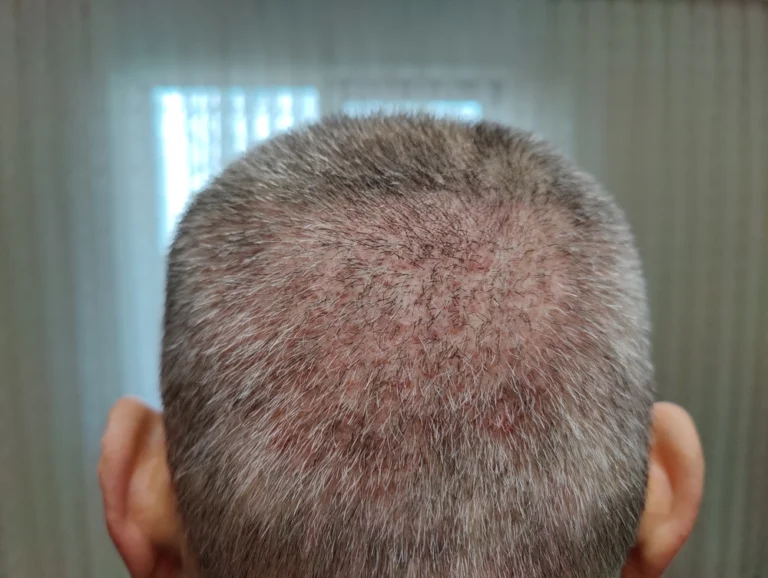
The recovery phase determines the success of your transplant. Poor aftercare can reduce graft survival from 95% to 70%, costing you thousands in failed grafts. Proper recovery ensures maximum graft establishment, optimal blood supply, and beautiful, natural-looking results that last a lifetime.
Expert Guidance
This guide provides medically-accurate, detailed information backed by clinical research and the experience of performing thousands of procedures. Whether you’re evaluating the procedure or post-op, you’ll find actionable guidance specific to each recovery phase.
What This Complete Guide Covers:
✓ Day-by-day and week-by-week recovery timelines with specific expectations
✓ Pain management strategies and when to expect discomfort to resolve
✓ Detailed activity restrictions and a realistic timeline for returning to work, gym, and sports
✓ Comprehensive nutritional guidance and supplements for accelerated healing
✓ Complete medication protocol, including antibiotics and growth-promoting drugs
✓ Potential complications, warning signs, and when to contact your surgeon
✓ Transparent cost breakdown for FUE in Islamabad with financing options
✓ Real case studies, before/after timelines, and expected results at each milestone
Key Statistics About FUE Recovery
• 90-95% of transplanted grafts survive with proper aftercare
• 80% of patients can return to normal activities by week 4
• Visible growth begins at 8-10 weeks post-operative
• Full results visible at 12 months post-operative
• Results are permanent – transplanted hair lasts a lifetime
• 97% patient satisfaction at Vagus Hair Transplant Islamabad
Understanding FUE Hair Transplant Basics
Before diving into recovery, it’s essential to understand what FUE involves and how it differs from other hair restoration methods. This foundation knowledge will help you better understand the recovery process and set realistic expectations.
What is FUE Hair Transplant?
Follicular Unit Extraction (FUE) is a modern, minimally invasive hair-restoration technique where individual hair follicles are gently removed one by one from a donor area, usually the back or sides of the scalp, using a fine, motorized micro-punch tool. These healthy follicles are then carefully transplanted into the thinning or balding areas. Each tiny graft typically contains 1 to 4 hairs, and they’re placed at precise angles to recreate a natural hairline and give the area fuller density.
Unlike the older FUT (Follicular Unit Transplantation) method, which involves removing a strip of skin, FUE leaves only small dot-sized marks (around 0.8–1.0 mm) that usually heal so well they’re nearly invisible. This makes it a popular choice for people who prefer shorter hairstyles or want to avoid noticeable scarring.
A typical FUE session can take anywhere from 6 to 8 hours, depending on how many grafts are needed. The results are permanent because the transplanted hair keeps its original genetic resistance to hair loss, allowing it to continue growing naturally in its new location.
Why Choose FUE Over Other Methods?
Multiple hair restoration options exist today. Understanding the differences between FUE and other methods helps you make an informed decision about which is right for your situation and lifestyle.

Why FUE is the Gold Standard for Hair Restoration
✓ Minimally invasive: No large incisions, less trauma to the donor area, faster healing
✓ Invisible scarring: Tiny dot scars blend seamlessly, allowing short hairstyles
✓ Quick recovery: Return to work within 1-2 weeks, most activities within 5 weeks
✓ Natural results: Individual hair placement allows a natural-looking hairline and density
✓ Permanent solution: Transplanted hair lasts a lifetime; no ongoing costs or maintenance
✓ High success rate: 90-95% graft survival with experienced surgeons like Vagus
Important Note: The FUE Procedure Takes Time
FUE is more time-intensive than FUT because each follicle is extracted individually. A typical FUE procedure extracts 1000-4000 grafts and takes 6-8 hours. While this is longer than the 2-3 hours for FUT, the superior results and minimal scarring make the extended operative time worthwhile for most patients. The procedure is performed under local anesthesia, so you remain awake and comfortable throughout.
Your surgeon will extract grafts at a precise angle matching your natural hair growth pattern, carefully dissect each graft under magnification, and then meticulously place each one in the recipient area. This attention to detail directly translates to natural-looking results that will impress for decades.
The Complete FUE Recovery Timeline
Understanding the recovery process helps set realistic expectations and prepare for each phase. The timeline from FUE procedure to final results spans approximately 12 months, with most patients achieving their desired appearance by month 9. The complete recovery journey can be broken down into distinct phases, each with specific expectations, restrictions, and milestones that will help you understand what’s happening with your transplanted grafts.
Recovery is not just about physical healing; it’s about graft establishment, hair follicle activation, and gradual hair growth. During the first week, your focus is on protecting grafts and managing swelling. By month 3, your attention shifts to watching for early growth signs. By months 6-12, you’ll see dramatic improvements in density and appearance.
Week 1
Healing Begins
Swelling peaks, bandages applied, minimal bleeding, initial recovery phase
Week 4
New Growth Starts
Scabs falling off, reduced sensitivity, most look normal, social recovery complete
Week 12
Growth Continues
Transplanted hairs enter resting phase, recovery complete, early hair visible
Month 6
Visible Results
20-30% of final results visible, noticeable improvement, significant density increase
Month 12
Full Results
100% of final results, permanent and natural-looking, mature hair established
Detailed Week-by-Week Breakdown
Days 0-3: Immediate Post-Op Phase
Peak swelling period, bandages in place, minimal to light bleeding, significant discomfort requiring pain management
• Swelling peaks on day 2-3
• Numbness and pressure sensation are normal
• Light oozing from both donor and recipient sites
• Bandages protect grafts from trauma
• Pain medication is essential for comfort
Days 4-7: Early Healing Phase
Swelling begins decreasing, scabs start forming, initial graft stabilization, pain significantly improves
• Swelling plateaus then gradually decreases
• Scabs form over recipient grafts
• Donor area begins scabbing over
• Pain dramatically improves by day 6-7
• Most patients can resume light activities
Week 2: Scab Shedding Phase
Scabs fall off naturally, reduced sensitivity, the majority of recipients look normal, and grafts are firmly established
• Scabs shed naturally (don’t pick them)
• The recipient area looks pink but normal
• Minimal pain or discomfort
• Can resume gentle shampooing
• Transplanted hairs enter the shedding phase
Weeks 3-4: Complete Recovery Phase
Most recipients look completely normal, can return to work and normal activities, invisible to others
• Redness fades significantly
• No visible signs of procedure
• Can return to desk work and meetings
• Light exercise can resume
• Grafts fully integrated into scalp
Month 2-3: Hair Shedding & Regrowth Begins
Transplanted hairs shed naturally, new growth begins underneath, and early signs of recovery appear
• Shedding is normal
• Don’t worry, grafts are still under the scalp
• New hair beginning to grow from follicles
• First new hairs appear at 8-10 weeks
• Growth will accelerate over the next months
Month 4-6: Active Growth Phase
Significant visible growth, 20-30% of final results visible, dramatic improvement in appearance and coverage
• Hair growth accelerates noticeably
• Individual hairs thicken and strengthen
• Increased density and coverage are obvious
• Hair begins blending with existing hair
• Results are becoming impressive to others
Month 6-9: Accelerated Growth Phase
Surgery day – 60-90 minutesHair thickens significantly, color and texture stabilize, 50-80% of final results visible, dramatic improvement
• Hair shaft diameter increases significantly
• Texture approaches mature characteristics
• Color fully stabilizes and matches
• Growth pattern becomes evident
• Results very impressive at this stage
Month 9-12: Final Maturation Phase
80-100% of final results visible, hair reaches mature thickness, permanent and natural results established
• Growth continues toward final density
• Hair fully mature and natural-looking
• 100% results typically visible by month 12
• Permanent and lifelong results established
• Final aesthetic goals achieved
Important: What Happens After Month 12?
After the first year, transplanted hair enters its natural growth cycle. Hair will grow continuously for 2-6 years (anagen phase), then shed naturally and regrow (telogen phase). This is identical to your natural hair cycle. Your transplanted hair will remain permanently because it retains the genetic characteristics of the donor area, which is not genetically programmed to fall out.
You can treat transplanted hair normally—wash it, style it, color it, and cut it just like natural hair. The results achieved at 12 months will last your entire lifetime without any additional procedures (unless you experience additional hair loss in untreated areas, in which case additional transplants can be performed).
Immediate Post-Operative Care (Days 1-7)

The first week after FUE Hair Transplant recovery is absolutely critical and sets the foundation for successful graft survival and optimal results. This is when your transplanted grafts are most fragile and require careful handling. How you manage the first 7 days can mean the difference between 90% graft survival and only 70% survival.
During this phase, your primary goals are: protecting grafts from trauma, managing swelling and pain, preventing infection, and following all post-operative instructions precisely. Even small deviations from instructions can compromise results, so it’s crucial to understand what to expect and why each recommendation matters.
What to Expect During Days 1-7
→ Swelling peaks on days 2-3 typically
This is completely normal and doesn’t indicate a problem. Maximum swelling occurs when fluid accumulates around surgical sites. Swelling gradually subsides over the following days.
→ Swelling may extend to the forehead and around eyes
This “gravitational swelling” is common when the head is kept down. Elevation prevents this. Some patients develop bruising under the eyes (looks like black eyes), which fades completely within 2 weeks.
→ Bruising around the recipient and donor areas
Bruising is normal after surgery. Extent varies by patient and surgeon technique. Bruising fades completely within 10-14 days and is easily covered with makeup if needed.
→ Mild to moderate discomfort managed with medication
Pain is usually described as pressure, soreness, or mild aching rather than sharp pain. Most patients discontinue pain medication by day 5-7. If pain persists beyond day 7, contact your surgeon.
→ Light bleeding or seeping from both areas
Minimal bleeding is normal for the first 24-48 hours. If bandages are saturated with blood, you can change them. Heavy bleeding (more than light oozing) warrants calling your surgeon.
Critical: Sleeping Position (Most Important!)
Your sleeping position during the first 7 days has a major impact on swelling, graft protection, and results. Many patients underestimate this and experience unnecessary complications.
Sleep with heyour ad elevated 45 degrees for at least 7 days
This is not optional, it’s critical for minimizing swelling. Elevation allows fluid to drain away from your face instead of accumulating around the surgery sites.
Use 2-3 pillows or a medical-grade neck pillow
Stack pillows to achieve a 45-degree elevation. A neck pillow designed for elevation is ideal. Many patients purchase a special recovery pillow from their surgeon.
Never sleep face-down or on your side for at least 2 weeks
Face-down sleeping puts pressure on transplanted grafts and can dislodge them. Side sleeping can compress one side of your head. Sleep on your back only.
Continue elevation for 7-10 days minimum
While most swelling subsides by day 5-6, continuing elevation helps optimize graft establishment. Many surgeons recommend maintaining elevation through day 10 for best results.
Bandage and Dressing Care
Your surgeon will provide specific instructions regarding bandages. Generally, the timeline is:
Day 0 (Surgery Day):
Bandages are applied after surgery to protect grafts and absorb blood. Keep them dry and in place. Don’t peek under bandages.
Day 1:
A surgeon will usually want to check bandages. Light bleeding through bandages is normal. Bandages remain in place; you may be instructed to remove them gently.
Days 2-3:
Bandages can typically be removed. Wash gently with the prescribed shampoo. Pat dry carefully—don’t rub. You can then apply new light bandages or leave them unwrapped, depending on the surgeon’s instructions.
Days 4-7:
The area should be clean and dry. Continue gentle washing. Avoid direct water pressure on grafts. Some surgeons recommend keeping the area uncovered; follow your specific instructions.
Strictly Avoid
✕ Heavy lifting or strenuous exercise
Increases blood pressure, causes bleeding, and can dislodge grafts
✕ Swimming or water activities
Chlorine, salt water, and pressure can damage grafts; risk of infection
✕ Direct sun exposure
UV rays can damage new grafts and cause hyperpigmentation of scars
✕ Sauna, steam, and hot showers
Heat causes vasodilation and bleeding; steam can expose grafts to bacteria
✕ Scratching or touching the face downtransplanted area
Can dislodge delicate grafts; causes infection risk and scarring
✕ Sleeping face-down or on the sides
Pressure on grafts causes dislodgement and poor establishment
✕ Wearing tight hats or headbands
Pressure damages grafts and increases swelling; gentle hats are OK after day 3
✕ Bending over or heavy work
Increases intracranial pressure, causing bleeding and swelling
Can Do Safely
✓ Light walking (non-strenuous)
Gentle walking around the the house is beneficial for circulation without overexertion
✓ Gentle showering (avoid direct water)
Use lukewarm water and direct stream away from grafts; pat dry gently
✓ Reading, television, light work
Mental activities with no physical exertion are fine and help pass recovery time
✓ Wearing loose, comfortable clothing
Avoid tight necklines that rub against grafts or restrict circulation
✓ Rest and adequate sleep (elevated)
Sleep is the best healer; aim for 8+ hours in an elevated position
✓ Taking prescribed medications exactly as directed
Antibiotics, pain relievers, and anti-inflammatories are critical for success
✓ Light social interaction at home
Visitors can come by; just avoid contact sports or activities that might cause trauma
✓ Eating healthy foods for healing
Protein-rich foods, fruits, and vegetables support immune function and graft survival
When to Seek Immediate Medical Attention
• Fever above 101°F (38.3°C) — may indicate infection
• Excessive swelling beyond day 5 — not normal trajectory
• Severe pain unrelieved by medication — beyond normal discomfort
• Signs of infection (pus, unusual odor, yellow discharge) — needs antibiotics
• Continuous heavy bleeding — not normal oozing
• Allergic reaction (difficulty breathing, rash) — emergency
Your surgeon should be available 24/7 for emergencies during the first week. Save their emergency number in your phone.
First Phase Recovery (Weeks 2-4)
By the second week, most visible signs of surgery fade as grafts establish themselves.
The Shedding Phase
Around day 7-10, transplanted hairs enter the shedding phase:
• Transplanted hairs fall out (not the grafts themselves)
• This is expected and doesn’t indicate procedure failure.
• New hair growth begins within 3-4 months.
• Shedding can continue for 2-3 months
Weeks 2-4 Activity Guidelines

Washing and Hair Care
Week 2:
Gentle washing with lukewarm water, pat dry gently
Week 3-4:
Can gradually increase water temperature, use the prescribed gentle shampoo
• Use the prescribed gentle shampoo
• Avoid direct water pressure on the recipient area for 7-10 days
• No hair dryers, blow-drying, or harsh styling
Second Phase Recovery (Weeks 5-12)
By week 5, most patients feel completely normal as hair growth preparation begins.
Weeks 5-8: Active Recovery Phase
Cleared Activities by Week 5
- Vigorous exercise and gym workouts
- Contact sports (with protective headgear)
- Sauna and hot tubs
- Heavy lifting (up to reasonable limits)
- Swimming and water sports
- Hair styling and products (gentle)
What's Happening Behind the Scenes
• Grafts establishing blood supply connections
• Grafts anchoring firmly in the recipient area
• Hair bulbs are beginning to activate.
• Entering the anagen (growth) phase preparation
Weeks 9-12: New Growth Emergence
This exciting phase shows the first visible signs of results:
• Fine, baby hairs begin emerging (1-2mm)
• Hair growth accelerates week 10-12
• Hair is typically very fine and may be a different color initially
• Growth rate: 0.3-0.4mm per day on average
Key Milestones
Week 5-8
Recovery Complete
Week 9-12
Hair Growth Begins
5-10mm
Hairs Length
Long-term Recovery & Hair Growth (Months 4-12)
The final months of recovery showcase the remarkable transformation.
Months 4-6
Hair growth becomes increasingly visible. 20-30% of final results are visible by month 4.
Months 6-9
Hair thickens and strengthens. 50-70% of the final results are visible.
Months 9-12
Final texture emerges. 80-90% of the final results are visible.
Months 12+: Permanent Results
✓ 100% of final results visible – Results are permanent and lifelong
✓ Transplanted hair won’t fall out naturally – Remains permanently
✓ Hair grows like natural hair – Behaves identically
✓ Natural appearance – Indistinguishable from natural hair
Long-term Maintenance Guidelines
Aspect
Hair Care
Styling
Hair Loss Medication
Follow-up Visits
Professional Cuts
Recommendation
Normal shampooing and conditioning
All styling methods safe
Continue if needed
Consultation if concerns arise
Regular trimming
Frequency
Daily
As desired
Daily (ongoing)
As needed
Every 4-6 weeks
Managing Pain and Discomfort
Understanding pain progression helps manage expectations effectively.
Expected Pain Levels
Days 1-2: Mild to moderate discomfort (mostly pressure/numbness)
Days 3-5: Peak discomfort (usually resolved with prescribed medication)
Days 6-7: Significant improvement
Week 2: Minimal discomfort
Week 3+: Essentially pain-free
Pain Management Strategies
Prescribed Medications
Painkillers taken exactly as prescribed (typically 4-7 days). Most patients discontinue by day 7.
Cold Therapy
Ice packs wrapped in cloth for 15 minutes every 2 hours (days 1-3). Never apply ice directly to skin.
Compression
Prescribed head wraps reduce swelling and pressure sensation. Wear as directed (usually 24-48 hours).
Positioning
Head elevation reduces pressure and pain. Use a U-shaped neck pillow for comfort while sleeping elevated.
Distraction Techniques
Entertainment, light meditation, and rest are most effective for managing discomfort.
When Pain Indicates a Problem
Seek immediate medical attention if experiencing:
• Severe, uncontrollable pain beyond day 5
• Sudden sharp pain in the recipient area
• Pain accompanied by fever or pus
• Spreading redness or unusual swelling
Medications and Aftercare Products
Proper medication adherence is absolutely critical for optimal graft survival and healing. The medications prescribed after FUE Hair Transplant serve multiple purposes: preventing infection, reducing inflammation to minimize swelling, managing pain, and promoting graft survival and hair growth. Deviating from the prescribed protocol can significantly reduce your results, missing antibiotics can lead to infection, and skipping anti-inflammatory medications means more swelling and a longer recovery period.
This section provides comprehensive information about each medication, why it matters, dosing guidelines, and what to expect. Always follow your surgeon’s specific instructions, as dosing may vary based on your individual situation, allergies, or other medications you’re taking.

Essential Post-Operative Medications (Days 1-7)
These medications form the foundation of your immediate recovery and are critical during the first week after surgery.
1. Antibiotics (7-day course)
Purpose: Prevents bacterial infection of surgical sites, which can compromise graft survival and cause serious complications.
Critical Importance: While infection risk is less than 1% with proper antibiotic coverage, infection is one of the few true complications that can significantly reduce results. Taking antibiotics exactly as prescribed ensures your grafts remain infection-free during establishment.
Common Types: Ciprofloxacin (500mg 2x daily), Amoxicillin (500mg 3x daily), Azithromycin (500mg day 1, then 250mg daily), or other broad-spectrum antibiotics your surgeon selects.
How to Take: Take exactly as prescribed, if 2x daily, space 12 hours apart. Take with food to minimize stomach upset. Complete the full 7-day course even if you feel better after 3-4 days.
What to Watch For: Allergic reactions (rash, difficulty breathing), severe stomach upset, or diarrhea. Some antibiotics can cause sun sensitivity; wear sunscreen. If you experience severe side effects, contact your surgeon.
2. Anti-Inflammatory Medications
Purpose: Reduces swelling and inflammation around surgical sites, improving comfort and potentially improving graft survival by maintaining blood flow.
Why It Matters: Maximum swelling occurs on days 2-3 and can extend into the eyes and face. Anti-inflammatory medications significantly reduce this swelling, allowing you to return to work and social activities much sooner. Some surgeons use oral steroids (like prednisone) during this phase.
Common Options: Prednisone (tapering dose), NSAIDs like Ibuprofen (600mg 3x daily), or other anti-inflammatory medications. Your surgeon may also prescribe specialized anti-inflammatory medications.
How to Take: Follow the exact tapering schedule if prescribed. Some are best taken with food. Take for the full recommended duration, typically 3-7 days.
What to Watch For: Stomach upset is the most common side effect. Take with food. NSAIDs can cause stomach bleeding if taken on an empty stomach. If you have a history of ulcers or stomach problems, mention this to your surgeon.
3. Pain Relief Medication
Purpose: Manages post-operative discomfort and pain, allowing better sleep and faster recovery.
Pain Characteristics: Post-FUE pain is typically mild to moderate, described as soreness or pressure rather than sharp pain. Most patients describe it as similar to a mild tension headache or muscle soreness. Peak pain occurs days 2-5 and improves dramatically by day 6-7.
Common Options: Paracetamol (Acetaminophen) 500-1000mg every 6 hours, or prescribed opioid-based painkillers like Tramadol for the first 3-5 days if needed. Most surgeons prefer non-opioid options initially.
How to Take: Take only as needed, typically every 6-8 hours. Don’t take more than the recommended maximum daily dose. Space doses out, you’ll need less as swelling decreases.
Important Note: Most patients discontinue painkillers by day 5-7. If pain persists beyond day 7, it may indicate a complication. Contact your surgeon. Avoid Aspirin for at least 7 days as it increases bleeding risk.
Hair Growth-Promoting Medications (Long-term)
These medications enhance graft survival and promote long-term hair growth and maintenance. They’re typically started in the first 2 weeks and continued long-term.
Minoxidil (Rogaine)
Purpose: Topical medication that improves blood flow to hair follicles, enhancing graft survival and promoting hair growth. It can improve both transplanted and existing hair.
How It Works: Minoxidil is a vasodilator that increases blood supply to the scalp. This improved circulation helps transplanted follicles establish more quickly and promotes the growth phase of hair.
Start Timeline: Begin week 2 post-operative (after initial healing). Starting before week 2 may interfere with initial graft establishment.
Application Instructions: Apply 2x daily (morning and night) to both the transplanted area and areas of hair thinning. Use exactly 1ml (use the provided dropper). Apply directly to the scalp, not to the hair. Wait 4 hours before washing hair or going to bed. Don’t shampoo for 4 hours after application.
Timeframe for Results: Takes 3-6 months of consistent use to see noticeable results. Most patients see improvement by month 4-6. Continued use is necessary—benefits stop if you discontinue.
Duration: Continue indefinitely (at minimum through month 12, ideally permanently) to maintain results and support long-term growth.
What to Watch For: The most common side effect is scalp irritation or flaking. It can cause temporary hair shedding in some patients (usually resolves). Some patients experience facial hair growth if minoxidil drips onto the face (use carefully). Dizziness or heartbeat changes are rare but warrant stopping use and contacting your surgeon.
Finasteride (Propecia)
Purpose: Oral medication for male pattern baldness that prevents further hair loss by blocking DHT (dihydrotestosterone), the hormone responsible for pattern baldness.
Critical Consideration: Finasteride prevents future hair loss in untreated areas. Your FUE transplants are permanent, but if you have male pattern baldness, you’ll continue losing hair in non-transplanted areas over time unless you take finasteride.
Who Should Take It: All patients with male pattern baldness should consider finasteride. Without it, you may need additional transplants in 5-10 years as the surrounding hair continues to thin.
Dosing: Standard dose is 1mg daily (one tablet of Propecia or generic finasteride). Take consistently at the same time daily.
Timeframe for Results: Takes 3-6 months to see effects. Maximum benefit takes 12 months. Requires ongoing use; stopping means hair loss resumes within 3-6 months.
Duration: Lifetime commitment is recommended. Start immediately or within the first month post-op for best results.
Side Effects (Important): Sexual side effects (decreased libido, erectile dysfunction) affect less than 1% of patients but are most commonly reported. These typically resolve after discontinuation. Gynecomastia (breast tissue enlargement) is rare. Many men take finasteride without any side effects.
Aftercare Products and Supplements
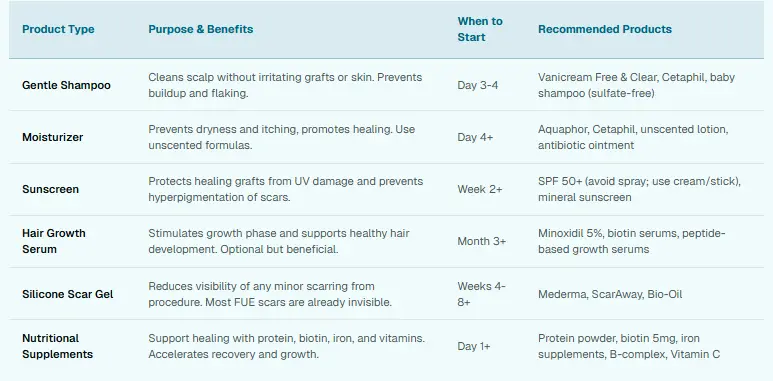
What's Typically Included in Your Package
✓ Antibiotic 7-day course
✓ Anti-inflammatory medications (3-7 days)
✓ Pain medication (4-7 days)
✓ Gentle post-op shampoo sample
✓ Specific aftercare instructions
✓ 24/7 surgeon access for questions
Optional Add-Ons (Additional Cost)
• Minoxidil prescription (starting week 2)
• Finasteride prescription (male pattern baldness)
• PRP (Platelet-Rich Plasma) therapy (PKR 50,000-100,000)
• Low-level laser therapy (PKR 30,000-50,000)
• Hair growth supplement packages
• Extended follow-up care packages
Medication Timeline Quick Reference
Days 1-7: Antibiotics, anti-inflammatories, pain medication, and gentle wound care
Weeks 2-4: Continue antibiotics if needed, start minoxidil, continue pain relief as needed, and gentle shampooing
Month 2-3: Minoxidil ongoing, consider finasteride, start nutritional support, UV protection
Month 4-12: Minoxidil 2x daily, finasteride daily, nutritional supplements, normal hair care
Year 2+: Continue minoxidil and finasteride indefinitely for maintenance of results
Diet and Nutrition for Hair Recovery
Proper nutrition accelerates healing and supports healthy hair growth.
Why Nutrition Matters
Hair is primarily composed of protein, and transplanted follicles require optimal nutrient availability for rapid recovery and strong growth.
Essential Nutrients for Recovery
Protein
Foundation
Daily requirement: 1.2-1.5g per kg
Sources: Chicken, fish, eggs, legumes, tofu
Iron
Growth
Daily requirement: 8-18mg
Sources: Red meat, spinach, lentils, beans
Biotin
Strength
Daily requirement: 30 mcg
Sources: Eggs, almonds, salmon, sweet potatoes
Vitamin C
Healing
Daily requirement: 75-90mg
Sources: Oranges, kiwis, berries, peppers
Vitamin B
Energy
Daily requirement: Variable
Sources: Whole grains, eggs, dairy, leafy greens
Zinc
Immunity
Daily requirement: 8-11mg
Sources: Oysters, beef, pumpkin seeds
Post-Op Meal Plan (First 2 Weeks)

Hydration is Critical
• Drink 2-3 liters of water daily
• Dehydration impairs healing and growth
• Herbal teas (green tea) provide additional antioxidants
• Avoid alcohol and excessive caffeine
Foods to Avoid
✕ Alcohol (at least 2 weeks)
✕ High-sodium foods (increase swelling)
✕ Processed foods (lack nutrients)
✕ Excessive caffeine (interferes with sleep)
✕ Spicy foods (may increase sweating)
When to Resume Daily Activities
A comprehensive guide to returning to your normal routine safely.
Immediately OK
• Reading
• TV/Entertainment
• Computer work
• Visitors
• Phone calls
Week 2-4 OK
• Light office work
• Meetings
• Social dining
• Car driving
• Shopping
• Haircut (careful)
• Moderate walking
Week 5+ OK
• Gym workouts
• Heavy lifting
• Swimming
• Contact sports
• Hair treatments
• Sauna/steam
Detailed Activity Guidelines
Driving
Week 1: Avoid (pain medication side effects)
Week 2+: Safe if not on painkillers and feel alert
Work
Desk Work: Resume day 1-2 (if pain-managed)
Physical Jobs: 2-4 weeks minimum
Travel: Local trips week 2+; air travel week 3+ (avoid pressure)
Exercise
Walking: Days 2-3 light; week 2+ normal pace
Jogging: Week 3-4 (if pain-free)
Weight Training: Week 5+ (avoid straining)
Swimming: Week 4-5 (once initial scabs heal)
Contact Sports: Week 5+ (with protective headgear)
Hygiene and Grooming
Bathing: Gentle showers day 1-2; normal week 2+
Hair Washing: With prescribed shampoo, day 4; normal routine week 2+
Haircuts: Week 4-6 (careful trimming only)
HairColouring: Week 8+ (after grafts fully established)
Hair Treatments: Week 6-8+ (avoid harsh chemicals)
Potential Complications and Solutions
Understanding potential issues helps you recognise and address them quickly.
1. Excessive Swelling
Normal Range: Peaks days 2-3, resolves by day 7
Problem Indicator: Swelling after day 7 or severe swelling
Solution: Contact the surgeon; may indicate fluid accumulation
Prevention: Keep head elevated, use prescribed anti-inflammatories
2. Infection
Symptoms: Fever, pus, unusual odor, increasing redness
Incidence: Less than 1% with proper care
Solution: Immediate medical attention; antibiotics
Prevention: Keep the area clean; follow hygiene protocols
3. Numbness
Expected: Common in the recipient and donor areas
Duration: Days to weeks (occasionally months)
Solution: Typically resolves naturally
When Concerned: If numbness persists beyond 6 months
4. Bleeding or Oozing
Normal: Light oozing days 1-3
Concern: Heavy bleeding beyond day 3
Solution: Apply gentle pressure with gauze; contact the surgeon if severe
Prevention: Avoid blood thinners; follow activity restrictions
5. Graft Failure
Rate: Less than 5% of transplanted grafts typically fail
Signs: The Recipient area doesn’t show growth by month 3
Causes: Poor blood supply, trauma, infection
Solution: Discuss with the surgeon; an additional transplant may be needed
6. Shock Loss
Definition: Temporary loss of existing hair near the transplant area
Cause: Trauma to hair follicles from the procedure
Recovery: Hair regrows within 3-4 months
Frequency: 5-10% of patients experience
7. Scarring (Donor Area)
FUE Advantage: Minimal scarring (pinpoint scars)
Visibility: Generally unnoticeable
Timeline: Red initially, fades over 6-12 months
Solution: Silicone gel, laser treatment if significant
When to Contact Your Surgeon
Immediate Contact Required:
• High fever (>101°F/38.3°C)
• Severe, uncontrolled pain
• Excessive bleeding
• Signs of infection
• Severe allergic reactions
Success Rates and Expected Results
Understanding realistic results after FUE hair transplant helps set appropriate expectations.
90-95%
Graft Survival
Industry standard with proper aftercare
80-90%
Hair Growth
Of grafts produce visible hair
97%+
Patient Satisfaction
With experienced surgeons
Factors Affecting Results

Cost Breakdown: FUE Hair Transplant in Islamabad
Understanding the cost structure of FUE Hair Transplant helps you plan your investment and understand why pricing varies. FUE is more expensive than FUT because each follicle is extracted individually using micro-punch technology, requiring advanced equipment and significant surgical time. However, the superior results and minimal scarring make FUE the preferred choice for most patients worldwide.
At Vagus Hair Transplant in Islamabad, pricing is transparent and competitive compared to international options. We’ll break down exactly what costs what and help you understand the value proposition of each service level.
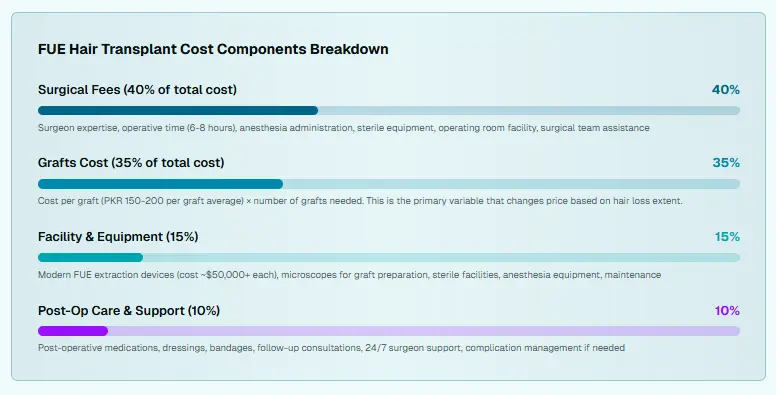
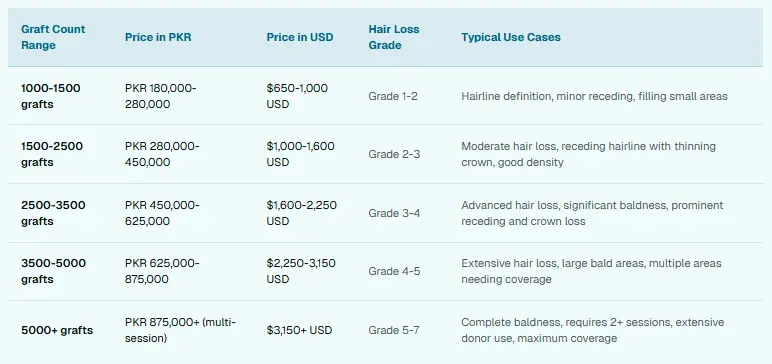
Detailed Pricing by Graft Count (Vagus Hair Transplant)
FUE pricing is primarily determined by the number of grafts needed, which depends on hair loss severity, existing hair density, and desired results. Here’s a transparent breakdown:
What's Always Included in Standard Package
✓ Comprehensive pre-operative consultation – full hair loss evaluation and custom treatment plan
✓ Full surgical procedure – extraction, dissection, and transplantation of all grafts
✓ Anesthesia – local tumescent anesthesia during the entire procedure
✓ Sterile instruments and supplies – premium surgical-grade equipment
Post-op medications – antibiotics, anti-inflammatories, pain relief (7-day course)
✓ Detailed aftercare instructions – written guide for recovery phases
✓ First follow-up visit – week 2 checkup to ensure proper healing
✓ 24/7 surgeon availability – emergency contact for post-op questions
Common Additional Costs (Not Included)
• Additional follow-up visits beyond week 2 – PKR 5,000-10,000 per visit if needed
• Minoxidil prescription (Rogaine) – ongoing monthly cost ~PKR 3,000-5,000
• Finasteride prescription (Propecia) – ongoing monthly cost ~PKR 2,000-4,000
• PRP (Platelet-Rich Plasma) therapy – optional add-on PKR 50,000-100,000 per session
• Low-level laser therapy – optional PKR 30,000-50,000 per session
• Hair growth supplement packages – biotin, vitamins, etc. PKR 5,000-15,000 monthly
• Revision procedures – if additional grafts are needed (rare with an experienced surgeon)
Why Islamabad's Pricing is Competitive Globally
→ International comparison: Same procedure costs $5,000-15,000 in the USA/Europe, $2,000-4,000 in Turkey, $1,500-3,000 in India. Islamabad at PKR 180,000-875,000 ($650-3,150 USD) offers exceptional value with world-class surgeons.
→ Quality not compromised: Lower costs aren’t due to lower quality, they reflect Pakistan’s lower cost of living and Vagus’s operational efficiency, not cutting corners on surgical standards.
→ No travel costs: For Pakistani patients, no need for international travel, accommodation, or time away from work, save PKR 100,000+ easily.
→ Local follow-up care: Easy access to the surgeon for follow-ups vs. international travel for complications or revisions.
Financing Options at Vagus Hair Transplant
Instalment Payment Plans
Split your payment into 3, 6, or 12 monthly instalments. Zero markup if paid within the agreed timeframe. Makes world-class FUE affordable for everyone.
Corporate/Group Packages
If multiple employees or friends are interested, ask about group discounts (typically 10-15% off for 5+ procedures).
Referral Discounts
Refer a friend and receive a 10-15% discount on your treatment or future procedures. Our satisfied patients are our best marketers.
Package Deals
Book FUE + minoxidil + finasteride together for a bundled discount (typically 5-10% savings combined).
Student & Military Discounts
Ask about special pricing if you’re a student or military personnel. Supporting your career goals is our mission.
Understanding the True Cost of Hair Loss (Without Treatment)
While FUE costs money upfront, consider the lifetime cost of hair loss:
• Topical treatments (minoxidil): PKR 3,000-5,000/month × 12 months × 10+ years = PKR 360,000-600,000+ with minimal results
• Hair systems/toupees: PKR 50,000-100,000 each, replaced every 2-3 months = PKR 200,000-400,000/year × 10+ years
• Multiple medications: Finasteride + minoxidil + supplements = PKR 10,000-20,000/month ongoing
• Psychological impact: Lost confidence, reduced social/professional opportunities—priceless negative impact
FUE offers a one-time cost for permanent, lifetime results—the most cost-effective long-term solution for hair loss.
Why Vagus Hair Transplant Islamabad
Excellence in hair restoration with cutting-edge technology and expert care.
Advanced Technology
Latest FUE extraction devices, motorised micro-punches, state-of-the-art facilities
Expert Surgeons
25+ years experience, international training, 94-96% graft survival rates
Patient Care Excellence
Comprehensive consultations, personalised plans, 24/7 emergency access
Vagus Hair Transplant Track Record
✓ 3,000+: Successful FUE transplants
✓ 97%: Positive patient reviews
✓ 85%: Repeat/Referral rate
✓ <2%: Complication rate (industry best)
✓ 94-96%: Average graft survival
Why Choose Vagus
✓ Local availability with international standards
✓ Affordable pricing in Islamabad
✓ Transparent cost structure, no hidden charges
✓ Payment plans available
✓ Easy follow-up and revision access
✓ JCI-accredited facilities
✓ Professional support staff
Before & After Case Studies
Real results from real patients at Vagus Hair Transplant.
Crown Hair Loss Restoration
Patient Profile
45-year-old male, Grade IV hair loss
Grafts Used
2,500 grafts
Timeline
12 months
Result
Natural crown coverage with excellent density
Patient Satisfaction
9/10
Hairline Definition
Patient Profile
32-year-old male, Grade II receding hairline
Grafts Used
1,200 grafts
Timeline
8 months
Result
Natural, defined hairline
Patient Satisfaction
10/10
Complete Coverage Restoration
Patient Profile
50-year-old male, Grade VI extensive hair loss
Grafts Used
4,500 grafts (two sessions)
Timeline
18 months (total)
Result
Significant density restoration
Patient Satisfaction
8.5/10
Visual Result Timeline
Month 0
Hair loss visible
Month 3
Early growth (20%)
Month 6
Significant (50%)
Month 9
Near-final (80%)
Month 12
Full results (100%)
Ready to Start Your Hair Restoration Journey?
Get a free consultation with our experienced surgeons at Vagus Hair Transplant Islamabad