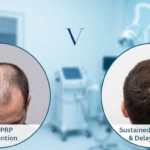
PRP or exosome therapy for early hair loss is among the most frequently searched questions in regenerative medicine nowadays, and for good reason. While both treatments are immense advancements over traditional solutions like minoxidil or hair transplants, they operate through vastly different biological mechanisms, come at different price points, and deliver results on different timelines.
What is PRP Therapy for Hair Loss?
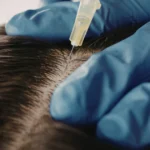
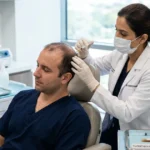
PRP hair treatment is currently one of the most popular options for addressing hair loss and promoting active hair regrowth, especially in younger patients. The procedure involves taking a sample of your blood, extracting the plasma, and then injecting it back into your scalp. This plasma is rich in platelets, which are believed to stimulate hair follicle regeneration and enhance hair growth.
PRP Therapy for Early Stages of Hair Loss: Duration and Effectiveness
Platelet-Rich Plasma (PRP) is a concentrated component of blood that contains growth factors essential for tissue repair and regeneration.
When injected into the scalp, PRP helps stimulate hair follicles, encouraging new hair growth and reducing hair loss.
PRP therapy has shown the most success in treating androgenetic alopecia, the most common form of hair loss, and is considered an effective treatment option for both men and women.
Related: Does androgenetic alopecia ever reverse naturally?
Why Choose PRP for Hair Loss?
PRP is a non-invasive treatment known for delivering visible results over multiple sessions. It has become a widely recognized and popular option for addressing early hair thinning. It is considered one of the best hair loss treatments available in Islamabad and across Pakistan.
What Does Exosome Treatment for Hair Loss Involve?
Exosome therapy is regarded as a groundbreaking approach to treating hair loss, with many experts predicting it will eventually replace PRP therapy for early-stage hair loss management. Exosomes are tiny vesicles derived from stem cells that play a key role in cellular communication and tissue regeneration. In hair restoration, exosomes are applied to the scalp to promote rejuvenation and stimulate hair growth.
How Does Exosome Therapy Work for Hair Loss?
Exosome therapy for hair loss involves the use of exosomes, tiny particles that contain a powerful mix of growth factors and cytokines. These elements are essential for revitalizing hair follicles and stimulating their regeneration. By delivering these regenerative substances directly to the scalp, exosome therapy improves the health of existing hair follicles, promoting stronger and healthier hair growth. This treatment not only combats hair loss but also helps increase hair density and strength, resulting in a fuller and thicker appearance over time.
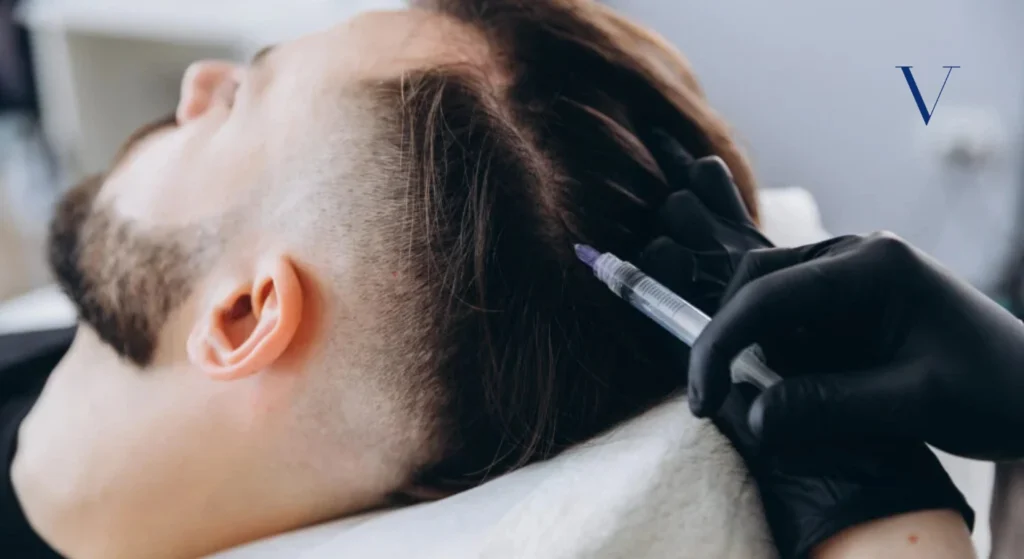
For Early Hair Loss: Exosome Therapy and Stem Cell Therapy
Exosome therapy and stem cell therapy are both effective treatments for early hair loss, each offering distinct benefits. Exosome therapy works by using growth factors and proteins found in exosomes, small vesicles derived from stem cells to stimulate hair follicles and promote regrowth. This minimally invasive treatment is highly safe and requires less recovery time compared to traditional options like hair transplants, making it an ideal choice for those in the initial stages of hair loss.
In contrast, stem cell therapy involves directly injecting stem cells into the scalp to encourage the regeneration of hair follicles and enhance scalp health. This approach offers a potential long-lasting solution. However, stem cell therapy is more straightforward but typically involves a longer recovery period.
Comparison of PRP, Exosome, and Stem Cell Therapy for Hair Loss Treatment
| Feature | PRP Therapy | Exosome Therapy | Stem Cell Therapy |
| Mechanism | Uses Platelet-Rich Plasma (PRP) from your own blood to stimulate hair follicles. | Uses exosomes (small vesicles from stem cells) to deliver growth factors to hair follicles. | Uses stem cells to regenerate and rejuvenate hair follicles. |
| Invasiveness | Minimally invasive (injection of PRP into the scalp). | Minimally invasive (injection of exosomes into the scalp). | More invasive (injection of stem cells into the scalp). |
| Recovery Time | Quick recovery with minimal downtime. | Fast recovery with minimal side effects. | Longer recovery time compared to PRP and exosome therapy. |
| Efficacy | Effective for stimulating hair growth, especially in early stages of hair loss. | Targets hair regrowth more precisely, showing promising results for early hair loss. | May provide more profound and long-lasting regeneration, especially in advanced hair loss cases. |
| Treatment Duration | Typically requires multiple sessions over several months. | Fewer sessions, often more effective in fewer treatments. | Requires more extensive treatment and multiple sessions. |
| Cost | Generally more affordable compared to exosome and stem cell therapies. | More expensive than PRP but less than stem cell therapy. | One of the most expensive options due to complexity and number of sessions. |
| Long-Term Results | Results may be seen after several months, with maintenance treatments needed. | Results are promising and may offer long-term effects. | Offers the most comprehensive and long-term results for significant hair regeneration. |
| Risk and Side Effects | Quick recovery with minimal downtime. | Low risk, minimal side effects such as mild swelling. | Higher risk due to the use of live stem cells; potential for longer recovery. |
| Best For | Early-stage hair loss and scalp health maintenance. | Targeted treatment for early hair loss and follicle regeneration. | Severe hair loss, particularly in cases requiring deep regeneration. |
Also read: Are exosomes safer than stem cells?
Why Opt for Exosome Therapy for Hair Loss?
Exosome therapy is becoming increasingly popular due to its superior outcomes and quicker recovery compared to traditional PRP treatments. It is regarded as a more effective solution for severe hair thinning and is praised for accelerating hair growth following hair transplant procedures.
Faster and More Noticeable Results:
Exosome therapy has a reputation for delivering quicker results compared to traditional treatments like PRP (Platelet-Rich Plasma). Because exosomes are highly concentrated with regenerative growth factors, they are more effective in stimulating hair follicles, leading to faster regrowth. Patients typically see visible improvements within a few weeks of the treatment.
Advanced and Highly Potent Treatment:
Exosome therapy offers a higher potency than other hair restoration treatments. Exosomes contain a variety of growth factors and proteins that work together to promote hair follicle regeneration. This makes the treatment particularly effective for individuals who are experiencing moderate to severe hair thinning.
Minimal Downtime and Recovery:
Like many non-surgical hair restoration options, Exosome therapy is relatively non-invasive with minimal recovery time. Most patients can resume normal activities within a day or two after the procedure. This makes it an attractive option for those looking for a quick solution without the need for a lengthy recovery period.
Long-Lasting Results:
Exosome therapy has shown long-lasting effects in clinical studies, with many patients enjoying the benefits of hair regrowth for months or even years. The concentrated nature of exosomes ensures that hair follicles are nourished and rejuvenated for a prolonged period, which may reduce the need for frequent treatments.
Safe and Biocompatible:
Since exosome therapy uses stem cell-derived material from your own body or from a donor, it is considered a safe and biocompatible treatment. There is little risk of allergic reactions or side effects, making it a low-risk option for most patients seeking to treat their hair loss.
PRP vs Exosome Therapy: Which is Better for Early Hair Loss?
With an understanding of both treatments, let’s compare PRP and Exosome therapy to determine which is better suited for early-stage hair loss.
Effectiveness:
PRP therapy is effective for mild to moderate hair thinning and often yields consistent results after several sessions. However, ongoing maintenance treatments are usually necessary to preserve its benefits. In contrast, Exosome therapy tends to produce faster and more noticeable improvements, especially in cases of advanced thinning, and is recognized for its effectiveness where PRP may fall short.
Recovery Time:
Both PRP and Exosome therapies involve minimal downtime. After PRP treatment, patients may experience mild soreness or redness, which typically resolves quickly. Exosome therapy also has minimal downtime, with many patients reporting faster recovery and increased comfort following the procedure.
Cost of PRP vs Exosome Therapy in Pakistan:
PRP therapy is generally more affordable and widely available, with sessions usually costing between Rs. 10,000 and Rs. 20,000. On the other hand, Exosome therapy is more expensive, with prices ranging from Rs. 25,000 to Rs. 40,000 per session.
Long-Term Results:
PRP therapy can deliver lasting results but often requires maintenance treatments every 4 to 6 months to sustain its effectiveness. Exosome therapy is known for providing longer-lasting and more consistent results, often needing fewer maintenance sessions over time.
Which Treatment Is Best for Early Hair Loss?
Deciding between PRP and Exosome therapy for early hair loss depends on your individual needs, budget, and the extent of your hair loss. For those experiencing mild thinning, PRP therapy is an excellent initial option. However, if you want quicker, more noticeable improvements or have not seen good results from other treatments, Exosome therapy may be a better choice.
Vagus Hair Transplant: A Lasting Solution for Severe Hair Loss
While PRP and Exosome therapy are beneficial for early-stage hair thinning, those experiencing more significant hair loss or seeking a permanent fix might consider the Vagus hair transplant. This advanced technique employs precision follicular unit extraction (FUE) to carefully harvest healthy hair follicles from donor areas and transplant them to bald spots, delivering natural and enduring results. Unlike non-surgical treatments, the Vagus hair transplant provides a permanent solution, making it ideal for severe hair thinning or for individuals who have not achieved desired outcomes with PRP or Exosome therapy. We customise the procedure to each person’s needs, delivering sustainable, personalised results and making it one of the most reliable methods for long-term hair restoration.
For those looking for a permanent and dependable solution to hair loss, Vagus hair transplant is the most effective choice, particularly when non-surgical options are insufficient.
Final Thoughts
Both PRP and Exosome therapies present effective options for early hair loss, with Exosome therapy standing out as a more advanced and potent alternative. While PRP remains popular due to its affordability and reliable outcomes, Exosome therapy is gaining recognition as a cutting-edge treatment, especially for those seeking faster results. Ultimately, the right treatment depends on your individual condition, goals, and budget. It is advisable to consult a leading hair loss clinic in Islamabad or a specialist in hair restoration treatments in Pakistan for tailored guidance and options.
Frequently Asked Questions
What is the best treatment for early-stage hair loss?
Both PRP and Exosome therapy are highly effective treatments for early hair loss, but Exosome therapy is gaining popularity for its faster results and advanced regenerative properties.
How much does PRP cost in Islamabad?
The cost of PRP in Islamabad typically ranges from Rs. 10,000 to Rs. 20,000 per session, depending on the clinic.
Can Exosome therapy help with severe hair thinning?
Yes, Exosome therapy for hair loss is particularly effective for severe thinning and offers quicker, more noticeable results than PRP.
Which therapy is better: PRP or Exosome therapy?
Exosome therapy is considered more advanced and effective, but PRP remains a great option for those starting with early hair thinning.
Are there any side effects of PRP or Exosome therapy?
Both treatments are safe with minimal side effects. Some patients may experience slight swelling or discomfort post-treatment, but these symptoms are typically short-lived.