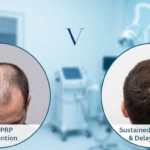
PRP therapy works on both receding hairlines and crown thinning, but the results are not equal. Crown thinning typically responds better to PRP hair therapy because the vertex area retains more dormant, miniaturized follicles that growth factors can reactivate. Receding hairlines are harder to treat because frontal and temporal hair loss often involves follicles that have completely died off, leaving nothing for PRP to revive.
If you catch a receding hairline early (Norwood Stage 1–2) and follicles are still miniaturizing rather than gone, PRP hair restoration can slow the recession, thicken existing hairs, and even stimulate some regrowth. But once the hairline is fully bald, PRP cannot create new follicles where none exist. For crown thinning, expect noticeable improvement in density within 4–6 months across 3–6 sessions. For hairline work, expect modest results, and consider combining PRP with minoxidil, finasteride, or a hair transplant for the best outcome.
PRP Works on Both, But Not Equally
PRP can stimulate hair growth in both receding hairlines and crown thinning, but the response rates are noticeably different. Clinical studies and dermatology practices consistently report stronger results in the crown area than along the frontal hairline. That doesn’t mean PRP hair therapy is useless for receding hairlines; it means your expectations need to be calibrated to the biology of each area.
Why the Crown Responds Better Than the Hairline
The crown contains a higher concentration of follicles that are miniaturizing but still alive. PRP hair treatment delivers concentrated growth factors directly to these struggling follicles, which can be coaxed back into producing thicker, healthier strands. The blood supply to the vertex is also more cooperative, and the follicles tend to weaken more gradually compared to the abrupt thinning at the hairline.
When PRP Can Genuinely Help a Receding Hairline
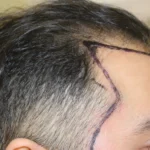
PRP therapy works on a receding hairline when the follicles are still present but underperforming. If you can see faint, fine “vellus” hairs along your receding edge, PRP has something to work with. If the hairline area is completely smooth and shiny with no visible follicle openings, PRP hair treatment has nothing to revive.
Understanding the Difference Between Hairline Recession and Crown Thinning
Before deciding whether PRP fits your situation, you need to understand that receding hairlines and crown thinning are not the same condition, even though both fall under androgenetic alopecia. The two patterns differ in cause, progression, and most importantly, how they respond to PRP hair therapy.
| Factor | Receding Hairline (Frontal & Temporal Loss) | Crown Thinning (Vertex Balding) |
| Primary Cause | DHT sensitivity at frontal and temporal follicles | DHT sensitivity at the vertex follicles |
| Pattern of Loss | Sharp retreat in an M-shape from the temples backwards | Diffuse, uneven thinning across the crown |
| Speed of Progression | Faster, more aggressive recession | Slower, more gradual thinning |
| Follicle Behavior | Follicles miniaturise and die off completely once a threshold is crossed | Follicles miniaturise slowly and often remain dormant or weakened for longer. |
| Salvageable Tissue | Less salvageable tissue once the recession sets in | More dormant follicles available for stimulation |
| Visual Appearance | Smooth, shiny skin at advanced stages | A thinning patch is visible before full baldness develops. |
| Blood Supply to Area | Less robust at the frontal scalp | More cooperative blood flow at the vertex |
| PRP Responsiveness | Limited, depending on early intervention | Generally stronger and more predictable |
| Best Treatment Window | Norwood Stage 1–2 (early recession) | Early-to-moderate thinning with visible follicles |
How PRP Therapy Actually Works on Hair Follicles
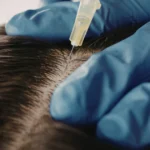
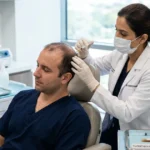
PRP, or platelet-rich plasma, is made from your own blood. A sample is drawn, spun in a centrifuge to separate the platelet-rich layer, and injected into the scalp. Platelets release growth factors like PDGF, VEGF, and IGF-1, which stimulate cellular activity in hair follicles, improve blood supply, and prolong the anagen (growth) phase of the hair cycle.
PRP can thicken existing hair, revive miniaturizing follicles, and extend the active growth phase. PRP hair restoration cannot create new follicles, regrow hair on completely bald skin, or permanently stop the genetic process of androgenetic alopecia. It’s a stimulation therapy, not a follicle-generation therapy.
The presence of dormant or miniaturized follicles is the single biggest predictor of PRP success. If you have them, PRP therapy has fuel to work with. If the follicles are gone, no amount of growth factor injection will bring them back.
PRP for Crown Thinning — Why It’s Considered More Effective
PRP hair restoration on the crown is widely viewed as the strongest use case for this therapy.
1. Follicle Density at the Crown
Even in moderate crown hair loss, the vertex usually retains a higher density of dormant follicles compared to a receding hairline of similar visual severity. This gives PRP hair treatment more biological material to stimulate.
2. Typical Success Rates and Timeline for Crown Results
Most patients with early-to-moderate crown thinning see visible improvement within 4–6 months after 3–4 initial sessions spaced about a month apart. Studies report response rates in the 60–75% range for vertex thinning, with results varying based on age, severity, and consistency of follow-up sessions.
3. Real-World Expectations for Vertex Regrowth
Expect thicker existing hairs, some new hair growth in thinning patches, and a denser overall look, not a return to a teenage head of hair. Maintenance sessions every 4–6 months are usually required to maintain the gains.
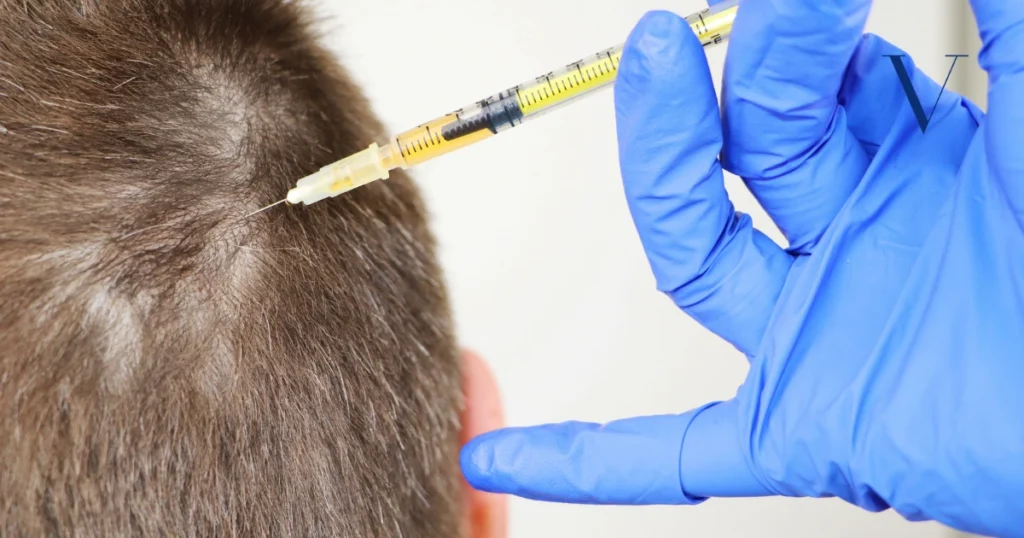
PRP for Receding Hairlines — The Complicated Truth
PRP therapy for a receding hairline is where expectations and reality often collide.
Why the Frontal Hairline Is Harder to Treat
The frontal hairline follicles are more aggressive responders to DHT and tend to die off faster. The blood supply at the front of the scalp is also less robust than at the crown, which can limit how effectively growth factors are delivered.
Cases Where PRP Does Improve the Hairline
PRP hair restoration can meaningfully help a receding hairline when the recession is recent, the follicles are still miniaturizing rather than gone, and the patient combines treatment with finasteride or minoxidil. Norwood Stage 1 and early Stage 2 patients tend to see the best hairline results.
Cases Where PRP Will Likely Disappoint You
If your hairline has been receding for years, if the skin looks smooth with no visible follicles, or if you’re at Norwood Stage 4 or beyond at the front, PRP hair restoration is unlikely to deliver a satisfying outcome. You’re better off considering a hair transplant.
The Role of Norwood Scale Stage in Predicting Results
Norwood 1–2: PRP can produce noticeable improvement. Norwood 3: PRP can help slow progression and thicken remaining hairs. Norwood 4 and beyond: PRP therapy alone won’t restore the hairline. A transplant becomes the realistic option.
How to Maximize PRP Results on Either Area
PRP hair restoration works best when it’s not a solo act.
Combining PRP With Minoxidil and Finasteride
The strongest hair regrowth results come from combining PRP with topical minoxidil and oral finasteride (for men). This triple approach attacks the problem from three angles: DHT suppression, follicle stimulation, and growth factor delivery.
Recommended Session Frequency
A typical protocol is 3–4 initial sessions spaced 4–6 weeks apart, followed by maintenance sessions every 4–6 months.
Lifestyle and Nutritional Factors
Iron, vitamin D, zinc, and protein levels all influence hair growth. Smoking, chronic stress, and poor sleep work against PRP hair therapy. Fixing these basics meaningfully improves outcomes.
Realistic Timeline: When to Expect Results
Patience is non-negotiable with PRP. Hair follicles don’t respond overnight, and the visible changes you’re hoping for unfold gradually across months, not weeks. Here’s what a realistic recovery and regrowth timeline looks like for each area.
| Milestone | Crown Thinning Timeline | Hairline Recession Timeline |
| Month 1 | Initial response, minor scalp activity | Minimal visible change |
| Month 2 | Reduced shedding becomes noticeable | Shedding may slow slightly |
| Month 3-4 | Visible thickening of existing hairs | Early thickening in some patients |
| Month 4-6 | Peak results, denser appearance | Subtle improvement in existing hairs |
| Month 6 | Full assessment point—reassess if there is no change | Too early for full judgment; continue treatment |
| Months 9-12 | The maintenance phase begins | Full assessment window, at least one maintenance round needed |
| Reassessment Trigger | No improvement by month 6 | No improvement by month 9 |
When to Reassess and Adjust the Plan
If you see no improvement at all in the crown by the 6-month mark or in the hairline by 9 months, it’s time to reassess. Switching protocols, adding medication like finasteride or minoxidil, or considering a hair transplant should be on the table. PRP restoration is not magic, and continuing the same approach when it isn’t working only wastes money and delays better options.
Cost Considerations for PRP on Hairline vs. Crown
PRP treatment pricing varies by clinic, the practitioner performing the procedure, and any active promotions. At our clinic, we offer transparent pricing with options that fit different budgets and preferences.
| Treatment Option | Standard Price (PKR) | Discounted Price (PKR) |
| Single PRP Session (Standard) | 25,000 | 12,500 (with 50% discount) |
| Single PRP Session by Dr Rana Irfan | 25,000 | No discount applicable |
| Initial Package — 3 Sessions (Standard, Discounted) | 75,000 | 35,700 |
| Initial Package — 3 Sessions with Dr. Rana Irfan | 75,000 | No discount applicable |
| Maintenance Session (Every 4–6 Months) | 25,000 | 12,500 (with 50% discount) |
Final Thoughts
If you have crown thinning in the early-to-moderate range with visible miniaturizing follicles, PRP is one of the most effective non-surgical treatments available, and it’s worth the investment. If you have an early receding hairline with follicles still hanging on, PRP hair restoration can help, especially when combined with medication. But if your hairline is significantly receded with no visible follicles, PRP alone will disappoint you, and a hair transplant is the smarter route.
The honest answer to “Does PRP work on receding hairlines or only crown thinning?” is this: PRP works on both, but it works better on the crown, and the only way to know what it will do for your specific scalp is to get evaluated by a qualified dermatologist or trichologist who can examine your follicles, stage your hair loss, and build a realistic plan, ideally one that combines PRP therapy with the other tools that make it work harder.
Frequently Asked Questions
Can PRP regrow a completely bald hairline?
No. PRP cannot create new follicles. If your hairline is completely bald with smooth skin and no visible follicle openings, PRP will not regrow hair there. A hair transplant is the only realistic option.
How many PRP sessions do I need for visible results?
Most protocols require 3–4 initial sessions spaced 4–6 weeks apart, followed by maintenance every 4–6 months. Visible results typically appear after the third session.
Is PRP permanent for hairline or crown regrowth?
No. PRP hair restoration results are not permanent because it does not stop the underlying genetic cause of hair loss. Without maintenance sessions and supporting treatments like finasteride, the gains fade over time.
Does PRP work better for men or women?
PRP works well for both, but the response patterns differ. Women with diffuse thinning often respond very well, while men with classic male pattern baldness typically see the strongest results on the crown.
Can PRP stop a receding hairline from getting worse?
PRP therapy can slow the progression of a receding hairline, especially in early stages and when combined with finasteride and minoxidil. It does not permanently stop genetic hair loss, but it can buy significant time.