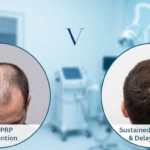
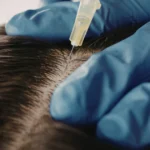
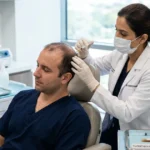
PRP Hair Restoration does work, but only under specific conditions. Clinical research confirms that platelet-rich plasma injections can meaningfully improve hair density, thickness, and follicle activity in people with early-stage androgenetic alopecia (pattern hair loss). However, it is not a miracle cure. PRP cannot revive dead follicles or reverse advanced baldness, and results vary widely depending on the patient’s hair-loss stage, the clinic’s preparation protocol, and whether the treatment is combined with proven therapies like minoxidil or finasteride.
The “hype” surrounding PRP hair restoration comes from inconsistent protocols, exaggerated marketing, and unrealistic before-and-after photos, not from the underlying science. If you’re a suitable candidate, expect modest but real improvement over 3–6 months, with ongoing maintenance sessions required to sustain results. In short, PRP is a legitimate science wrapped in a layer of clinical marketing. Knowing how to separate the two is what determines whether it’s worth your money.
The Short Answer — Does PRP Actually Work?
Yes — with conditions.
The honest answer isn’t a clean “yes” or “no.” PRP therapy has demonstrated measurable benefits in peer-reviewed studies, particularly for people with early to moderate androgenetic alopecia. However, results depend heavily on the patient’s hair loss stage, the quality of the PRP preparation, the injection technique, and whether the treatment is combined with other therapies. People expecting transplant-level density from PRP alone are setting themselves up for disappointment. People with the right expectations and the right hair-loss profile usually see real, visible improvement.
What Does the Scientific Research Say?
Key Clinical Studies and Meta-Analyses
Multiple randomised controlled trials and meta-analyses published over the past decade support PRP’s effectiveness for androgenetic alopecia. Studies in journals such as the Journal of Cutaneous and Aesthetic Surgery, Dermatologic Surgery, and International Journal of Trichology have repeatedly found statistically significant improvements in hair count and thickness in PRP-treated areas compared with controls.
Documented Improvements
Across studies, PRP hair treatment has been associated with:
- Increased hair density (often 20–40% improvement)
- Thicker individual hair shafts
- Higher hair count per square centimetre
- Reduced hair shedding within 3–6 months
- Improved patient-reported satisfaction
Limitations of Current Research
That said, the science isn’t airtight. Many studies use small sample sizes, short follow-up periods, and inconsistent PRP hair restoration preparation protocols. There’s no universally agreed-upon “best” centrifuge speed, platelet concentration, or injection frequency. This lack of standardisation is the single biggest reason results vary so wildly between clinics and why critics call PRP “evidence-supported but not evidence-perfected.”
Who Is PRP Therapy Most Likely to Work For?
Ideal Candidates
The best results come from people in the early stages of androgenetic alopecia, diffuse thinning, a widening part, or mild recession, where follicles are weakened but still alive. If you can see hair on the scalp, even if it’s thin, PRP therapy has something to work with.
People with Telogen Effluvium or Other Hair Loss Types
PRP hair restoration also shows promise for certain non-androgenetic conditions, such as chronic telogen effluvium (stress- or illness-induced shedding) and even some cases of alopecia areata, though the evidence here is less robust than for pattern hair loss.
Men vs. Women
Both sexes benefit. Some studies suggest women with diffuse thinning may respond especially well, possibly because their hair loss tends to involve follicle miniaturisation rather than total follicle death. Men with crown thinning typically see better results than men with frontal hairline recession.
Who PRP Probably Won’t Help (Managing Expectations)
Advanced Baldness and Dormant Follicles
If you’re Norwood 6 or 7, meaning large, smooth bald areas, PRP cannot help. Once a follicle has fully miniaturized and stopped producing hair, no amount of growth factors can resurrect it. PRP therapy stimulates living follicles; it does not create new ones.
Scarring Alopecia and Autoimmune Hair Loss
Conditions like lichen planopilaris, frontal fibrosing alopecia, and discoid lupus permanently scar the follicles. PRP therapy cannot reverse this. Severe alopecia areata also tends to require immunomodulating treatments rather than PRP hair restoration.
People Expecting Hair Transplant Level Results
PRP improves what you have. A hair transplant relocates follicles to create new density. These are different tools for different problems. Anyone promising PRP therapy results comparable to a transplant is overselling.
Realistic Results — What You Can and Can’t Expect
Timeline
Most patients begin noticing reduced shedding by month 2, improved hair quality by month 3, and visible density changes between months 4 and 6. Patience is non-negotiable.
Before-and-After Expectations
Expect improved density and thickness in already thinning areas, not new hair on bald patches. The “wow” transformation photos circulating online are often selectively edited, taken under different lighting, or paired with other treatments like minoxidil.
How Long Do Results Last
Without maintenance, PRP therapy results typically fade within 12–18 months. Most protocols call for an initial series of 3–4 sessions spaced a month apart, followed by maintenance sessions every 6–12 months.
Where the “Hype” Comes From
The science behind PRP therapy is real, but the marketing often outruns it. Here’s where the hype gets manufactured:
| Clinics overpromising results | Some advertise PRP as a guaranteed solution for all hair loss, regardless of stage or cause. |
| Lack of standardised protocols | Different clinics use different centrifuges, spin times, and injection techniques, yet all call it “PRP.” This makes comparison and quality control nearly impossible. |
| Misleading before-and-after photos | Lighting, angle, hairstyling, and timing can make dramatic differences that don’t reflect real outcomes. |
| Influencer and celebrity endorsements | Paid promotions rarely disclose that the celebrity is also using minoxidil or finasteride or has had a transplant. |
Red Flags — How to Spot a Clinic That’s Overhyping PRP
- Guaranteed results claims. No legitimate provider promises specific outcomes.
- No discussion of candidacy. A clinic that treats every walk-in is treating PRP hair restoration as a sales product, not a medical therapy.
- Non-medical practitioners. Trained doctors or licensed medical professionals should perform PRP injections — not aestheticians with weekend certifications.
- Vague preparation methods. If they can’t tell you what centrifuge they use, the spin protocol, or the final platelet concentration, walk away.
Final Thoughts
PRP hair restoration is neither a miracle nor a scam; it’s a legitimate medical treatment with real but modest benefits, surrounded by a marketing ecosystem that often distorts what it can actually do. The evidence supports its use for early-stage pattern hair loss, especially when combined with proven therapies. It is not, however, a replacement for a hair transplant or a fix for advanced baldness.
If you’re considering PRP, the smartest next step isn’t booking the cheapest clinic you can find; it’s consulting a board-certified dermatologist or trichologist who can honestly evaluate your candidacy, recommend a personalized plan, and tell you whether your money is better spent on PRP hair restoration, another treatment, or a combination approach. Informed decisions beat hopeful ones every time.
Frequently Asked Questions
1. Is PRP permanent?
No. PRP slows hair loss and improves existing hair, but its effects fade without maintenance sessions every 6–12 months.
2. How many sessions are needed?
Most protocols start with 3–4 sessions spaced 4–6 weeks apart, followed by maintenance every 6–12 months.
3. Is PRP painful?
Discomfort is mild for most people, especially with numbing cream. Expect a pinching or pressure sensation during injections and some scalp soreness for a day or two afterwards.
4. Can PRP regrow hair on completely bald areas?
No. PRP stimulates existing follicles. Once a follicle is fully dormant or dead, PRP cannot bring it back.
5. Is PRP safe long-term?
Because PRP uses your own blood, the risk of allergic reaction or rejection is extremely low. Long-term safety data are generally favorable, though formal multi-decade studies are still developing.
6. Does insurance cover PRP for hair loss?
Rarely. PRP for hair restoration is classified as cosmetic and is typically paid out of pocket.