Summary
If you’re wondering, “How do I know if I’m a good candidate for FUE Hair Transplant?” this guide will help you understand the key factors that determine candidacy. FUE is ideal for individuals with stable hair loss, sufficient donor hair, and realistic expectations.
Age, general health, and scalp condition also play crucial roles in eligibility. Consult with a specialist to assess your suitability and take the next step toward natural-looking hair restoration.
Introduction
Considering a hair transplant can be overwhelming, especially when evaluating if you’re a suitable candidate for Follicular Unit Extraction (FUE).
Understanding the key factors that determine candidacy can help you make an informed decision. This guide outlines essential criteria, benefits, and expert insights to assist you in assessing your eligibility for FUE hair restoration.
What Is FUE Hair Transplant?

Follicular Unit Extraction (FUE) is a minimally invasive hair restoration technique that involves extracting individual hair follicles from a donor area (typically at the back or sides of the scalp) and transplanting them into areas with thinning or no hair. The procedure is preferred by many because it doesn’t require large incisions or leave a linear scar, making it a great option for those who want a more natural-looking hairline.
Benefits of FUE
- No Linear Scarring: Unlike the traditional strip method, FUE doesn’t leave a visible scar on the scalp, making it an excellent option for people who prefer short hairstyles.
- Faster Recovery: FUE has a quicker recovery time than traditional methods. Most patients are able to resume normal activities in just a few days.
- Natural-Looking Results: The technique allows for highly accurate and precise graft placement, resulting in a natural appearance that mimics the patient’s natural hair growth pattern.
Key Factors to Determine If You’re a Good Candidate for FUE
1. Sufficient Donor Hair Supply
One of the most important considerations for FUE eligibility is having enough healthy hair follicles in the donor area. The back and sides of the scalp are typically used for harvesting grafts. If these areas are too thin or if there is not enough hair to harvest, the results may not be as satisfactory.
Expert Tip: To ensure the best results, you should have healthy, dense hair in the donor region. If you have a family history of extensive hair loss, your doctor may recommend waiting until hair loss stabilizes before undergoing the procedure.
2. Stable Hair Loss Pattern
A good candidate for FUE hair transplant should have a stable hair loss pattern. This means that hair loss should have slowed down or plateaued, and the individual should not be experiencing rapid or progressive hair thinning. If hair loss is ongoing, a hair transplant may not be effective in the long term, as you may continue to lose hair in untreated areas.
Pro Tip: If you are under 25, it’s important to understand that your hair loss might not have fully stabilized. Consult with your specialist to determine whether it’s best to wait until your hair loss slows down.
3. Age Considerations
Most FUE hair transplant candidates are between 25 and 60 years of age. While younger patients can be candidates for the procedure, it is generally recommended that people under 25 wait until their hair loss pattern becomes more predictable. For older individuals, the procedure can still be effective, but overall health and scalp elasticity are considered more significant.
Pro Tip: FUE works best when the patient has reached a point where their hair loss has stabilized. Younger patients should consult with their doctor about the potential long-term effectiveness of a hair transplant.
4. Realistic Expectations
Setting realistic expectations is crucial for any hair restoration procedure. FUE hair transplants can significantly improve the appearance of thinning or balding areas, but it’s important to understand that complete coverage may not be possible depending on the amount of donor hair available.
5. Good General Health
Good overall health is a must for any surgical procedure, including FUE hair transplants. Candidates should be free from underlying conditions that might impair healing or affect the outcome. Conditions like uncontrolled diabetes, high blood pressure, or active scalp infections could hinder the healing process and affect the success of the transplant.
Pro Tip: Before scheduling your procedure, ensure that your doctor performs a thorough medical evaluation, including a blood test, to rule out any health concerns that could affect the transplant.
Additional Considerations
Scalp Health and Flexibility
For optimal results, it is important to have healthy scalp skin. Conditions like psoriasis, dermatitis, or scarring can prevent the hair follicles from taking root in the transplanted areas. The flexibility of your scalp is also crucial, as a tighter scalp can make it more difficult to extract and transplant hair.
Pro Tip: A flexible scalp improves the success rate of FUE by providing better access to the donor hair and ensuring the grafts are taken out with minimal damage.
Hair Characteristics
The texture and thickness of your hair can impact the final result of an FUE hair transplant. Thick, coarse hair tends to provide better coverage and a fuller look post-transplant. On the other hand, fine hair may require more grafts to achieve a similar result. Curly hair can sometimes offer better coverage compared to straight hair, but each case is unique.
Gender-Specific Factors
While men are more likely to experience hair loss due to male pattern baldness, women can also be candidates for FUE if they have thinning hair or areas of baldness. However, women typically experience diffuse thinning rather than distinct bald patches, which can make the procedure more complex.

Frequently Asked Questions (FAQs)
What is the average cost of an FUE hair transplant?
The cost can vary depending on the clinic and the number of grafts required. On average, FUE hair transplants range from $4,000 to $15,000.
How long does the recovery process take?
The recovery time for FUE is typically quick. Most patients can return to normal activities within 3-5 days, though full results may take 6-12 months.
Are there any risks associated with FUE?
FUE is a relatively safe procedure, but potential risks include infection, scarring, and poor graft survival. These risks can be minimized by choosing an experienced surgeon.
How soon can I expect to see results?
Initial results can be seen in about 3-6 months, but it can take up to a year to see the full effects of the transplant.
Can FUE be performed on women?
Yes, FUE can be performed on women. However, the procedure may be more complex if the hair thinning is diffuse across the scalp.
Next Steps
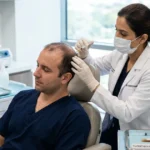
If you’re considering an FUE hair transplant, it’s important to schedule a consultation with a certified specialist. During your consultation, the surgeon will assess your scalp health, hair characteristics, and overall health to determine if you’re a suitable candidate for the procedure. Be sure to discuss any concerns you have and set realistic expectations for your results.
Ready to take the next step in restoring your hair? Book a consultation with our expert team today to discuss your eligibility for an FUE hair transplant. Let us help you achieve the natural, confident look you’ve always wanted.